 English
 Korean
 Spanish
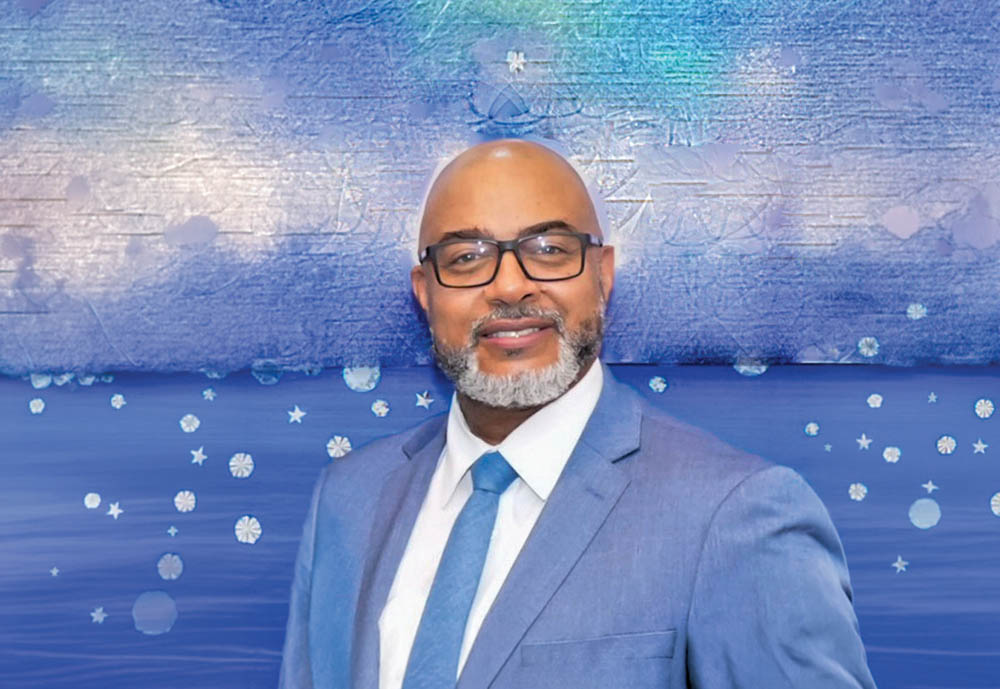
Earlier this year, the Southern Baptists of Texas Convention entered into a ministry partnership with the Baptist Convention of New York. Frank Williams, BCNY’s executive director/treasurer, recently spoke with the Texan about the challenges churches in his convention face and the powerful opportunities that exist through the partnership, an effort that will be known in the SBTC as Reach New York.
Talk about the churches that make up the Baptist Convention of New York.
Frank Williams: The Baptist Convention of New York is truly a diverse state convention. Our territory is made up of about 530 churches and 10 associations. It includes the states of New York, northern New Jersey, western Connecticut, and we have a handful of churches sprinkled in Massachusetts. It’s a territory that encompasses rural communities, especially in the upstate [New York] area, and some really densely populated cities. Throughout our territory, there are pockets of diversity, whether you’re looking at upstate New York or at the New York City area, which is known for its diverse cultures and nationalities.
New York City is just one small portion of our area, geographically speaking. Population-wise, notoriety-wise, it’s a global city. It’s a financial hub. It’s a real estate hub. When people hear New York, [New York City] is the first thing they think, but we do want to make sure that when people think about the Baptist Convention of New York, they see the larger convention and the churches that serve a much larger territory.
What are some of the challenges BCNY churches face?
FW: The greatest challenges, I think, exist in three areas. The first is location. Whether located in suburban areas or in a bustling place like New York City, people keep to themselves. So churches have to really be intentional about engaging them at some event, maybe at the mall or at a shopping center. There is apathy among some in those communities, a sense that, “Oh, I don’t need [organized religion].” Some churches are located in economically depressed neighborhoods, which makes sustainability difficult. In Rochester, N.Y., we have the largest deaf population per capita in the country. It’s been challenging establishing a church plant for this community. On the other hand, you can go into Midtown Manhattan at two o’clock in the morning and you’re going to see hundreds of people walking around, the lights are bright … but even in that context, people will see you and not hear you. The challenge to reach people is apathy.
The second challenge is vision. If a community is changing and the church does not have a vision to reach that community and relate to their changing context, they start to become their own community within a community. I believe our churches feel the Great Commission is an essential part of their existence, but sometimes that doesn’t get translated into an actual vision that focuses on reaching the people who are moving into a neighborhood. If there’s no vision, it eventually produces a church that is plateaued or declining, and revitalization is going to be on the horizon. And if revitalization does not happen, that church is just counting the days to possible closure.
The third challenge is capacity. The church is established at a location and they don’t plan to move, they have a vision, but they don’t have capacity to actually execute their vision. They have a heart for it, and so they’re praying for the Lord of the harvest to raise up laborers for His harvest.
How do you see this partnership with the SBTC addressing some of those challenges?
FW: Revitalization is going to be such a key part of our partnership, because we have quite a few churches in that category. I think that’s one of the ways this partnership can serve the churches of the Baptist Convention of New York, in that they can come alongside a particular congregation in a particular neighborhood that has a vision but lacks some capacity to execute [its strategy], whether it’s a Vacation Bible School, a community outreach, a neighborhood cleanup, or other outreach opportunities of that nature.
I think church planting is always something we need. When you look at the residents in places like New Jersey and Connecticut, you have millions of people coming to New York City daily for work and then going back home to their respective neighborhoods. So when you do church planting in different parts of our state convention, it’s going to look different. Our Send Network partners who have been church planting in New York City for decades know this well. But this partnership [with the SBTC] could connect and greatly benefit our convention to church planting work—especially in the rural areas [in] upstate [New York] and in some of our New Jersey counties.
How do you see this partnership encouraging BCNY pastors?
FW: As a state convention, we have three vision values or focus areas: engaging for unity, equipping for ministry, and encouraging for continuity. That third focus area deals with the encouragement of pastors. We encourage pastors to remain faithful to their commitment to Christ, to their families, and to their calling in ministry. But sometimes when the calling feels overwhelming or unfruitful for pastors, it trickles into their relationship with Christ. It trickles into their family. Sometimes it can even cause pastors to quit. So we are building a counseling network to assist pastors with their mental and emotional health needs—and not just pastors, but their spouses, because what affects the pastor affects his wife. One of the other things—we haven’t done this yet—is we want to have a retreat for pastors and their families. There’s discouragement all across the kingdom of God when it comes to pastors and their families, and if [this partnership] can provide some kind of support in very real and tangible ways to pastors and planters and their families … I think it will be critical.
How can SBTC churches begin praying right now for the churches of the Baptist Convention of New York?
FW: Pray that God moves in ways our strategies can’t. The church is called to be a house of prayer, but sometimes we strategize more than we pray. Certainly, strategy is needed, right? We can’t minimize that. But pray that our churches are houses of prayer. The activities of the kingdom of darkness are so prevalent in this area, and that makes ministry tough. There’s no strategy that you can just throw at that. It’s going to take prayer. Pray also for God to send laborers. The harvest here is plentiful, but the laborers are few. We need church plants in rural and urban areas alike. And pray for our churches to receive this partnership with openness and a collaborative spirit. In everything we do, we engage for unity. We don’t just want to be on the receiving end of this partnership. We want to be an asset to the churches of the Southern Baptists of Texas Convention as well.