 English
 Korean
 Spanish
Two languages, one hope
On the first Sunday of every month, worship at Hope Church looks like a family reunion.
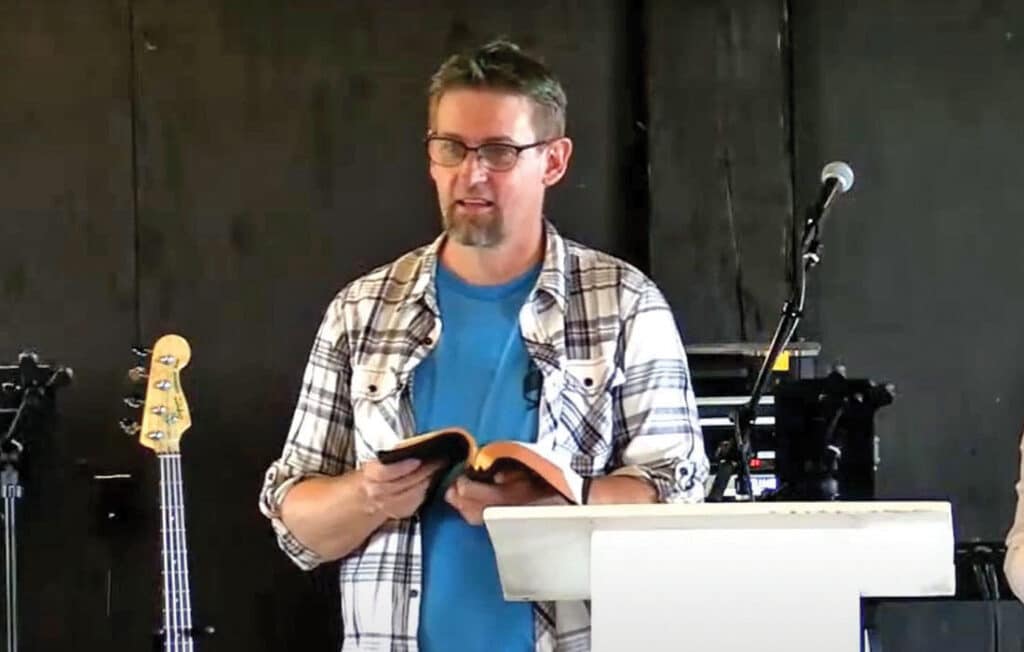
The congregation—normally gathered in separate English and Spanish services—comes together for a single “One Hope” service. Pastor David Mathis preaches in English while a translator conveys the same message in Spanish.
“The gospel is for everyone,” Mathis said. “When we worship together, it shows that language isn’t a barrier for the family of God.”
From engineering to church planting
Hope Church launched in January 2019, but its roots stretch back to 2017, when its founding church began exploring how to expand its ministry. At the time, Mathis was a career software engineer and serving as a lay elder.
“God was shaping my heart,” he recalled. “With the encouragement of leaders around me, it became clear that He was calling me into full-time ministry.”
That call intersected with the conviction to plant on the east side of Kyle—an area more diverse economically, culturally, and linguistically. In the process, the launch team connected with a Spanish-speaking congregation that had been meeting separately in a different building. The two groups began exploring ministry together, and the vision took shape: two languages, one hope.
Launching a bilingual congregation brought opportunities and challenges. Hope Church began with English and Spanish services and occasional joint gatherings, embodying the vision of one church family. During its first year, however, the young church experienced challenges that tested its unity. “It was a difficult season,” Mathis admitted. “But even through that, God refined our vision and confirmed His call for us to be one church with two languages.”
Soon after, the disruption of COVID-19 added another layer of difficulty. Meeting in a school meant Hope Church had to close early during the pandemic. The church moved its services online and implemented creative solutions such as outdoor drive-in gatherings with live translation.
“That was the first time I preached through a translator,” Mathis said. “We saw God bringing Spanish-speaking families back, and we knew He was at work.”
‘Something special’
By summer 2020, God opened another unexpected door: A local family who owned a wedding barn opened their doors for the congregation to use their property.
“At first we met outside on the grass—even from the back of a pickup truck,” Mathis said. “Eventually, they let us use the barn itself and they told us we could meet there for free on Sundays.”
The barn, once rustic with no air conditioning or heat, has gradually been upgraded by its owners. Today, it continues to serve as Hope’s weekly worship space.
“It’s not traditional, but it’s been God’s provision,” Mathis said. “People walk in and sense something special. It reminds us the church isn’t a building—it’s God’s people.”
Around the same time, God provided in another remarkable way. A local landowner donated a parcel next to the barn where Hope Church now meets—across from a middle school and beside new apartments, which has become a hub for youth ministry and community outreach. Later, additional gifts and partnerships allowed the church to prepare the site for ministry.
“It’s exactly where we need to be,” Mathis said. “From the very beginning, we’ve seen the Lord provide at every step.”
As Hope Church was preparing to launch, Mathis and his wife went through the church planter assessment process with Send Network SBTC, receiving encouragement, oversight, and resources for the new congregation.
“We are grateful for the partnership of the SBTC and local Baptist associations,” Mathis said. “They walked with us from the very beginning and helped provide accountability and encouragement.”
That connection has continued, with Southern Baptists of Texas Convention leaders offering training, networking, and financial support at key moments. For Mathis, it has been a reminder that Hope Church is part of something larger.
“It’s been important to know we’re not alone,” he said. “We’re one church among many, united in the same mission.”
“It’s been important to know we’re not alone. We’re one church among many, united in the same mission.”
—David Mathis Tweet
‘We belong to one another’
Today, Hope Church maintains English and Spanish services each week, with the monthly combined One Hope service serving as a visible sign of unity. In every
format, translation is intentional and in person. “It takes more effort,” Mathis noted, “but worshiping together reinforces that we belong to one another.”
Though modest in size—about 65 people—Hope’s congregation represents a wide range of countries: Mexico, El Salvador, Argentina, Puerto Rico, Cuba, Spain, and more. That diversity shapes discipleship. During the pandemic, for example, an English-speaking member mentored a younger Spanish-speaking mom using a simple online translator and persistence. “It’s a lot of work,” Mathis said, “but it glorifies God—and it bears fruit.”
Hope Church’s donated land has become a launching pad for ministry, including soccer camps, Easter sunrise services, family carnivals, and neighborhood outreach events. The church has also partnered with nearby congregations, including another bilingual fellowship, to extend its reach.
A site plan for future development is nearly complete, but Mathis says the church remains focused on one step at a time. “We’ve learned that we can trust the Lord to provide. He’s already given us more than we could have imagined.”
For Mathis, Hope Church’s story is not only about one church, but also one of encouragement for other churches. “Ask God to open your eyes to the people around you,” he said. “You don’t need a perfect plan—just take the next step to love your neighbors. The Lord will provide what you need.”
As Kyle continues to grow, Hope Church’s vision stays clear: one gospel, two languages, one family.
“When we sing and hear the Word in two languages as one church,” Mathis said, “you can sense the Spirit at work. That’s our one hope.”