
Month: April 2014

Maybe it”s complicated and maybe it”s not

The Planned Parenthood Federation of America’s latest effort to whitewash their sepulcher is puzzling. Knowing that most evangelical Christians find their work pretty repulsive, the country’s largest abortion provider has trotted out their chairwoman, Alexis McGill Johnson, who describes herself as a Christian, to tell us that abortion is “complicated.” Everyone who is shocked to hear a pro-abortion liberal Christian describe the killing of more than a million unborn children a year as “complicated” raise your hand. No one? Me neither.

Mrs. Johnson is only saying what liberals, liberal Christians, liberal Baptists and even liberal Texas Baptists have been saying since 1973. Perhaps we should stipulate that unmarried pregnancies, single motherhood and unfit parents are a big, complicated mess. Will that move the dialogue on to explaining the sordid source of Planned Parenthood’s power and income? When asked about the greater success Planned Parenthood has had drumming up abortion business in minority communities, the chairwoman pointed out not only is this also complicated but it is also a civil rights issue comparable to the Voting Rights Act.

In an effort to downplay the abortion business Planned Parenthood does, she pointed out that only about 10 percent of their business is abortion. Why then does this industry leader raise and spend millions to build giant abortion clinics; why do they turn out thousands to disrupt the Texas Senate’s deliberations? As I suggested last year in a TEXAN column, it may be because this mere 10 percent of their business actually generates a third of their income. I remind you that it was not Planned Parenthood’s right to hand out condoms, refer people to actual doctors for breast exams or even give terrible, anti-family advice that was at risk when Texas passed a bill to require higher medical standards for the state’s abortion industry. It was the ability of substandard clinics to make money from abortions—even late-term abortions that dispatched a thousand orange-shirted protestors, and a gubernatorial campaign.

But let’s look at 10 percent for a moment. What percentage of abortions are late-term each year? The answer is 1.5 percent. Those 15,000 or so human beings sound like a worthy cause for pro-lifers but piddling business for abortionists. And yet, they fight as though this small percentage matters. What percentage of Americans identify as homosexual? Gallup says 3.4 percent but some say it’s higher, though not 10 percent. And yet that portion of our population has launched a hundred court cases and now will likely force some Americans out of business and cost others their jobs. What would you say about a man who spends 90 percent of his weekly 119 waking hours feeding the hungry and volunteering in a pediatric cancer clinic, but the other 11.9 hours as an arsonist? How about a florist or baker who gladly accommodates 97 percent of her customers who want help with a wedding but who will not accept the 2 or 3 percent who want to have a same-sex ceremony? What are her chances? No one is mollified by hearing that Planned Parenthood manages to set the industry standard for abortion but with only 10 percent of their customers. Nothing could be further from relevant.

A big thanks to ChristianPost.com for running this interview. It shows how incredibly clueless American radicals can be. Those who were pro-abortion before reading the story will say, “See there!” And those who were not will say, “So what?” I guess it also points to the huge span of beliefs called Christian in our day. We know that but it’s a little startling when we see someone use casually a term that for us holds a very specific and holy meaning. Perhaps there is a cynical use of “Christian” in this case. Pro-lifers have no reason at all to muddy the meaning of the word; the chairwoman of the Planned Parenthood Federation of America has more to gain if she can shave off a few undecideds. She didn’t say anything about abortion that an atheist couldn’t have said. It’s complicated, yes. It’s all about rights and freedom, yes. But attaching the term “Christian” added nothing to the same rhetoric pro-abortion America has been using for decades.

“Complicated” doesn’t mean that same thing as “tragic” or even “difficult,” by the way. Sometimes it’s very difficult to do or live with the right decision. Often, taking the right path will make our lives much messier. I’m not sure the difference between right and wrong, or life and death, is always complicated in itself. But when it is, alive and dead are still the same outcomes. Feeling conflicted about it is of very little use. 
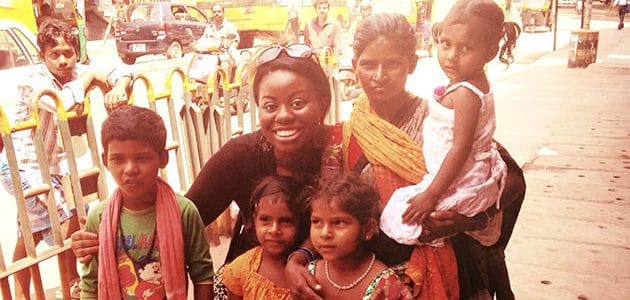
In India, Baptist workers bring hope to hopeless slums

EDITOR’S NOTE: *The names of the American workers living in India have been changed to protect their work.

Seneca Calhoun did not feel right leaving. For one week she had labored in the slums of a largely unreached region of India, pouring herself into the lives of women and children and an American couple called to minister there. To return to the United States without knowing when she would be back broke her heart.

“One lady didn’t want me to leave. She wanted to leave with me,” Calhoun told TEXAN Digital.

She was one of seven SBTC volunteers who traveled to India to assist the couple and about 50 indigenous pastors.

The tearful Indian woman was a recent convert to Christianity—risky in a country dominated by Hindu and Muslim prohibitions. Anti-conversion laws and familial ostracism puts all new believers, especially women, in harm’s way. And in the slums women and children suffer at the hands of abusive husbands and fathers who often drown their own despair in alcohol or give their pre-pubescent daughters in marriage to adult men.

Yet into those dire circumstances Ben and Sara* speak hope, drawing people into the light of Christ one at a time in a land of 1.23 billion souls.

“This is a dark place. Satan definitely is working here,” Sara said via email. The couple has served five years in the region. “People here worship 330 million gods of stone. To see one come to (Christ) is such a thrilling experience.”

The SBTC has partnered with Ben and Sara and the India Baptist Society for the past four years. The mid-March trip was the second involving convention representatives.

Although it was her second trip to the region, Calhoun was nonetheless moved by the deep spiritual depravation. Given the opportunity to minister to middle-class and poor women, Calhoun recognized the same needs in them all.

“I could see the hurt in some of these women’s eyes. And the pain,” she said.

And for those without any material means, the suffering is only compounded. In the cities’ slum regions—squalid plots of land crammed with makeshift homes pieced together from scavenged scraps of tarps, cardboard, and, if fortunate, sheet metal—living is barely preferred to death for many of the women.

“It is a common practice for husbands to beat their wives. I’ve patched up several women who have come to me with bruises and cuts. The women are very sad here. They easily talk of dying and how good it will be to get out of their troubles. They only stay alive for their children,” Sara said.

Alcohol serves to fuel the violence. Ninety percent of the men in the slums are alcoholics who spend the wages for their manual labor on their addiction, Sara said. If their wives earn money it is confiscated to buy more alcohol instead of food for the family.

But Sara and the SBTC team of women were a welcome contrast last month. They graciously entered a tent home offered for an intimate gospel meeting, which was quickly filled to overflowing with women and children. A small grass mat, put out for the guests, covered the dirt floor as Calhoun’s head brushed the tarp ceiling.

As was her routine, Sara told Bible stories and led the humble assembly in songs and prayers. Calhoun, who couldn’t help noticing how young the mothers were, watched as they listened intently and mimicked the worship, not fully comprehending but learning.

Sara said she parlays the spiritual teaching into academic and vocational education.

“The lack of education makes such a difference in how both the children and the parents think,” she explained. “It’s a vicious circle to break—getting the kids in school and teaching them there is more than just slum living.”

Benefiting most from the education are young girls who, if of no economic value to their families, will be given in marriage to adult men. As of this writing in mid-April, Sara and Ben called for prayer partners to intercede on behalf of an 11-year-old girl pledged in marriage by her parents to a 21-year-old man.

Ben said March had been a wonderful month for the girl. She had completed the English curriculum with excellent marks and her English was progressing rapidly. But the first of April the girl’s mother took her from the city school to a Hindu temple in their home village 12 hours away and pledged her in marriage.

Although illegal, the ceremony is culturally binding. Ben said he could pay police to intercede on the child’s behalf. But the family could counter with a bribe to maintain the contract.

“The law is what you pay it to be,” he said.

Pleading for intercessory prayer, Sara in an email newsletter: “This child has not even ‘matured’ yet, but will be married off soon! [She] is a true believer in Christ and has renounced Hindu idols and worships Jesus only. Frankly, she is fearful, worried, and does not want to be married. Her pitiful plea to us was, ‘Auntie, I am too little. I don’t want to be married.’ But we are asking God to intervene.”

The religious and cultural hierarchy of the predominantly Hindu society relegates the slum residents to the margins of society where they have no hope in this life or beyond. But those seeking relief from mere survival find sanctuary in the Help and Hope Center, a house-turned-multi-purpose facility led by Sara and Ben. Children come for meals, lessons, showers (with lice shampoo) and hugs—lots of hugs.

“When they’re there they smile all the time,” Calhoun said.

In an effort to teach young girls a marketable skill and protect them from the ravages of childhood marriage, Sara started a sewing class. With only one machine and five students, lessons are taught by a “dear Muslim friend,” including even the teacher in the overarching gospel lesson being taught at the Center in word and deed by Sara and Ben.

The needs of the people they serve are overwhelming. Sara said there are days when she just goes home and has a good cry.

Calhoun witnessed the strain but also the incredible resilience. She said she would return repeatedly to encourage her friend and the women she met. Meanwhile, she said she will minister in prayer from Texas.

Sara said she feels those prayers.

“Without it, we can do nothing. Often I feel so tired and discouraged, and then I think of those back home who are praying for us. I feel those angels lift up my arms and give me the push I need to get back in the battle.”

In addition to prayer, the greatest resource the couple has for reaching the lost in India is its own people.

“If we can win some and train some—then pray over that work—we believe God will use them to do the work. This culture is so steeped in rituals and traditions that an American can’t break. Only (God) can change them.”

Trip to India convinces SBTC team: More support needed to enhance gospel work among largely unengaged region

Regardless of age, gender, race or stage of life, the impact of an overseas mission experience can be jarring, heartbreaking and life changing.

Jim Richards, 61-year-old executive director of the Southern Baptists of Texas Convention, and Ryann Mathews, a 22-year-old student and daughter of an SBTC pastor, were part of an SBTC group that traveled in March to India to labor alongside Southern Baptist workers and local pastors in witnessing and preaching among Hindus and Muslims. A veteran of more than a dozen mission trips around the world, Richards’ experiences far exceed those of Mathews, who was traveling abroad for the first time. Despite the disparity, the Holy Spirit similarly moved them as the team grieved for the desperate physical and spiritual poverty of the Indian people and reflected on widespread shallowness in churches back home.

“It was absolutely heartbreaking to see the people blinded. It makes the pages of the Old Testament just leap to life,” Richards said.

More must be done to reach the lost with the gospel, Richards and Mathews agreed, and to rouse American churches from indifference.

That goal may seem insurmountable in places like India, where the government forbids evangelism, Christian converts are ostracized by their families and Christians make up less than 2 percent of the population in a nation of 1.2 billion people.

The dark spiritual condition was profoundly evident in the deplorable living conditions of India’s street people and their veneration of carved images in a Hindu temple ceremony. The SBTC team sadly watched as worshipers presented offerings to a lifeless statue while their fellow Hindus, living in squalor, begged in the streets for daily needs.

“The people are so religious, so devout. But for what?” Mathews asked. “It broke my heart. They have a god for everything. Jehovah God has everything!”

Yet amid the darkness shine small points of light—namely, several International Mission Board workers and about 50 native church planting pastors. Answering the call by IMB President Tom Elliff to adopt Unreached and Unengaged People Groups (UUPGs), the SBTC joined hands with the missionary in southern India, partly due to the convention’s relationship with a North Texas church plant reaching Indian immigrants.

This was the convention’s second trip since adopting the IMB couple about four years ago. The team appraised the effectiveness of the partnership and provided resources in the form of preaching, mentoring and encouragement.

“A people group is unreached when the number of evangelical Christians is less than 2 percent of its population. It is further called unengaged when there is no church planting strategy consistent with evangelical faith and practice under way,” according to the IMB website.

Richards said it is imperative that Texas churches and associations join the effort in engaging and reaching the lost overseas. While the IMB pays salaries and some ministry expenses, there are few financial reserves to fund specific projects the missionaries undertake.

The SBTC has helped fund projects through the India Baptist Society—including the construction of a multi-purpose facility used by the missionary and the pastors—and facilitated an ongoing connection with national workers. Richards spent two days in one region teaching pastors. Some traveled 8-10 hours and slept on the meeting room floor just for the opportunity of training and fellowship.

Mathews spent her week “just genuinely loving on” street children and their parents. Witnessing the nature of their existence was physically, emotionally and spiritually overwhelming, she said.

Fascinated with India since high school, Mathews said she believes her mission opportunity was divinely orchestrated. Her father, Tony Mathews, pastor of North Garland Baptist Fellowship and a seasoned mission-team volunteer, did not try to soften the reality his daughter would experience.

“Whatever preconceived ideas you have about missions, throw them out,” Ryann Mathews said. “I was broken. Totally.”

Richards said: “Observing people who have never been on a mission trip is like watching a light being turned on. A person’s entire countenance changes when they see the lostness and needs of others in some very difficult places.”

The team returned to the states with a renewed burden for the lost abroad and at home. Having fellowshipped with Christians whose lives and livelihoods are threatened if they heed the Great Commission, Richards said, “I see the shallowness of the church in America. It grieves my heart that we take Jesus flippantly.”

Mathews said she has no shame or guilt for her material possessions as some do after witnessing dire poverty. Instead, she realized she had taken for granted something less tangible yet far more valuable—her freedom.

During her visit, Mathews had frequent opportunities to engage a young Muslim mother who made saris for the women on the SBTC team.

“I would tell her ‘Jesus loves you’ and ‘He died for you,’” Mathews recounted.

At the end of the week the woman gave each team member a handmade bookmark on which she had written, in Arabic, “Jesus is Lord.”

Mathews said she believes the woman wanted to profess Christ but was afraid of the repercussions.

The consequences of conversion, for Muslims and Hindus, can mean being ostracized from their families, losing their jobs, even death. Hindus, who believe in millions of manifestations of their one god Krishna, must fully process the concept of one God for all people before placing their trust in Christ.

When they do, Richards said, “They are repenting of all other gods and that Jesus Christ is the one and only true and living God.”

Each trip supports Christians in the mission field, emboldens the volunteers’ witness at home and sparks in them the desire to return to the field. Mathews said she knows she will go back but not when. On their last day of ministry in the streets, the mother of a toddler to whom Mathews grew especially attached asked Mathews when she would come back.

“I’ll try in a year” was all Mathews could think to say.

Crestfallen, the mother replied, “That’s too long.”

Oregon county surprised by use of aborted babies as “energy source”

A Catholic newspaper in British Columbia, Canada has reported that medical waste from Canada, including aborted babies, was being sent to a Marion County, Oregon power plant to be burned for electricity production in Oregon homes.

The practice has reportedly been halted pending an investigation by local officials in Oregon, who were quoted as surprised and troubled by the finding.

The Associated Press reported that Sam Brentano, Marion County board of commissioners chairman, was halting human tissue from being used at the longtime waste-to-energy plant.

“We provide an important service to the people of this state and it would be a travesty if this program is jeopardized due to this finding,” he said in a statement, according to the AP. “We thought our ordinance excluded this type of material at the waste-to-energy facility. We will take immediate action to ensure a process is developed to prohibit human tissue from future deliveries.”

A British Columbia health ministry spokesman told the AP that health authorities there contract with a third party to send “biomedical waste, such as fetal tissue, cancerous tissue and amputated limbs,” to the Oregon plant.

I’m not sure on why the panic by the Marion County commissioners—unless they believe human life in the womb has sanctity. I hope that’s the case. Too often people are repulsed by the thought of such things, but those sentiments can be numbed with time and indoctrination provided they have no theological base to hold to.

If we are merely material beings, no biggie. Get over it. Apparently in Canada they understand this more than in Marion County, Oregon.


Crimean Baptists face uncertain times

KIEV, Ukraine—Baptist workers in Russia and Ukraine are uncertain what effect the recent Crimean referendum to secede from Ukraine and join Russia will have on churches in the region.

Although there is freedom of religion in Russia, national identity is tied to the Orthodox Church. Protestant denominations, which are classified as cults, are treated with mistrust. Laws related to religious activity are more tightly controlled in Russia than in Ukraine, where evangelical Christianity has surged since the early ’90s.

“Baptist Church leaders are not sure what standing they will have with the new government,” said Tim Johnson,* an International Mission Board (IMB) representative in Kiev. “The freedoms of religion and the protection of the Ukrainian constitution are now lost and what standing they will have in the transition is uncertain.”

The March 16 referendum in Crimea has left the region torn between two nations. Russia has claimed the region with a strong military presence, but Ukraine and its allies do not acknowledge the legitimacy of the vote. Residents of Crimea are living with the reality of having their citizenship, pensions, currency and property documents in limbo.

“There is an overhanging sense of the unknown,” Johnson said.

John Green,* an IMB representative in Russia, said Russians generally feel that Crimea belongs to Russia. Crimea was given to Ukraine as a gift when both were a part of the former Soviet Union. When Ukraine claimed independence in 1991, Russia lost Crimea.

“What is creating unease is how Russia is perceived by the rest of the world,” Green said. “Russians want the rest of the world to see them as strong and courageous, and Baptist Russians want to see their countrymen trusting in God and not just their country.”

A third player in this drama is the native people of the land, the Tatars, who make up less than 15 percent of Crimea’s roughly 2 million people. Sunni Muslims of Turkic origin, the Tatars began returning to Crimea some two decades ago. They are deeply suspicious of Russian rule following the mass deportation of their ancestors to Central Asia by Soviet authorities in 1944, and many strongly protested the March 16 referendum.

Crimean Baptist pastor Kostya Bakonov, who leads a church in Simferopol, said many people are spiritually open because of the ongoing hostilities.

“Many people in Ukraine have been searching for answers and are seeking the answers from churches and ministers,” Bakonov said. We praise God that he is opening hearts to reveal himself.”

Johnson confirmed this sentiment. “It’s amazing how much easier it is to talk to people now,” he said.

Bakonov asked for continued prayer for the people of Crimea as they navigate this time of transition. “I fervently believe the crisis in Ukraine is not only about the political stability in the country and region but also for the souls of men,” he said.

*Name changed

Alvord church touts CP”s global impact

ALVORD—Hopewell Baptist Church, nestled a few curvy miles off Highway 287 in North Texas, is a modest church. It offers a nursery as needed, has one Sunday School class and fits all its announcements on a small corkboard outside a two-stall bathroom that the pastor and his wife clean themselves.

But for Hopewell Baptist, small would be a misnomer.

Hopewell Baptist operates on a big-vision mindset, taking decidedly large strides in supporting missions and ministry through the Cooperative Program—the collective giving arm of Southern Baptists. As a church, members of Hopewell have committed to pass 10 percent of their annual budget through the CP via the Southern Baptists of Texas and Southern Baptist conventions—all in an effort to extend their reach beyond their community to the far corners of the globe.

Pastor Timothy Pigg, a Florida native and master of divinity student at Southwestern Baptist Theological Seminary, says Hopewell members realized that on their own, they could not do much in the battle to win souls globally, yet they also knew they were not excepted from the Lord’s instructions in Matthew 28 to go into all the world proclaiming the good news of Jesus Christ. From where they sat in a small white church situated just up the hill from a cow pasture and an unmarked railroad crossing, it seemed their influence was somewhat limited.

“We do not have the financial resources to do what the church at Antioch did with Paul,” said Pigg, who grew up the son of an associate pastor now serving at First Baptist Church in Naples, Fla. “As a smaller church, we cannot financially support a full-time missionary, but we recognize our Great Commission obligation to make disciples of all nations. We were stuck in a quandary.”

The CP, however, has provided Hopewell a chance to make big waves for Christ, even from their rather remote and out-of-cellular-range location.

“We decided that partnering with other like-minded churches would allow us to impact the kingdom of God in ways that would otherwise be impossible,” Pigg said, explaining that increasing their contribution through the CP served as part of the solution to the church wanting to up its efforts in missions and evangelism. Pigg said the church also takes Lottie Moon, Annie Armstrong and Southwestern Baptist Theological Seminary offerings in answer to God’s call to sacrificial giving.

“Another reason why I support giving through the CP is that is allows me to teach my members the importance of unity and cooperation,” Pigg said. “The nature of the CP is churches working together to accomplish one goal. As a pastor, I want a spirit of unity to undergird every ministry we do as a local congregation. The CP allows me to remind my members how we have been called to a greater service for God that involves our cooperation.”

140th anniversary celebration
In keeping with the church’s big vision was the service it held April 6 commemorating Hopewell’s 140th anniversary. The celebration, which coincided with CP Sunday—a day churches make a concerted effort to recognize the value of the Cooperative Program and emphasize their continued and fervent support of Southern Baptists’ giving channel—included a sermon by Southwestern Seminary President Paige Patterson and music led by Don Wyrtzen, Southwestern church music professor, and Leo Day, church music dean.

Dorothy Patterson taught a women’s Sunday School class, and SBTC Minister-Church Relations Associate Ted Elmore presented a plaque of commendation on behalf of Executive Director Jim Richards and the convention for Hopewell’s faithful ministry over the past 140 years.

Nearly 100 people packed into the two sections of pews for the celebration and then converged on the fellowship hall to share a Texas-sized potluck. Pigg said a normal Sunday service runs about 30 people—double the average attendance from little more than a year ago when the church called Pigg as its pastor.

Before preaching from John 3, Patterson commended the church for its longevity and also for its faithful giving through the CP, which not only funds missionaries but also substantially underwrites the preparation of missionaries, pastors and church leaders in the convention’s six seminaries.

“By your faithful giving and sharing with other churches all across the state of Texas and far, far beyond, in your giving to a common missionary fund, what you have done is to make it possible for Timothy Pigg and this young man and that young man and several others I see around here, all the way back to this young man [Patterson], for us to go to seminary at a third of the cost,” Patterson said.

Reduced education costs for students, Patterson said, equate to ministers and missionaries free to go wherever the Lord calls them without mountains of educational debt. This means, he explained, that those the Lord has called can begin their service with immediacy and focus.
That service, Patterson said, is an extension of the ministry of Hopewell Baptist Church, among thousands of others, as it financially and prayerfully backs those serving as the Lord’s hands worldwide.

“You have 5,200 career missionaries—that’s the largest mission force in all of the history of Christianity—in 2,000 years of Christianity—you have 5,200 missionaries representing you out there on the field in 138 countries,” Patterson told the congregation. “We have all those people scattered throughout the world that represent you and that represent me. Thank you, church, for what you have done across the years.”

Pigg said he prays the milestone in the life of Hopewell Baptist Church will stoke fires that have been burning among their body for the past 140 years into a furnace that will propel ministry and revival in Wise County, and thanks to the CP, the whole world. 

“My prayer is that the 140th anniversary service serves as a catalyst for the next 140 years,” Pigg said. “There is still much to be done for the kingdom of God, and I could not think of two people [Patterson and Day] who would celebrate God’s past work and challenge us to go forward with greater fervency to study and know God’s Word, than these two men.”

Trustees approve new apologetics master”s degree, elect four professors

FORT WORTH—Southwestern Baptist Theological Seminary trustees approved the formation of a Board of Visitors and elected new faculty members, among other business, at a meeting on the school’s campus April 9.

The Board of Visitors acts as purely an observatory and feedback-supplying body, and its members have no legal responsibility or authority to the seminary.

“They don’t have any oversight over the campus,” said Steven Smith, Southwestern’s vice president of student services and communications. “What they do is they come and they look around and generally gain awareness themselves of what’s going on, on campus, and they’re able to give us feedback. It’s one more avenue to engage people who are not formally or vocationally in the ministry, necessarily, and for them to come on to our campus and see what we’re seeing everyday.”

Pending approval by the seminary’s accrediting agencies, students may soon have another degree program from which to choose when they begin studying at Southwestern. The trustees voted to approve a master of arts in Christian apologetics degree as well as a certificate in the same field of study.

Provost Craig Blaising said interest in apologetics has been piqued among laypeople and academics alike and continues to be on the rise, especially among many students studying in the College at Southwestern. The creation of a degree focused on that area seemed a natural response to that interest, he explained.

“With the interest that has been communicated to us, we felt the time was right to go ahead and create this degree, as well as the certificate, because the certificate is there for maybe laypeople who have interest in apologetics, science and culture and who want to focus and get some training in that area.”

Though approved in concept by the trustees, the degree will still have to go through the approval channels of the accrediting agencies before students can begin the new degree.

Faculty Elections
The trustees also voted to elect four professors to the seminary’s faculty: Paul Gould as assistant professor of philosophy and Christian apologetics; Craig Kubic as dean of libraries; Vern Charette as assistant professor of preaching; and Keith Loftin as assistant professor of humanities. Additionally, the board voted to endow the Jesse Hendley Chair of Biblical Theology and elected Blaising to occupy it. Matt Queen, assistant professor of evangelism, was elected to fill the L.R. Scarborough Chair of Evangelism, also known as the Chair of Fire, formerly held by Patterson.

“Due to Matt Queen, this place is a different place than it was three years ago,” Patterson told the board early in the meeting, before the professor’s election to the chair. “Matt Queen has done exactly what I asked him to do. I told him, ‘I don’t care what you teach, I just want you to electrify this campus with evangelistic outreach. I want there to be only two kinds of people that set foot on Southwestern’s campus: those who are soul winners and those who are desperately ashamed of themselves and miserable because they’re not going to get involved in it.’ And he has done that unbelievably. The longer he is at it, I see how big of a failure I was during my first eight years here, and my hat is off to him, and I thank God for the others who have joined him.”

Officer Elections
The trustees made elections to their own board as well, voting to select Steve James of Lake Charles, La., to serve a second term as chairman, Bart Barber of Farmersville, to serve as vice chairman and John Brunson of Houston, to serve a second term as secretary.

Budget and other business
Trustees approved a $35.1 million budget for the seminary for the 2014-15 fiscal year, which represents a slight increase over the $32.9 million budget approved for 2013-2014. The board also approved audits for the seminary and the seminary’s development foundation for the fiscal year ending July 31.

Patterson requested the board “receive the report of the successful conclusion” of the 2009-2013 strategic plan, which it did unanimously. He then also asked that they approve the 2014-2019 strategic plan, which Patterson said includes items such as libraries, faculty and staff compensation, and upkeep to the physical plant.

Filipino village awakened to gospel by SBTC”s Disaster Relief efforts

A small-scale awakening continues in Agojo, the Filipino fishing village in the province of Capiz devastated by Typhoon Haiyan last November, as disaster relief workers minister there under the direction of Garry and Sherry McDugle of Bois d’Arc Baptist Church in Palestine.

The McDugles, coordinators for the effort and disaster relief chaplains with the  Southern Baptists of Texas Convention, have been in the area since early January and will extend their stay until the end of April.

Volunteer teams from churches in Georgia and Texas have assisted in the efforts.

Nearly 80 Filipinos have made decisions for Christ followed by dozens of ocean baptisms and the start of multiple Simbalays, or Filipino home churches.

These new believers face challenges and need prayer, volunteers said.

“Some will be ostracized from their families, friends and communities,” Garry McDugle said. “Here, it is not well received for one to be baptized outside the Catholic faith.”

At the conclusion of an ocean baptismal service, the McDugles’ driver, Bert, expressed curiosity and after hearing the gospel, he too asked to be baptized.

Filipino pastor Ronald Calina conducts the beach services. On March 8, at one evening service, 30 adults and 15 children prayed to receive Jesus.

The scene could have occurred on the Sea of Galilee, Sherry McDugle said. Fishing boats rocked gently offshore, nets cast out, while the families of the fishermen—women, elderly parents and fishermen themselves—listened attentively to the gospel.

A young boy took Sherry McDugle’s hand and explained, smiling and pointing aloft, that he was not going to hell but to heaven.
While the gospel is at work, the physical work of recovery and rebuilding also continues.

Much progress can be seen at the local elementary school, painted by volunteers from the Georgia Baptist Convention. The Georgia contingent completed work on 80 sites and even installed windows in the Agojo daycare, Garry McDugle said.

“I just showed them the need and they went for it,” said McDugle of the team who returned to Georgia on March 14.

Teams from Texas, including volunteers from First Baptist The Colony and First Baptist of Brownsville, have rotated in.

“We have over 250 work orders,” said Garry McDugle, who noted that 30 of the needed 55 10-foot by 10-foot shelters have been completed and that 10 carpentry teams remain busy.

Baptist Global Response and the SBTC have provided $100,000 in funds to meet the region’s needs, but individuals are still encouraged to donate to the effort. More DR teams are also needed, said McDugle, who emphasized the effectiveness of smaller two-person teams like First Baptist The Colony’s Wally Leyerle and Jake Martinez.

SBTC DR teams have assisted schoolteachers who live outside the Agojo neighborhood but work at the Agojo elementary school. One, a mother of five named Gina whose husband had suffered a stroke and pneumonia prior to the typhoon, commutes to work 45 minutes twice daily by motorcycle. Her home was in the eye of the storm and debris remained scattered about. As DR workers gathered to pray with Gina’s family, neighborhood residents joined them.

The family of Belinda, another teacher who lives just outside Agojo, had huddled underneath a table during the typhoon’s blast. Belinda’s husband lost his fishing boat, the family’s means of livelihood, to the storm. Tears welled up in Belinda’s eyes as DR workers arrived with sheets of corrugated metal to repair her home.

Just as Belinda will never forget the November day when the typhoon destroyed her island, neither will she forget that March day when SBTC DR workers arrived to help and to pray. She requested and received a new Bible to replace hers that was lost during the storm.

Stories abound of Filipinos coming to the Lord. There is Nenitea, a laborer likely in her 40s, recently widowed, who with her grown daughter trusted the Lord. Jessa, a 16-year-old who was befriended and given a Bible by the McDugles more than a month ago, recently trusted Jesus, as did her best friend, her father and family of six. Even the wife of the local Agojo elected official or captain has expressed interest in learning more about Jesus.

“Please, please keep praying for everyone here,” Garry McDugle said.

“Jesus is wooing the community,” Sherry McDugle added.