Month: May 2012

On gay issue, SBC leader condemns harsh language

The Southern Baptist Convention’s national strategist for gender issues has released a statement condemning the harsh language of two independent Baptist pastors from North Carolina whose remarks on homosexuals and gender identity have gone viral on the Internet.

The controversial statements came from pastors of churches not affiliated with the 16-million-member Southern Baptist Convention, but “they still stand as reminders to us—not only pastors, but all believers—that above all else we must represent the heart of Christ,” wrote Bob Stith, a retired Southlake, Texas pastor who has served the SBC in the gender issues role since 2007.

Stith, who has said he was once “negative and condemning” towards homosexuals, wrote in a May 23 statement released by the SBC’s Ethics & Religious Liberty Commission that Southern Baptists seek to be “proactive and redemptive in reaching out to those who struggle with unwanted same-sex attractions.”

“From the video clips it would appear that both men pastor fairly large churches. I wonder how many people in those congregations were gripped with the fear that their personal struggle might be discovered,” Stith wrote. “And how many have loved ones involved in homosexuality? I wonder about the loneliness and isolation they must have experienced, knowing they could never share those burdens.”

Pastor Charles Worley of Providence Road Baptist Church in Maiden, N.C., described on one website as an independent, fundamental “KJV-only” congregation, drew attention from CNN’s Anderson Cooper and from other national media outlets after his rant against homosexuals went viral on the Web.

On May 13, Worley told his church: “I figured out a way to get rid of all the lesbians and queers. But I couldn’t get it past Congress. Build a great, big, large fence 50 to 100 miles long. Put all the lesbians in there. Fly over and drop some food. Do the same thing with the queers and homosexuals. And have that fence electrified so they can’t get out. Feed ’em and you know what? In a few years they’ll die out. Do you know why? They can’t reproduce.”

After someone shouted “Amen!” Worley continued, “You might as well ‘Amen.’ I’m gonna preach the hell out of all of it!”

It’s not the first time Worley has advocated execution for homosexuals. “Forty years ago they would’ve hung, bless God, from a white oak tree! Wouldn’t they? Amen,” Worley is heard saying in a 1978 sermon linked from the website sermonaudio.com and reported by the New York Daily News on May 23.

Amid criticism and threats of protests, some of the church’s members voiced support for their pastor, according to WCNC-TV in Charlotte, N.C.

“He had every right to say what he said about putting them in a pen and giving them food,” longtime member Geneva Sims told the station. “The Bible says they are worthy of death. He is preaching God’s Word.”

Another pastor, Sean Harris of Berean Baptist Church in Fayetteville, N.C., has since expressed regret for his words, claiming he was taken out of context and admitting he spoke carelessly after garnering attention on YouTube.

During the sermon leading up to the vote on a North Carolina marriage protection amendment, which voters passed, Harris told his church that when young boys begin acting effeminate, dads should squash those tendencies by stating “‘Man up, son, and get that dress off you and get outside and dig a ditch because that’s what boys do!’”

“The second you see your son dropping the limp wrist, you walk over there and crack that wrist,” Harris said. “Man up! Give him a good punch, OK? ‘You’re not going to act like that. You were made by God to be a male and you are going to be a male.’”

But in a subsequent YouTube video after news media scrutiny and outcry from homosexual activists, Harris tells an interviewer: “I have learned a lot from this, Justin. And I’ve learned that I need to be more careful and deliberate with my words. And I hope that if I take away anything from this incident, that I will be even better and more deliberate, more careful, with exactly the words I select.”

The SBC’s Stith responded to Harris by stating: “It is encouraging that Mr. Harris has backed away from those comments and pledged to be more careful. The real problem is the lack of understanding as to why this is problematic. Too many people, pastors and otherwise, have either said things like this or thought them, which is why I have consistently urged Southern Baptist entities to provide more training for our people.

“Don Schmierer’s excellent book ‘An Ounce of Prevention’ should be required reading for pastors—and parents. While this example is certainly extreme, I’ve heard far too many stories through the years of men and women who were wounded by well-meaning adults who employed some variation of this approach.”

Stith said he would “caution all pastors to be aware that in this cyber-savvy world, anything you say can be worldwide within moments. Paul says, ‘Let your speech always be with grace, seasoned with salt’ (Colossians 4:6). Will your words meet that standard? Will they hold out hope to anyone in bondage? Will they bring honor to Christ?”

For more information on the SBC’s ministry to people struggling with same-sex attraction and gender issues, visit the website www.sbcthewayout.com.

Official Statement

The complete statement from Bob Stith, SBC national strategist for gender issues, reads as follows:

“Those of us who have served on the Southern Baptist Convention’s Task Force on Ministry to Homosexuals have as a stated objective to help Southern Baptists be ‘proactive and redemptive in reaching out to those who struggle with unwanted same-sex attractions.’ Our goal has always been to help Southern Baptists and others develop compassionate hearts for those who struggle and their families.

“Unfortunately, the watching world too often has witnessed examples of the opposite. While I am grateful that the two most recent instances were not in Southern Baptist churches, they still stand as reminders to us—not only pastors, but all believers—that above all else we must represent the heart of Christ.

“The pastors’ comments that have rocketed across the Internet and been featured in so many news outlets also show a complete lack of understanding of how to minister to those struggling with this particular temptation. Real masculinity cannot be stereotyped. Attempting to force a sensitive son to share all of his father’s interests is a recipe for disaster. Children desperately need the loving involvement of their fathers, not their condemnation. (See Parenting the Sensitive Soul by Ricky Chelette.)

“Ironically, one pastor seemed to be arguing for a genetic causation. How else to explain his statement that the death of all homosexuals in one generation would eliminate future struggles with homosexuality? Even the American Psychological Association no longer argues for strict genetic causation. The sad truth is that the attitudes reflected in these comments are far more likely to exacerbate problems than to help them.

“From the video clips it would appear that both men pastor fairly large churches. I wonder how many people in those congregations were gripped with the fear that their personal struggle might be discovered. And how many have loved ones involved in homosexuality? I wonder about the loneliness and isolation they must have experienced, knowing they could never share those burdens.

“I would especially caution all pastors to be aware that in this cyber-savvy world, anything you say can be worldwide within moments. Paul says, ‘Let your speech always be with grace, seasoned with salt’ (Colossians 4:6). Will your words meet that standard? Will they hold out hope to anyone in bondage? Will they bring honor to Christ?”

Bryan, a founder of SBTC, dies

DENTON—Bobby Gene Bryan, 80, of Denton, a longtime pastor in Colorado, South Dakota and Texas and a leading figure in the founding of the Southern Baptists of Texas Convention, died May 16 at Denton Regional Medical Center.

Bryan retired from the full-time pastorate while at Cooper Creek Baptist Church in Denton in 1996 but continued to serve, perhaps most notably as chairman of the transition team that in 1997-98 helped form the Southern Baptists of Texas Convention.

Born Sept. 11, 1931 in Dallas to Roberts Owen and Lucile Bryan, he graduated from Woodrow Wilson High School and Howard Payne University. In addition to Cooper Creek, Bryan pastored First Baptist Seagoville, Emory Baptist in Emory, Eastern Hills Baptist in Garland, and Grace Temple in Terrell. He was a member of First Baptist Church of Krugerville.

Bryan was preceded by his wife of 50 years, Betty Sue Wilson Bryan. He is survived by second wife, Joyce Bryan of Denton; daughter, Darla Jeanette Melton of Emory; son, Stephen Gene Bryan of Winnsboro, La.; and stepchildren Geary Watson, Stephen Watson, and Melanie Sweatman.

Other survivors include a brother, Morris Wayne Bryan of Dallas, six grandchildren and three great-grandchildren, plus five step-grandchildren and two step-great-grandchildren.  

The funeral was May 19 at the First Baptist Church of Krugerville with burial at the Cooper Creek Cemetery.


SBC far from monolithic, strategist says

Southern Baptists signaled their intention to broaden ethnic involvement, passing a set of proactive recommendations last year at the annual meeting in Phoenix. In his new role as presidential ambassador for ethnic church relations, Ken Weathersby has begun the task of helping implement those recommendations by simply listening.

“The main goal is to make sure we focus on the task at hand, that is to penetrate lostness in North America and the world,” Weathersby told the TEXAN. “The way I have approached that, first of all, is by listening to the direction of where we’re going in convention life and how we want to be inclusive in anything we’re doing.”

Weathersby most recently served as associate vice president for ethnic mobilization at NAMB. He has previously served in leadership positions in NAMB’s church planting and evangelism areas as well. He has also served in an evangelism leadership role with the Tennessee Baptist Convention and pastored churches in Baton Rouge, La., and Cincinnati.

With over 10,000 ethnic and African American churches among more than 45,000 that make up the Southern Baptist Convention, Weathersby is convinced there is plenty to celebrate.

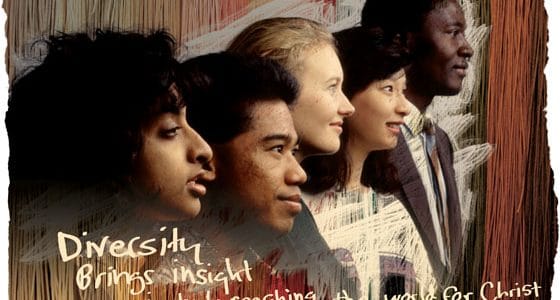
An exhibit at the annual meeting in New Orleans will illustrate the many faces of the denomination to show its diversity, he said.

“We have to highlight what God has already done in the life of Southern Baptists. For many years people have labored and worked hard to make sure we, as Southern Baptists, penetrate communities with the gospel,” he explained. “In doing so, we have been planting healthy, New Testament churches among all ethnic groups. We’re grateful to God for that.”

“We probably are the most diverse Protestant denomination because of the number of non-Anglo churches that are a part of our convention,” Weathersby said.

There’s no mechanism for counting diversity within predominantly Anglo churches, but Weathersby has seen enough multiethnic congregations to be encouraged. “It’s just amazing to see what God is doing based on building relationships and getting to know people in the community.”

Three advisory councils jointly appointed by the presidents of the Executive Committee and North American Mission Board will provide Weathersby and other SBC entity leaders an opportunity to hear from representatives of non-Anglo groups. An Hispanic Advisory Council appointed last September as a three-year ministry initiative will offer the perspectives Hispanic churches and church leaders bring to the common task of reaching the United States and other nations with the gospel. A similar group made up of African American representatives was formed next and a multiethnic group is yet to be named.

“We’re going to be listening to our church leaders and getting information from them on how we approach working together for the cause of Christ,” Weathersby said. “Right now we are in the listening mode.”

In meeting with various groups, Weathersby wants them to understand how their ministries can be magnified through giving to the Cooperative Program and the two mission offerings to send missionaries throughout North America and around the world. “As one writer said, we are not giving to the Cooperative Program. We are giving through the Cooperative Program,” he reminded.

As he coordinates efforts to implement the components of the SBC’s ethnic study report that was approved overwhelmingly last year, Weathersby will encourage ethnic churches to be full participants in Southern Baptist life.

He is encouraged by the election of four African Americans at state convention meetings last fall. “At the Southern Baptists of Texas Convention we are grateful to God that the convention called Bro. Terry Turner to be state president. That helps,” Weathersby said. “We have Roscoe Belton as state president in Michigan, Mark Croston as state president in the Baptist General Association of Virginia and Kendrick Curry in the D.C. Convention.”

Weathersby has no doubt that there will be a greater increase in the diversity of people serving on SBC committees, boards and commissions in the coming years.

Those expectations are a part of the recommendations passed by messengers to last year’s annual meeting. The notebook for the next SBC president will include an encouragement “to give special attention to appointing individuals who represent the diversity within the Convention.” The president will report the total number of ethnic appointees when names of the committees are released next year to Baptist Press.

The SBC president and Committee on Order of Business will be asked to give “due consideration to the ethnic identity of program personalities” enlisted for the annual meeting in 2013.

This year’s Committee on Nominations will include in its annual report in New Orleans the total number among its nominees that represent the ethnic diversity within Southern Baptist life.

“We see signs right now,” Weathersby said when asked if he expects to see progress in the inclusion of varied races and ethnicities.

“Here we are going to the convention in New Orleans with the potential of nominating the first black president of the Southern Baptist Convention, Pastor Fred Luter of New Orleans, and as first vice president Pastor Nathan Lino of Texas” who is white but of South African heritage.

“We see God is certainly at work,” Weathersby said. “I’m so glad that God has us on purpose making disciples among all ethnic groups. In doing so, people are getting to know one another and are recognizing because of the blood-stained banner of Christ we must work together for his cause.”

“Send Cities” effort rallying ethnic groups

Polish, Brazilian, Haitian, Romanian, African, Jew, Mainland Chinese, Slavic/Russian, Korean, Filipino, Hispanic, Japanese, Vietnamese, Laotian, Caribbean, Deaf, and Cambodian are just a few of the ethnic people groups who have been introduced to the Send North America strategy of the North American Mission Board in the past year.

With a commitment to mobilizing and equipping Southern Baptist churches to plant evangelistic churches throughout North America, NAMB is seeking participation from Southern Baptist ethnic church fellowships and African American congregations.

Forty ethnic leaders from across the U.S. and Canada heard from NAMB President Kevin Ezell last June as he underscored how important these leaders are in their spheres of influence and in NAMB’s new church planting strategy.

The new strategy will benefit ethnic networks and churches more than other groups, Ezell said, because “many of you are already established in the 26 ‘Send Cities’ we’re focusing on,” according to a report by NAMB writer Mickey Noah.

“We want to partner with you as we move forward,” Ezell told ethnic church leaders. “We need your help in encouraging your churches to step up to the plate and partner with us to plant more churches.”

With the creation of a NAMB-funded position for a presidential ambassador for ethnic church relations, the SBC entity will give special focus on ethnic churches and leaders to work together as a “Great Commission people with a Great Commission Heart,” the entity noted in its report to the SBC Executive Committee. Ken Weathersby, an African American, was named to that position in partnership with the Executive Committee.

The report also noted that five ethnic leaders currently serve on NAMB’s board of trustees.

“It’s about time Southern Baptists of all ethnic backgrounds worked together,” stated Paul Kim, a Korean multiethnic church planter and pastor in Boston who, at the 2009 SBC annual meeting, introduced the motion that led to the ethnic involvement study.

“That’s why I introduced the motion. We are all one family and can achieve more work for the kingdom together,” Kim said. He exhorted his counterparts to attend local, state and national Southern Baptist meetings. “Let people know who you are. Why do we even have so many ethnic fellowships rather than being one, working together?”

Weathersby emphasized, for example, that African American churches must plant Hispanic churches and Japanese churches must plant Korean churches and Slavic churches must plant Chinese churches—not just churches of their own ethnic groups. Working across cultures to plant new churches is what Send North America is all about, he said.

That’s been the approach of Paramount Baptist Church in Amarillo, which sponsors Korean and Hispanic congregations, as well as hosting a service for Afrikaners on campus. The Hispanic congregation, Iglesia Bautista Fuente Viva, is starting a congregation for English-speaking Hispanics.

For over 17 years, Paramount Baptist Church in Amarillo has used ESL as a vehicle for reaching 400 adults from 30 different countries, leading to 100 people professing faith in Christ and 25 baptisms. Over 125 members of Paramount are involved in the outreach effort, providing an opportunity to develop relationships that have attracted class participants to get involved in the church.

A combination of ethnic churches reaching people of their own ethnicity and working across cultures has been successful at the International Mission Board as well. Terry Sharp directs IMB efforts to strengthen relationships with state conventions and associations as they develop strategic mission involvement and engagement strategies with Unreached People Groups.

The Church and Partner Services office of the IMB has three departments that specifically relate to larger ethnic components in the SBC, according to the report provided to the SBC Executive Committee. Trustees, staff and hundreds of IMB missionaries come from ethnic minority backgrounds with Korean American missionaries represented at a significantly higher percentage than in the SBC as a whole.

“These ethnic missionaries maintain a close connection with their home churches, and specifically ethnic IMB events are frequently conducted in the churches and gatherings of SBC ethnic communities,” the report noted.

“For all of our folks it’s about strategy,” Sharp told the TEXAN. “Certainly, if there are projects they see that are strategic in those countries where they speak the same language, that would be very good,” Sharp said. “But Hispanics, for example, are serving in areas of the world that are Muslim and they’ve got more of an open door” than Anglos.

Jason Carlisle, missional church strategist, and Marcela Rivera, a mobilization specialist, both represent IMB in working with Hispanic churches to develop mission strategies overseas.

“African Americans can serve God all around the world, not just in places that have people of African origin,” shared Keith Jefferson, African American mobilization strategist for IMB. After returning from serving as a missionary among Brazil’s Quilombola people, Jefferson has been encouraging, challenging and training African American churches and people to be on mission with God.

“A missionary can be from any background because there’s someone that he can reach that no one else can reach,” Jefferson told IMB reporter Don Graham. “God uses our unique personalities to click with somebody in another country.”

As a Korean/Asian missional church strategist for the IMB, Gihwang Shin is encouraged by the response he’s seeing among mission-minded Korean Baptists.

“Some churches are really open to work cross-culturally beyond the Asian limit, so they go to Africa or South America to sponsor those churches,” Shin said. Many Korean Baptist churches have been successful in reaching Native Americans and are heavily involved with that ethnic group in the U.S. and Canada, he added.

Nearly 400 Korean Baptist messengers attended last year’s annual Korean Southern Baptist meeting in Carrollton, with 52 of the 190 churches represented accepting the IMB challenge to embrace unengaged, unreached people groups.

“I was amazed,” Shin said. “Out of 190 churches represented, it is a big number.”

Hyoung Min Kim, pastor of Denton Korean Baptist Church in Denton, has led his congregation to plant churches in Texas and sends teams overseas, and is eager to embrace unengaged, unreached people overseas. “To reach all the ethnic groups in the world, not just missionaries … but all the local churches should be mobilized in order to reach all of the world,” he told IMB reporter Alan James.
Prayer is the key to embracing the difficult places, he added.

“Without prayer it is impossible to reach those ethnic groups.”

SBTC State Bible Drill, Speakers” Tournament held

More than 30 students participated in the state finals of the SBTC Bible Drill and Speakers’ Tournament on April 28 at the convention office in Grapevine. The Bible Drill is divided by high school and youth.

SPEAKERS
In the Speakers’ Tournament, Alexandria Crocker of Cornerstone Baptist Church of Arlington won first place, with a tie for second place between Connor Torrealba of Tate Springs Baptist Church of Arlington and Mikaela Wilson of Cornerstone Baptist Church.

Others receiving the rating of Outstanding were: Cameron Burleson, Cornerstone Baptist Church; Conner Chambers, Prestonwood Baptist Church, Plano; Dominique Clark, Cornerstone Baptist Church; Victoria Clark, Cornerstone Baptist Church; Zachary Coleman, Cornerstone Baptist Church.
Paris Riggs, also of Cornerstone, earned an Excellent rating.

Students receiving Superior ratings were: Rachel Haire, Tate Springs Baptist Church; Abby Jenkins, Galloway Avenue Baptist Church, Mesquite; and Haley Talkington, North Oaks Baptist, Spring.

BIBLE DRILL
In the Bible Drill competition, youth division, Tyler Lantz of Prestonwood Baptist, Plano, earned first place. A tie for second place was shared by John Christopherson of First Baptist Church, Euless, and Robert Hill, North Oaks Baptist Church, Spring.

Also earning Outstanding ratings were: Amanda Harris of Southside Baptist, Brownwood; Rohan Koripalli, North Oaks Baptist, Spring; and Emily Torrealba, Tate Springs Baptist, Arlington.

Earning Excellent ratings were: Anna Clark and Marie Clark of First Baptist, Buna; and Carolyn Johnston of Prestonwood Baptist, Plano.

Earning Superior ratings were: Ryan Green and Mackenzea Tait of Bethany Baptist, Breckenridge; and Jacob Walters of Timber Crest Baptist, Waco.

In the high school division, Brittanie Phelps of Lake O’ the Pines Baptist Church won first place. Second place went to Emily Christopherson, First Baptist Church, Euless; and third place went to Keerthi Koripalli, North Oaks Baptist, Spring.

Others earning Outstanding ratings were: Susannah Christopherson, First Baptist Church, Euless; Nathan Curb, New Hope Baptist Church, Gorman; Carter Lantz, Prestonwood Baptist Church, Plano; and Hannah Strebeck, First Baptist Church, Lavon.  

Excellent ratings were obtained by Danae    Best, First Baptist, Buna; Hannah Bransom, Providential Baptist Church; and Hannah Valles, Bethany Baptist Church, Breckenridge.

Earning Superior ratings were: Haven Arias, First Baptist Church, Brookshire; and J.T. Valles, Bethany Baptist Church, Breckenridge.

Beyond mission boards, SBC agencies respond to growing ethnic diversity

The task of making Southern Baptists and others aware of the Bible’s position on racial reconciliation and ethnic identity has received significant attention from the Ethics & Religious Liberty Commission, the SBC entity assigned responsibility for addressing moral issues.

Bulletin inserts, articles, sermons and an analysis of issues and answers related to racial reconciliation and ethnic relations are available at erlc.com/race.

“In focusing on the human rights and immigration issues, racial and ethnic peoples are most often at the center of that debate,” the ERLC reported.

Ethnic leaders have been among the recipients of the ERLC’s annual awards with China Aid director Bob Fu, a leading advocate for the persecuted church in his native Asia, receiving the John Leland Religious Liberty Award in 2007. Last year, New Orleans pastor Fred Luter received the ERLC’s Distinguished Service Award in recognition of his work in spreading the gospel and meeting the needs of New Orleans residents following Hurricane Katrina.

As part of the annual “data call” requested by the Executive Committee of the SBC, the ERLC and other Southern Baptist entities provided descriptive reports of participation of ethnic churches and church leaders in the life and ministry of the respective SBC entity. (See related articles on information provided by mission boards and seminaries.)

EXECUTIVE COMMITTEE
As part of the Executive Committee staff, Baptist Press was asked to continue to provide news coverage to individuals of all ethnic groups and to carry stories that demonstrate “the wonderful works the Lord is accomplishing through the vital ministries of Baptists of every tribe and tongue and people and nation.”

According to the EC report, the convention news service extended the reach of Baptist Press en Español (BPEE), expanding the number of news stories translated from the daily BP lineup and increasing the number of Hispanic columnists that contribute to the weekly posting of BPEE, including the SBTC’s Mike Gonzales and Rudy González of Southwestern Baptist Theological Seminary.

BP also expanded the number of freelance journalists who write regularly for the news service, reflecting broader ethnic perspectives. Baptist Press has sought to carry regular news stories and features on a variety of churches and church initiatives that reflect the ethnic diversity found within convention work.

In late summer 2011, the office of convention communications and relations commissioned a series of 1,000-word essays on the various ministries of the SBC with a goal of translating them into the more dominant languages of first-generation immigrant churches that cooperate with the SBC.

People with a proficiency in English and the host language as well as conversancy with Southern Baptist doctrine, polity and perspectives are being enlisted to translate the brochures “Meet Southern Baptists” and “The Southern Baptist Convention: A Closer Look” into other languages. The Baptist Faith & Message confessional statement and an earlier version of “The SBC: A Closer Look” are available at sbc.net in Arabic, Chinese, French, Hindi, Korean, Portuguese, Russian, Spanish and Vietnamese.

The communications office also seeks to represent visually the many faces of Southern Baptists in its photographic postings in the print resources it produces. Also, the SBC helps churches and church leaders seeking information about how to complete immigration forms for legal immigrants who serve as pastors and church staff for language churches, in a manner that reflects and preserves Baptist polity.

The Committee on Nominations now provides a way for nominees to indicate their ethnic identity, thanks to the work of EC staff. They also encouraged the SBC president to select qualified candidates for the Committee on Committees that represent the SBC’s ethnic mix, and asked the Committee on Order of Business to be as inclusive as possible in choosing platform guests at the SBC annual meeting.

GUIDESTONE FINANCIAL RESOURCES
GuideStone Financial Resources is actively working to promote and encourage ethnic churches and ethic church leaders to be participants and ministry partners with the programs and services offered.
Websites and printed resources are available from GuideStone in Spanish and Korean. The call center employs multiple Spanish-speaking representatives, as well as offering an Akorbi language line to assist callers in any of over 100 other languages. Retirement plan and mission/church assistance information is also available in Chinese, Vietnamese, and French Haitian.

Shawn Dorrough of Guidestone’s new business development office meets several times each year with the National African American Fellowship to promote products and services and assist those who are current participants. He also represents GuideStone at the Black Church Leadership and Family Conference held annually at Ridgecrest, attends and teaches sessions at state convention fellowships for African Americans, and participated in last year’s Ethnic Summit in Denver.

GuideStone’s Miguel Perez works with Confraternidad Nacional de Iglesias Hispanas Bautistas de Sur, a multinational fellowship of Hispanic Southern Baptists, through an annual pastors’ conference and meeting to promote GuideStone products and services. He is a member of the SBC’s Hispanic Consortium and represents GuideStone at the pre-convention Hispanic Celebration, various state convention meetings and regional conferences for Spanish-speaking participants.

While Perez attends the annual fellowship of the Council of Korean Southern Baptist Churches and SBTC’s Asian Pastors’ Conference, GuideStone is adding a Korean employee to work to enhance participation of individuals and churches in the Korean community.

LIFEWAY CHRISTIAN RESOURCES
“LifeWay Christian Resources is constantly alert to opportunities that present ways to help spiritually transform all peoples from all cultures and backgrounds by offering biblical solutions for life,” according to their report to the Executive Committee this year.

The church resources division provides material in 20 languages with two basic evangelism and discipleship resources, “Share Jesus without Fear” and “The Call to Follow Christ,” offered in 50 languages. CRD employees work specifically with African American and Hispanic churches, with several events designed primarily for African American churches, as well as an urban Sunday School curriculum. Age-graded Spanish resources, conferences and webinars for Sunday School, discipleship, VBS and leadership help equip Hispanic congregations.

Nearly 5,000 Spanish language products are available in LifeWay Christian Stores with nearly 1,700 Spanish products at LifeWay.com/Espanol. Depending on the cultural make-up of a community, stores have sections for Spanish language products and materials of particular interest to African American churches and members, as well as in-store clinics and events featuring Spanish and African American authors.

Products in over 27 languages are offered by B&H Publishing Group, which is also the largest commercial publisher of Spanish Bibles in the world. MyStudyBible.com offers online Bibles in Spanish and Chinese through the Technology Division.

The Transformational Discipleship project by LifeWay Research was offered in English, Spanish and French. Current projects relate to African American church planting, cultural and religious research in Brazil and exploration of projects in South Africa, Philippines and Australia.

LifeWay Christian Resources employs hundreds of ethnic minorities, regularly attends minority job/career fairs, and advertises for particular ethnic minorities.

Multiethnic ministries helps keep world in mind

The SBTC’s multiethnic ministries office is well aware of the cultural changes in Texas, and among Southern Baptists in Texas.

Jesse Contreras, multiethnic ministries associate, works with the convention’s network of Hispanic churches and helps coordinate numerous Spanish-language events. The multiethnic ministries office also links consultants such as E.W. McCall, who is a liaison to African American churches, and Hyoung Min Kim, a Denton pastor who works with Asian congregations, to a growing diversity of churches around the state.

Contreras said a friend recently commented to him that she observed in a well-traveled hallway on a Texas college campus not a word of English spoken for several minutes as students meandered between classes.

“Perhaps she had caught a glimpse of what it means when people say, ‘the nations have come to us,’” Contreras commented.

“Our multiethnic ministries department welcomes the challenge to come alongside our churches to help them engage their ever-changing multicultural community around them. Most of these churches want to share the love of Christ to their neighbors but are simply at a loss as to how to take the first steps to reach them.”

Contreras said churches should intentionally celebrate an ethnic presence and purposefully communicate the gospel in the language of the hearers.

“ESL, after-school programs, child care, computer training are just a few of the ways that churches can take the initial steps in being the hands and feet of Christ without speaking a different language or knowing the complete intricacies of a specific culture,” he said.

“How fitting to think that after several rebukes and corrections the apostle Peter with all of his background, stereotypes, and partiality towards the Gentiles declares, ‘I see very clearly that God shows no favoritism. In every nation he accepts those who fear him and do what is right’ (Acts 10:34-35),” Contreras wrote.

Amid the diversity, the need for specific ethnic group ministries is still needed but it should not be understood as an ultimate goal, he added.

“Rather, it serves a strategic purpose in reaching the nations for Christ that are in our own backyard and incorporating them into the life of the larger body of Christ across ethnic, cultural, social, and demographic lines.”

Contreras said SBC resolutions and actions aimed at responding to increased diversity encourage all churches to “touch the nations in culturally sensitive ways and encourage believers to become cross-cultural ministers at home and abroad.”

The multiethnic ministries office hosts four regional weekend Hispanic conferences across the state throughout the year, in a format similar to the SBTC’s Equip Conference with breakout sessions on various facets of ministry.

Also, there is an annual Pastor & Wife Retreat, statewide Hispanic men’s and women’s conferences, and the Alto Frio summer student camp, which attracts not only Hispanic students but also Asian, African American and Anglos.

There are Spanish-language events around the SBTC’s Bible Conference in the fall and the Empower Evangelism Conference in the winter. The department also facilitates gatherings for the African American Fellowship and the Asian Fellowship during those fall and winter events.

Contreras said the three-day Asian Family Retreat (scheduled July 23-25 at Hyde Park Baptist Church in Austin) also attracts some Arab, Indian, Filipino, Nepalese, and Egyptian participants. SBTC has churches among those people groups, yet there is not enough representation to warrant a fellowship. So the Asian retreat is a venue to bring some of the groups into a larger fellowship as well, Contreras said.

African American Fellowship builds important bridges, consultant says

E.W. McCall said he was thrilled to find a home in the Southern Baptists of Texas Convention after retiring to Texas following 37 years as a California pastor and a trailblazer among black Southern Baptists.

One of the founders of the National African American Fellowship of Southern Baptists, McCall has a fondness for the SBC’s theological fidelity and its missions funding mechanism—the Cooperative Program—which he says is a gift from God.

These days, McCall, as the African American ministry consultant to the SBTC, is busy spreading his message among fellow African American pastors: the SBTC is a family worth belonging to.

“One of my passions is to help African American pastors see the value of being a part of Southern Baptists,” McCall said. “Once you see the benefits, the added value to your ministry, the blessing of the Cooperative Program, you feel proud because you know you are a part of something great. I’ve lived it and experienced it myself.”

There is still much work to do in forging relationships between the Anglo-dominant denomination and the growing number of immigrant ethnic groups and African Americans in its midst, but progress continues to be made, he said.

Upon McCall’s arrival in 2010, he took on the role of facilitator for the SBTC’s African American Fellowship and has been working to tell the SBC story to his colleagues, some of whom were already in the convention—some dually aligned with National Baptists—but not engaged in the missions enterprise or familiar with the history or mechanics of the Cooperative Program.

The African American Fellowship, McCall explained, “adds greatly to the larger group of the SBTC. It gives connection to the larger body and the African American pastors feel they are a part of something bigger.”

Southern Baptists do a good job of helping pastors with retirement, affordable life insurance, and a safety net for those pastors who retire without means. Add to that training events and relationships that add value to one’s ministry and church, and it is a message well taken, he said.

“I’ve had numerous pastors tell me, ‘I just felt disconnected and the fellowship connects.”

McCall told of one pastor he knows of whose church had given almost nothing through the Cooperative Program until getting to know McCall and other pastors through the African American Fellowship. Today that church is actively giving through CP to support missions in Texas and worldwide, he said.

“Leaders like Terry Turner (state convention president) and Tony Mathews (fellowship vice president) have been invaluable in telling the story of who we are,” McCall said. “The fellowship brings people together and helps them know how to operate in the Southern Baptist Convention, which is a benefit to everyone.”

In California, where ethnic diversity ran ahead of the rest of the country years ago, ethnic representation on state convention boards and committees has long been present.

Within the SBTC, it is running ahead of the rest of the SBC’s core states, but more progress needs to be made, he said.

In certain areas of the state, particularly outside the large cities, it is important that churches do more than merely welcome all kinds of people into their congregations; they must make them feel wanted.

“There is a difference. You can welcome people but not want them,” he said, and that cuts across all people groups, social classes, and churches.

The election of Terry Turner as SBTC president was “huge,” McCall commented. The expected election of Fred Luter next month as the first African American SBC president is historic and will have national and international ramifications.

“It speaks loudly to those constituents in the field that this is a push toward inclusiveness,” McCall said.

Hispanic scholarship recipient close to PhD.

DALLAS—Baltazar Alvarez III is excited to see what God will do in the next seven years based on what he’s seen in the last seven. As a scholarship recipient in the Hispanic Education Superhighway developed by the Southern Baptists of Texas Convention, Alvarez is about a year from finishing a Ph.D. in foundations in education at Southwestern Baptist Theological Seminary.

Quoting the British poet and hymn writer, William Cowper, Alvarez said, “‘God moves in mysterious ways, his wonders to perform.’ Seeing God’s will in my life is much clearer in the present than while experiencing it in the past. He has worked different aspects of my past to come together in ways that are fitting more perfectly every day.”

His first connection to Southern Baptists came in 1993 when he joined a Southern Baptist church in Dallas pastored by David Allen, now theology dean at Southwestern Seminary. Serving as a music intern, Alvarez followed his pastor’s advice and enrolled at Criswell College where he earned the bachelor of arts degree in biblical studies with honors.

“I can still remember how proud my parents were when I started my studies at Criswell back in 1998,” he recalled. “Their influence to persevere and complete anything I start has been a driving influence in continuing and completing my education.” Further encouragement came from his wife whom he described as “my constant companion, cheerleader, drill sergeant, life coach and friend.”

Allen provided Alvarez with additional ministry opportunity at MacArthur Blvd. Baptist Church in Irving, enlisting him to teach “Theology for Everyone” on Sunday nights. Former Criswell professor Doug Wood helped him refine his presentation skills in both academic and church environments.

After serving as an academic assistant and instructor, Alvarez was elected as an assistant professor upon completion of his M.A. in theology at Criswell. He began leading an annual cross-cultural mission practicum to Brownsville where students help with Vacation Bible School at First Baptist Church and share the gospel throughout the city.

When Criswell theology professor James Bryant told Alvarez about a new education commission begun by the SBTC, he learned of a scholarship named for the state convention’s second president, Rudy Hernandez, to assist Hispanics pursuing ministerial training at Jacksonville College, Criswell College and Southwestern Seminary.

“My connection to the SBC in 1993 led me to Criswell. My connection to Criswell led me to the SBTC. My connection to the SBTC led to my Ph.D. as well as my service to the SBC,” he said, referring to his service on the Committee on Committees for the annual SBC meeting in 2010. Alvarez also served on the SBTC Resolutions Committee in 2007, and the Education Commission, most recently as chairman.

Grateful for the influence of people like Hernandez who developed the idea of the Hispanic Education Superhighway, Alvarez said, “I am grateful to God for those who have been good stewards of their efforts and goods to give to such a venture as this. My hope is that I can return this stewardship with one of my own.”

SBC classrooms provide models of diversity

The classrooms of Southern Baptist seminaries provide a model for diversity with students representing most every ethnic background, numerous children of missionaries who grew up in another culture, and a fair number of professors who studied overseas or immigrated from another country.

For Southwestern Baptist Theological Seminary President Paige Patterson it’s a dream come true, having achieved a personal goal of recruiting an international faculty to teach an increasingly multiethnic campus.

“The presence of a large number of students from just about every conceivable ethnic background and the stellar achievement of men and women of these various backgrounds makes it incumbent on a seminary like ours, training for ministry in every part of the earth, to have a representative faculty that can speak to every circumstance possible,” Patterson told the TEXAN.

Twenty percent of Southwestern’s faculty comes from non-Caucasian groups or nationalities other than the United States. “The fellowship and the interchange of cross-cultural spiritual challenge have created the closest we can get to heaven on earth in a faculty,” Southwestern’s president added.

Current faculty include an African American, an Arab, an Australian, two Chinese, two Germans, a Jewish Christian, six Hispanics, seven Koreans, a Moldavian, an American Indian and a Zimbabwean.

“I am very grateful for these men and women and the insights that they bring,” Patterson stated. “The Lord has graciously provided that which we asked of him.”

Not counting international students, enrollment in master’s degree programs at the six Southern Baptist seminaries last year attracted 512 Hispanics, 382 Asians, 219 African Americans, and 23 Native Americans, with the remaining 78 percent composed of Caucasians. All six of the seminaries offered a report earlier this year to the Executive Committee of the Southern Baptist Convention on recent efforts to involve ethnic churches and ethnic church leaders in SBC life.

Golden Gate Baptist Theological Seminary has the most diverse ethnic and racial mix in their student body, according to their report to the Executive Committee, with 36.3 percent described as Caucasian, 21.4 percent as Hispanic, 19.4 percent as African American, 12.6 percent as Asian American and 2 percent as Native American, and the remaining portion coming from internationals or students whose race or ethnicity was not identified.

Based in Mill Valley, Calif., the seminary has developed significant relationships with ethnic church leaders throughout the western U.S., including them often as chapel speakers and adjunct professors.
Midwestern Baptist Theological Seminary in Kansas City, Mo., featured an African American church emphasis in chapel last September, followed by a pastor luncheon. The school’s evangelism teams also work with several local area ethnic congregations, according to the report provided to the Executive Committee.

Nearly 200 students from South Korea and the U.S. are pursuing either the D.Min. or D.Ed.Min degrees, which are both offered in Korean. The school also offers a Korean master of arts degree entirely online with 33 students enrolled.

“Because of the strong relationship that’s been built between Midwestern and the Korean pastoral community in recent years, we anticipated continued enrollment growth,” stated Rodney Harrison, MBTS director of doctoral studies. “Korean pastors are being trained in their heart language which, in turn, enables them to minister more effectively.”

New Orleans Baptist Theological Seminary offers academic programs at various levels for Koreans, Hispanics, Haitians and African Americans. Undergraduate, graduate, and D.Min. degrees are offered in the Korean language in New Orleans and at the Atlanta extension center, as well as online classes and an online biblical studies certificate in Korean.

For African Americans the school offers the African American Church Planting certificate through the Florida Baptist Convention. For Hispanics, a bachelor of arts degree is offered through the Miami extension. NOBTS also offers the equivalent of the master of arts in Christian education, in worship, and in marriage and family counseling for trainers of house church leaders, through the Western Cuba Theological Seminary.

Church leadership certificates are offered to Haitians in Haiti and Florida and to African Americans at church locations spread across Louisiana and Georgia. Additional certificate-level instruction has been offered in Portuguese, Cambodian and Vietnamese.

New Orleans Baptist Seminary also hosted the national African American Pastors’ Conference in recent years and provided help in the form of computer equipment and adjunct teachers to a local National Baptist school.

Southern Baptist Theological Seminary “proactively seeks to hire faculty and administrative staff from diverse ethnic backgrounds,” according to the school’s report, and encourages applicants from a variety of ethnic backgrounds.

Instruction and/or graduate supervision is offered in Spanish, Vietnamese and Korean to non-English speaking students.

Another way in which the seminary strives to encourage ethnic participation in the SBC is by suggesting the names of ethnic church leaders to the SBC Committee on Nominations for service on Southern Seminary’s board of trustees “when appropriate and as solicited.”

Southeastern Baptist Theological Seminary reported on efforts to increase the participation of ethnic church and church leaders in the life of the seminary. “While major percentage gains have not been seen, SEBTS is seeing growth in the ethnic student population,” the report noted.

Based in Wake Forest, N.C., the school has increased the number of ethnic speakers on the chapel schedule and is looking for ethnic churches to participate in the Great Commission Equipping Network that provides a church-based internship training program, as well as seeking qualified ethnic professors for faculty positions.

Southeastern conducts an annual picnic event that is attended by multiple ethnic churches and organizations, providing students an opportunity to learn about and participate in the ministries of these churches and organizations throughout their time in seminary. Ethnic church leaders have been featured in chapel, as well as a panel discussion titled “Skin Deep: A Discussion of Faith and Race in the Church.”