Month: December 2025

Empower 2026 offers exciting lineup

Ministry demands never stop. Leaders face relentless pressure from packed schedules, limited resources, and the constant need for solutions. Empower is led by experienced ministry leaders who have faced these same challenges and developed practical, effective ways to reach communities across Texas and beyond—where the need for the gospel remains as great as ever. Check out this year’s schedule and make plans to attend as we maximize our kingdom impact together. 

Sunday, Feb. 22
6:30-8:30 PM 
+ Student Rally

Join students from across the region for an unforgettable night that changes students’ lives each year. Portraits Music will lead powerful worship, Daniel Ritchie will share an encouraging message, and illusionist Jared Hall will deliver a jaw-dropping performance you won’t forget. Come to this free event ready to grow in your faith, build lasting friendships, and be inspired to live boldly for Jesus.


Monday, Feb. 23
11:00 AM-12:45 PM
+ Classics Lunch

Mark Lowry is a storyteller at heart—whether he’s singing a beloved hymn, cracking a perfectly timed joke, or delivering a message that pierces the soul.

+ Send Network SBTC Lunch
+ XPAN – Executive Pastors & Administrators Network Lunch

1:00-4:00 PM
+ Classics Session w/ Chris Osborne, Alan Arthur, Frank Harber, Greater Vision
+ Women’s Session w/ Jen Wilkin

1:00-2:30 | 2:45-4:15 
+ Afternoon Breakouts

4:30-6:00 PM
+ Resourcing Churches Dinner
+ Shepherds Collective Dinner 
+ Student Ministers Network Dinner
+ Worship Leaders Network Dinner

6:00-8:30 PM
+ Evening Session

Tuesday, Feb. 24
7:30-8:45 AM
+ Advancing Mission Breakfast
+ DR Breakfast Taco Truck

8:30-11:35 AM
+ Morning Session

11:45 AM-12:50 PM
+ Cooperative Program Lunch

1:00-2:30 | 2:45-4:15 
+ Afternoon Breakouts

4:00-5:30 PM
+ Closing Session

5:45-7:15 PM
+ Black Church Network Dinner
+ Missions Mobilization Network Dinner

SBTC DR volunteers brought a variety of skills to the field in ‘25—including compassion

All things to all people

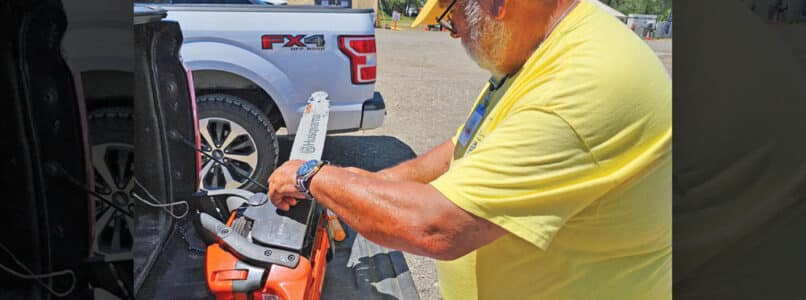
Tony Durant’s career prepared him perfectly to be active in Southern Baptists of Texas Convention Disaster Relief. With a background in mining and the industrial rubber industry, the retired business owner embraces the wisdom of 1 Peter 4:10, using his gifts while serving as an SBTC DR unit director, also known as a “blue hat.”

“I’m a fixer. I have a knack to repair,” Durant said. During a recent deployment serving Texas Task Force 2 search and rescue personnel responding to July’s Hill Country flooding, Durant found himself replacing the motherboard on one of the laundry unit’s washing machines.

Leading a new unit on its first deployment, Durant praised his crew of volunteers, saying, “Each of my team members used their gifts to serve people and first responders at Leander. I couldn’t use my gifts without team members who make my job easy.”

While in Leander, Durant and his fellow volunteers washed just shy of 650 loads of laundry in service of Task Force 2.

From August 2024-2025, SBTC DR volunteers assisted first responders and survivors of hurricanes, storms, fires, and floods in Spring, Porter, Harlingen, Brownsville, and Bonham, in addition to the Central Texas flood response in Leander, Kerrville, San Saba, and San Angelo. They also provided relief during water crises in Marlin and Chester. Outside the Lone Star State, they ministered in New Mexico, Florida, California, Missouri, and Oklahoma.

“All ministry facets—chainsaw, feeding, chaplaincy, recovery, assessment, administration, shower and laundry—were in the field this year,” SBTC DR Director Scottie Stice said. “We had 19 deployments in Texas and 15 out of state, totaling 64,100 volunteer hours. Volunteers prepared 138,095 meals for distribution, including 52,074 meals served directly to the public by SBTC DR folks. They made more than 48,000 spiritual contacts and saw 2,827 professions of faith, including those related to the border ministry of West Brownsville Baptist Church.

“Folks like Tony and his team are what make DR ministry successful,” Stice added. “They minister to the physical and spiritual needs of survivors and are bound together themselves by Christian fellowship and friendship.”

— Jane Rodgers

As women’s ministry leader grows, she’s helping others do the same

Empowered to lead, ready to serve

Jocelyn Babilon became the women’s ministry director at Lakeland Baptist Church in Lewisville about a year ago. As she settled into the role, she began having conversations with those the ministry would serve.

“When I listened to the women, they were really wanting connection,” Babilon said, “but they were also wanting to learn more about what it actually looks like to follow Christ and to have a better understanding about what they believe.”

As those conversations were ongoing, Babilon said she was also having discussions with other women’s ministry leaders and with Laura Taylor, the women’s ministry associate for the Southern Baptists of Texas Convention. It became a season of training for Babilon, who was looking for solutions to a challenge many churches face—connecting women to build multigenerational relationships, as well as developing leaders to serve as disciple-makers.

A pair of SBTC events helped Babilon along the way: the She Stands Women’s Conference hosted by Lakeland in the spring, and later, the Women’s Ministry Leadership Summit. Babilon said she was excited to learn that many of the ideas and points of emphasis God had already put on her heart were part of the training at each event. 

“I walked away with so many great ideas,” she said. “The way God just lined those things up was amazing.”

Connections are a key part of the strategy of the SBTC Women’s Ministry, which empowers women in their faith journeys and in the areas to which God has called them through fostering collaboration and growth. In addition to She Stands and the leadership summit, the SBTC offers Women’s Roundtable Conversations to share ideas between women’s ministry leaders and promote available resources. Roundtable Conversations will happen in multiple locations in 2026. 

There is also a more specialized focus for the wives of pastors through events such as the Come Away Pastor Wives Retreat and Pastor Wives Connection Nights. Those events, designed to offer encouragement and fellowship, connected more than 50 women from 48 churches this past year. 

“My goal for our SBTC’s women’s events is to encourage and equip women to grow in Christ and to be better equipped to minister to women in their churches and communities,” Taylor said. “We seek to provide opportunities for networking with other women to advance the gospel.”

That is what’s happening at Lakeland, where Babilon is seeing fruit as the women who serve on her team are doing the work of ministry in the areas of prayer, fellowship, discipleship, and more.

“Now that we’ve established all our roles, [our goal is] to equip our women to do these things well,” she said. “It’s been really great to watch. I’m just excited to see the way the women are growing in our church.”

—Jayson Larson

God is so, so good

I was a crime reporter when I began my journalism career about 25 years ago. Each morning, I would travel to our local police and sheriff’s departments and thumb through the previous day’s call sheets and the jail census. I would walk the hallways, interviewing deputies and detectives. Most of the stories I would unearth were bad news—at least for somebody.

By God’s grace, I have a much different calling today. Each morning when I arrive at my office, I have one main focus: to find and then tell the stories of what God is doing across the Southern Baptists of Texas Convention.

Each year, there are always a few stories we tell that stand out to me. As we put the wraps on 2025 and look ahead to all that we anticipate God will do in 2026, here’s a look back at a few of those stories:

‘Running toward the hopeless’ (Issue 2)

Every follower of Jesus loves a transformation story. Even if we don’t completely connect with a person’s past, we know what it’s like, as Colossians 1:13 says, to be delivered out of the dominion of darkness and transferred into Christ’s kingdom. This story, published in the spring, had lots of that. It opens by introducing readers to a man named David—described by many as “scary,” but who ended up giving his life to Christ through the ministry of Port Arthur City Church. The church’s pastor, Julian Martinez, had his own messy past. But since Jesus redeemed his life, the pastor spends his time trying to point everyone he can to salvation. 

‘My life is in His hands’ (Issue 3)

As a parent, this story sent my emotions on a ride. Joshua Nostrand was only 14 years old when he went into cardiac arrest for eight minutes while at youth camp. While moments like that are some parents’ worst nightmare, what happened next was as heart-warming and inspiring as it gets. After surviving the emergency, Joshua recovered, gave all glory to God, and began using his life to tell others about Jesus. “This whole experience,” he said later, “has helped me grow in the gospel.” Amen and amen. 

‘Man, we can do something’ (Issue 4)

In May, a group of pastors and church leaders went on a vision trip as part of the SBTC’s Reach Europe initiative, a ministry partnership with the International Mission Board. While they walked in some of the world’s most beautiful and historic places, many on the trip were also surprised to hear how lost Europe is. In fact, the IMB considers it the most lost continent in the world. Meeting pastors on the frontlines of the spiritual battle was special, but hearing reports that several SBTC churches have since returned (or are planning a return) is downright exciting.

‘SBTC churches get creative to deliver the gospel to the Metroplex during Crossover’ (Issue 5)

Each year in conjunction with the Southern Baptist Convention Annual Meeting, an event called Crossover is held to saturate the host city’s streets with the gospel. This year, with the meeting being held in Dallas, SBTC churches joined congregations from across the nation to tell people about Jesus. Churches held block parties and did door-to-door evangelism. One church held a pickleball camp. Another hosted a Christian comedy club, weaving the gospel story into an evening of laughs. And the best part? More than 700 people made decisions to follow Jesus during Crossover.

You can find these stories and more at the Texan’s online print archive: texanonline.net/print-archive.

SBTC churches are mobilizing to locations where the gospel is desperately needed

Partnering with a purpose

Holly Springs Baptist Church Lead Pastor Clint Williams was among the pastors and church leaders who traveled overseas in May as part of the Southern Baptists of Texas Convention’s Reach Europe vision trip. 

When Williams got home and told his congregation what he saw, the missions-minded church in Nacogdoches decided to send a group back. It took less than 24 hours for the trip to fill up. 

“Our church was very eager to go,” Williams said.

Holly Springs served in Hungary, one of the countries included in the Reach Europe ministry partnership between the SBTC and the International Mission Board. The initiative’s goal is to reverse the staggering trend of lostness in Western Europe, which has been described as one of the most lost places in the world. Only 1.1% of Europe’s residents are evangelical, and there is no population segment that is 2% reached. By the IMB’s standards, that makes all of Europe an unreached continent.

As of November, several SBTC churches were preparing to mobilize to locations across the continent to serve IMB partners in locations including Denmark, England, France, Greece, Romania, and Slovenia. 

The SBTC has developed similar ministry partnerships closer to home in Puerto Rico and Nevada—one of the fastest-growing states in America. In those locations, the goal is to strengthen existing Southern Baptist churches, plant new ones, and help raise up a new generation of pastors and leaders to reach the lost. 

“Through these partnerships that have been curated by the SBTC, we’re able to connect our churches to missions opportunities for the purpose of developing long-term relationships that offer maximum gospel impact,” said Colin Rayburn, SBTC Missional Ministries associate. “As we continue to learn more about the specific needs, desires, and abilities of our churches, we’ll be able to fine-tune these partnerships in ways that maximize every SBTC church’s ability to engage missionally.”

During their October trip, Holly Springs worked with rural Hungarian churches to do outreach in a unique way—taking family photos and providing framed prints for people in impoverished villages who might not otherwise have such a luxury. Later, the Texas group had a similar opportunity for a group of elementary school children.

Before heading home, the team had one last chance to leave a taste of Texas with their hosts. Holly Springs hosted a barbecue featuring pulled pork, beans, coleslaw, and southern gospel music played against a backdrop of Texas flag décor. As the Holly Springs team sang hymns such as “I’ll Fly Away” and “Amazing Grace,”  Williams would occasionally stop to explain the biblical principles contained in the lyrics. 

“Just loving on these folks, it was very good,” Williams said. “It connected with a lot of people.”

— Jayson larson

Network event connects pastor & wife to community, shared cooperative mission

Stronger together

Michael Sheets admits he did not know much about the Southern Baptists of Texas Convention until a few years ago.

While attending the SBTC’s annual Black Church Network Retreat, Sheets—senior pastor of Abundant Faith Baptist Church in Humble—heard a presentation about the Cooperative Program and how it gives churches of all sizes an opportunity to have greater gospel impact.

“One of the reasons I wanted to join the SBTC was because I understood we all have an obligation to Matthew 28,” he said, referring to Jesus’ Great Commission to go and make disciples of all nations. “As a church our size … we don’t have the capacity to do that on our own, but through our connection with the SBTC, we’re able to join cooperatively in that program and fulfill Matthew 28—which is huge for us. It’s been a real blessing to our church. It’s changing the way we see missions. It’s changing the way we see outreach.”

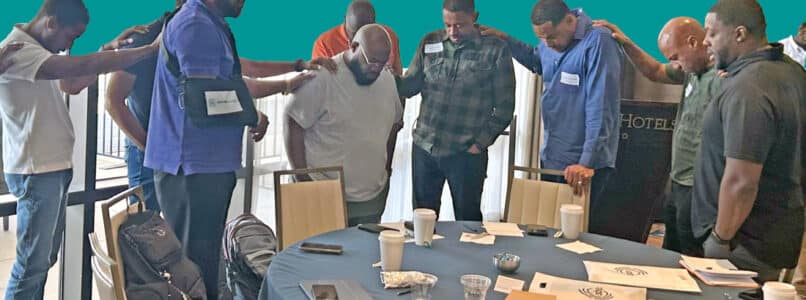
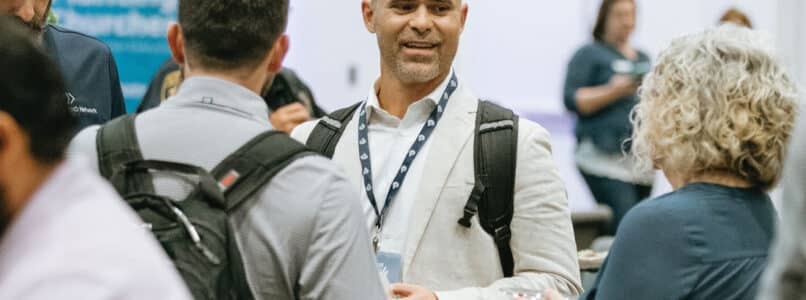
SBTC networks exist to serve, support, and connect pastors and church leaders in a variety of ministry areas. There are networks for student, children’s, and collegiate ministers; for women’s ministry leaders and pastor wives; and for those who specialize in disability ministry. More recently, several networks launched including the Executive Pastors & Administrators Network (for those who oversee church operations), the Regenesis Network (for those involved with the SBTC’s church health and renewal process), and the Shepherds Collective (for lead and senior pastors of any age). 

Networks are designed to meet a wide range of needs. For Sheets, those needs were personal and professional. At the BCN Retreat, speakers were brought in to talk to pastors about their mental, financial, and spiritual health. At a different BCN event, Sheets said he connected with a fellow pastor who turned him on to a system that has helped the church become more visible in the community. 

The value of network involvement reached even beyond that, he added. The wives of the pastors attending the BCN Retreat, including his wife, Theresa, began to gather as their husbands met. It provided a much-needed community for women who are often hungry for meaningful relationships.

“She really came away with a connection to some of the other ministers’ wives,” Sheets said. “To be with a group of women—sisters who understand [their calling] and who are figuring out ways to work through that—that bond was just so important for her.”

Sheets, who has ministered for over three decades and now serves on the SBTC’s Committee on Order of Business, said he would encourage other pastors to find a network with which to connect.

“It’s just good to know you’re not by yourself,” he said. “There are other guys who are walking in similar situations. Some of their situations may be different or they have evolved, but just to know you’ve got a network where you can plug in and be connected, that is huge.”

—Jayson Larson

As Regenesis footprint expands, churches celebrate renewed health, revival

Hope and a future

In the fall of 2019, Merit Baptist Church—located in a rural community in North Texas—was experiencing some encouraging victories. A well-attended vacation Bible school had opened the door for the church to start an Awana program, and children were flowing in and out regularly.

But by the summer of 2023, when the church’s pastor, Tim Cline, looked around, something felt off. Though the children’s program was popular, it wasn’t building bridges for the church to reach their parents or other adults. 

To Cline, things felt like they were on autopilot.

“The proverb says, ‘Where there is no vision, the people perish,’” Cline said. “What we began to realize is, we had no vision. We were living the proverb.”

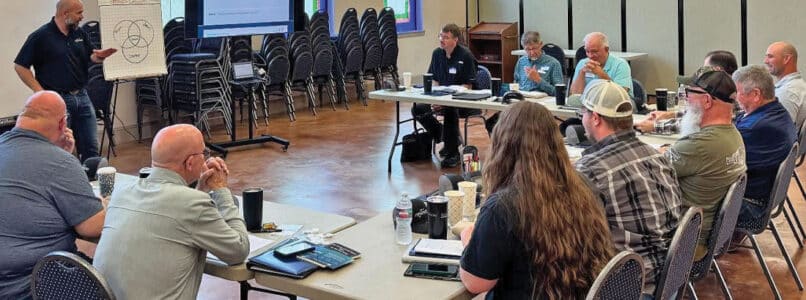
While attending a local Baptist association meeting, Cline saw a presentation about Regenesis, the Southern Baptists of Texas Convention’s church health and renewal process. Regenesis helps churches design a unique, intentional process to make disciples while overcoming common barriers to growth and vitality. 

Merit Baptist Church joined a Regenesis cohort in 2024 and completed the process in May 2025. Along the way, Cline said he and other church leaders gained insights that helped them chart a course forward. He began preaching and teaching through a series on the biblical characteristics of a maturing disciple. Leaders evaluated the budget to align it with the church’s priorities. Church members were challenged to mobilize outside the church’s walls, not just living as informed disciples of Jesus, but as sent ones. 

What’s happened since can only be attributed to a work of God, Cline said. The church baptized 15 people over the summer, while regular attendance has climbed from the 40s and 50s into the 80s. Church members are taking personal ownership in inviting their friends, neighbors, and co-workers—a great platform on which to build the culture of evangelism that Cline says will be the next step in the process.

These are the kinds of celebration stories Regenesis churches are reporting from around the state. Since its inception in 2022, 1,659 lay leaders have participated in Regenesis representing 555 churches. Last year, Regenesis was deployed to Nevada, where the SBTC has developed a strategic ministry partnership, and in 2025, its footprint expanded with the launch of Regenesis Español and the Regenesis Network, a group created to offer ongoing support and encouragement to pastors and church leaders.

“Regenesis churches are experiencing revival and spiritual renewal,” SBTC Pastoral Ministries Associate Anthony Svajda said. “The Regenesis cohorts are just the beginning and lead to much bigger God things.” 

Cline sees it that way, too.

“Regenesis is a clear and concise strategy on how a church is supposed to fulfill its unique mission and take advantage of the gospel footprint the Lord has provided for that church,” he said. “What we’re seeing is a movement of God.”

—Jayson Larson

One voice to glorify God

Editor’s note: In celebration of the Cooperative Program’s 100th anniversary, each issue of the Texan this year will include a testimony from a pastor explaining why his church gives through and believes in CP. 

I began attending Southern Baptist churches before I was even born—my earliest memories shaped by pews, hymnals, and the steady encouragement of my father, who was a Southern Baptist pastor. 

As a preacher’s kid, I remember sitting in the sanctuary as missionaries on furlough visited from all over the globe, always expressing heartfelt thanks to our congregation for supporting something called the Cooperative Program.

The Cooperative Program is a unified funding system through which Southern Baptist churches pool resources to support missions, seminaries, and ministries around the world. At the time, I didn’t fully grasp what those missionaries were referring to. It wasn’t until I prepared to enter seminary myself that I began to understand the profound impact of the Cooperative Program—in my personal life and beyond.

Not only did the Cooperative Program shape my personal journey, but its reach extends far beyond individual stories. For example, when the time came for seminary, there was only one SBC seminary in Texas able to offset tuition costs: my beloved Southwestern Baptist Theological Seminary. Thanks to Cooperative Program support, I was able to pursue two degrees—one from SWBTS and another from Midwestern Baptist Theological Seminary—without the overwhelming financial burden so many students face.

While attending seminary, I came to see how Southern Baptists, through the Cooperative Program, work together to reach the nations with the gospel. The program enables full-time missionaries to serve without having to pause their ministry for fundraising trips home. I’ll never forget hearing the stories of the missionaries who visited our church. I remember the couple sent out by First Baptist Church of George West through the International Mission Board to an East Asian nation and how they were able to go because you gave.

As we strive to reach the nations as Jesus commanded, I urge you to continue giving through the Cooperative Program so we may continue in “one voice to glorify the God and Father of our Lord Jesus Christ.”

As my horizons broadened, I also learned about the churches planted across North America because of ongoing Cooperative Program support. This initiative is only possible by the cooperative spirit among Southern Baptists, who choose daily to work together as one voice so the nations may hear the gospel.

In 2017, when Hurricane Harvey devastated the Rockport-Fulton community, Coastal Oaks Church benefited from Cooperative Program giving through disaster relief ministries from SBTC and the North American Mission Board. Their presence was a living testament to the power of partnership and generosity, answering the call to go and serve as one voice so the nations will hear the gospel.

Every church I have pastored over the last 25 years—from a rural community in Central Texas to the vibrant city of Honolulu and back to the Texas coast—has supported the Cooperative Program. In each context, I witnessed firsthand how those gifts made a global impact. Romans 15:5-6 says, “May the God of endurance and encouragement grant you to live in such harmony with one another, in accord with Christ Jesus, that together you may with one voice glorify the God and Father of our Lord Jesus Christ.”

As we strive to reach the nations as Jesus commanded, I urge you to continue giving through the Cooperative Program so we may continue in “one voice to glorify the God and Father of our Lord Jesus Christ.” When you give, you equip and mobilize young men and women—like I once was, growing up in the brush country of South Texas—to fulfill the Great Commission so that all may hear, and by hearing the Word of Christ, believe.

Throughout its existence, Hope Church has seen the Lord ‘provide at every step’

Two languages, one hope

On the first Sunday of every month, worship at Hope Church looks like a family reunion. 

The congregation—normally gathered in separate English and Spanish services—comes together for a single “One Hope” service. Pastor David Mathis preaches in English while a translator conveys the same message in Spanish. 

“The gospel is for everyone,” Mathis said. “When we worship together, it shows that language isn’t a barrier for the family of God.” 

From engineering to church planting 

Hope Church launched in January 2019, but its roots stretch back to 2017, when its founding church began exploring how to expand its ministry. At the time, Mathis was a career software engineer and serving as a lay elder. 

“God was shaping my heart,” he recalled. “With the encouragement of leaders around me, it became clear that He was calling me into full-time ministry.” 

That call intersected with the conviction to plant on the east side of Kyle—an area more diverse economically, culturally, and linguistically. In the process, the launch team connected with a Spanish-speaking congregation that had been meeting separately in a different building. The two groups began exploring ministry together, and the vision took shape: two languages, one hope. 

Launching a bilingual congregation brought opportunities and challenges. Hope Church began with English and Spanish services and occasional joint gatherings, embodying the vision of one church family. During its first year, however, the young church experienced challenges that tested its unity. “It was a difficult season,” Mathis admitted. “But even through that, God refined our vision and confirmed His call for us to be one church with two languages.” 

Soon after, the disruption of COVID-19 added another layer of difficulty. Meeting in a school meant Hope Church had to close early during the pandemic. The church moved its services online and implemented creative solutions such as outdoor drive-in gatherings with live translation. 

“That was the first time I preached through a translator,” Mathis said. “We saw God bringing Spanish-speaking families back, and we knew He was at work.” 

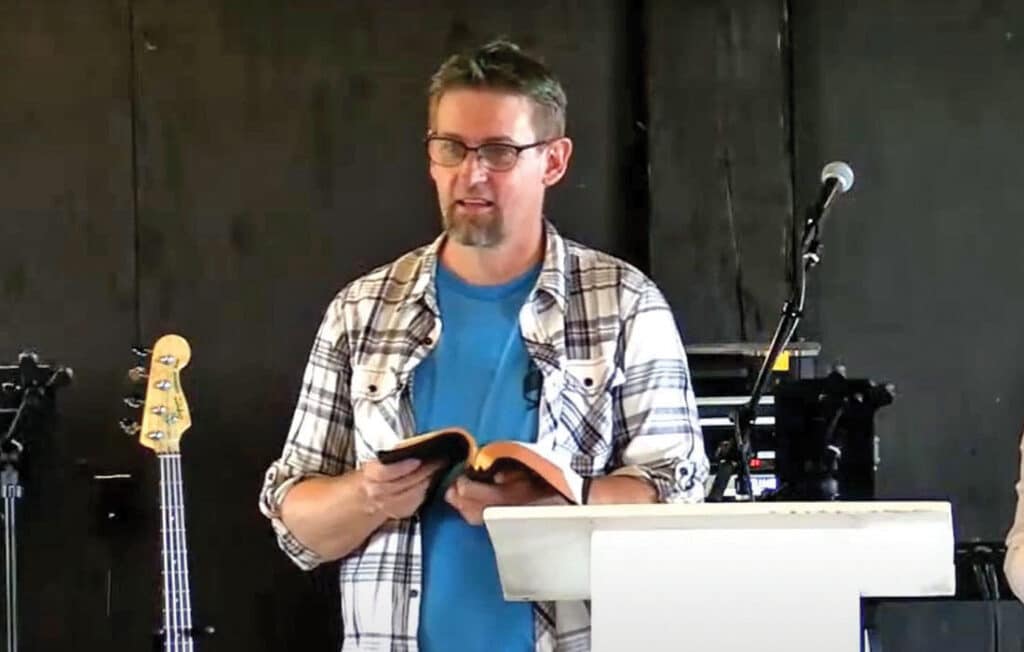
Hope Church, led by Pastor David Mathis (seen above), maintains English and Spanish services each week, with the monthly combined One Hope service serving as a visible sign of unity. SUBMITTED PHOTO

‘Something special’

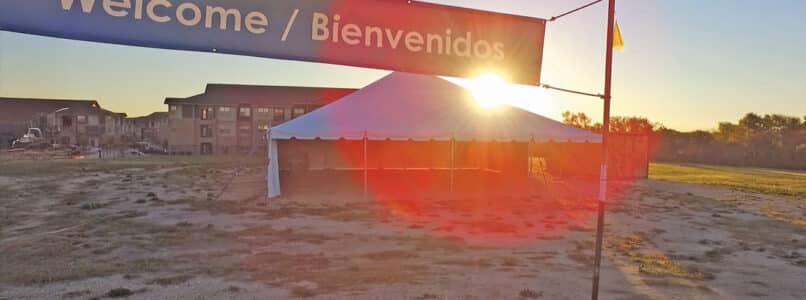
By summer 2020, God opened another unexpected door: A local family who owned a wedding barn opened their doors for the congregation to use their property. 

“At first we met outside on the grass—even from the back of a pickup truck,” Mathis said. “Eventually, they let us use the barn itself and they told us we could meet there for free on Sundays.” 

The barn, once rustic with no air conditioning or heat, has gradually been upgraded by its owners. Today, it continues to serve as Hope’s weekly worship space. 

“It’s not traditional, but it’s been God’s provision,” Mathis said. “People walk in and sense something special. It reminds us the church isn’t a building—it’s God’s people.” 

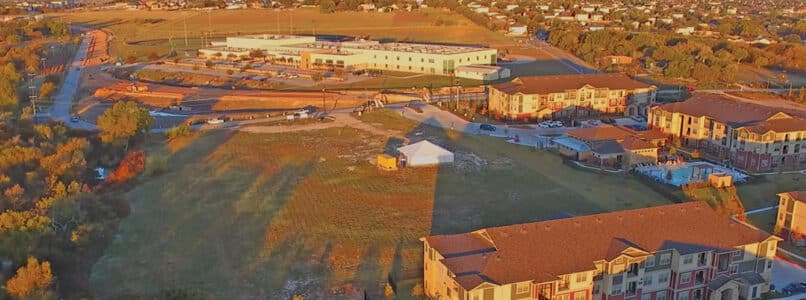
Around the same time, God provided in another remarkable way. A local landowner donated a parcel next to the barn where Hope Church now meets—across from a middle school and beside new apartments, which has become a hub for youth ministry and community outreach. Later, additional gifts and partnerships allowed the church to prepare the site for ministry. 

“It’s exactly where we need to be,” Mathis said. “From the very beginning, we’ve seen the Lord provide at every step.” 

As Hope Church was preparing to launch, Mathis and his wife went through the church planter assessment process with Send Network SBTC, receiving encouragement, oversight, and resources for the new congregation. 

“We are grateful for the partnership of the SBTC and local Baptist associations,” Mathis said. “They walked with us from the very beginning and helped provide accountability and encouragement.” 

That connection has continued, with Southern Baptists of Texas Convention leaders offering training, networking, and financial support at key moments. For Mathis, it has been a reminder that Hope Church is part of something larger. 

“It’s been important to know we’re not alone,” he said. “We’re one church among many, united in the same mission.” 

“It’s been important to know we’re not alone. We’re one church among many, united in the same mission.”

‘We belong to one another’

Today, Hope Church maintains English and Spanish services each week, with the monthly combined One Hope service serving as a visible sign of unity. In every
format, translation is intentional and in person. “It takes more effort,” Mathis noted, “but worshiping together reinforces that we belong to one another.” 

Though modest in size—about 65 people—Hope’s congregation represents a wide range of countries: Mexico, El Salvador, Argentina, Puerto Rico, Cuba, Spain, and more. That diversity shapes discipleship. During the pandemic, for example, an English-speaking member mentored a younger Spanish-speaking mom using a simple online translator and persistence. “It’s a lot of work,” Mathis said, “but it glorifies God—and it bears fruit.” 

Hope Church’s donated land has become a launching pad for ministry, including soccer camps, Easter sunrise services, family carnivals, and neighborhood outreach events. The church has also partnered with nearby congregations, including another bilingual fellowship, to extend its reach. 

A site plan for future development is nearly complete, but Mathis says the church remains focused on one step at a time. “We’ve learned that we can trust the Lord to provide. He’s already given us more than we could have imagined.” 

For Mathis, Hope Church’s story is not only about one church, but also one of encouragement for other churches. “Ask God to open your eyes to the people around you,” he said. “You don’t need a perfect plan—just take the next step to love your neighbors. The Lord will provide what you need.” 

As Kyle continues to grow, Hope Church’s vision stays clear: one gospel, two languages, one family. 

“When we sing and hear the Word in two languages as one church,” Mathis said, “you can sense the Spirit at work. That’s our one hope.”