Month: January 2019

Classics luncheon promises laughter, music, encouragement

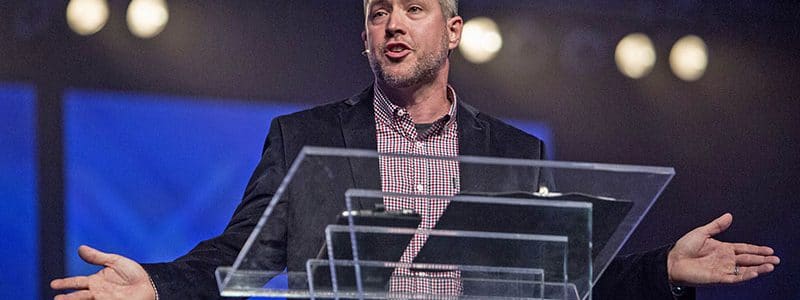
LAS COLINAS Continuing the tradition from recent years, the kickoff event for this year’s SBTC Empower Conference will be the Classics Luncheon, 11 a.m. Monday, Feb. 25 in the Irving Convention Center at Las Colinas. 

Charles Lowery will be the guest speaker. Lowery is a nationally known Christian psychologist, author and speaker who blends humor with a message of hope. 

Following the luncheon, a Classics Session from 1-4 p.m. will feature music from the Southern Gospel group The Hoppers and sermons by Junior Hill, T.C. Melton and Ronnie Floyd.

Both the luncheon and session are open for all age groups. Tickets for the luncheon are $10 each and available at sbtexas.com/empower.

Empower Conference boasts diverse speaker lineup, breakouts

LAS COLINAS—Designed to encourage and equip churches in evangelism, the Southern Baptists of Texas Convention’s annual Empower Conference has steadily grown in recent years, culminating in last year’s record attendance of more than 2,800. This year’s conference—Feb. 25-26 at the Irving Convention Center at Las Colinas—features a modified schedule and diverse speaker lineup that includes Trip Lee, D.A. Horton, Lee Strobel and Brooklyn Tabernacle pastor Jim Cymbala.

“There are a lot of great conferences out there, but what sets Empower apart from the others is that it is a true evangelism conference,” said Shane Pruitt, SBTC director of evangelism. “I’ve asked every speaker and breakout leader to speak on something under the umbrella of evangelism and making disciples.”

This year’s schedule includes two days of breakout sessions, allowing attendees to select from a list of 25 breakouts led by ministry experts. Sessions are designed to give practical tools and action steps for churches to use in evangelizing their communities. A full list of breakout sessions can be found at sbtexas.com/empower. 

The conference begins Monday, Feb. 25, with a missions luncheon and classics luncheon from 11 a.m.-12:45 p.m., followed by breakout sessions, a new pastors’ orientation, women’s session and classics session. 

Monday evening will feature worship by Jimmy McNeal and Austin Stone Worship, along with sermons from author, pastor and rapper Trip Lee; best-selling author and apologetics professor Lee Strobel; and D.A. Horton, a church planter in Los Angeles and national coordinator of Urban Student Missions at the North American Mission Board. Following the evening session will be a late-night gathering with Trip Lee on reaching the next generation with the gospel. 

On Tuesday morning, attendees will hear messages from Noe Garcia, Nathan Lorick and Gregg Matte, followed by a Cooperative Program lunch and afternoon breakout sessions.

The conference will conclude with a session from 4:45-5:45 p.m. featuring a sermon from Jim Cymbala, the pastor of Brooklyn Tabernacle since 1971. Under his ministry, the multicultural church has grown from around 20 people to more than 10,000 in weekly attendance. The story of God’s mighty work in the church is chronicled in Cymbala’s award-winning book Fresh Wind, Fresh Fire.

Registration for the Empower Conference sessions is free and available at sbtexas.com/empower. Tickets for meals are available for purchase at the website as well.  

The Sanctity of Human Life

Whoever sheds the blood of man, by man shall his blood be shed, for God made man in his own image. —Genesis 9:6

All lives matter! All lives are precious in God’s sight. The reason—because God created us in his image, after his likeness (Genesis 1:26). Consequently, every person—male/female, young/old, born/unborn, black/white, Hispanic/Asian, citizen/immigrant, rich/poor, religious/irreligious, Christian/non-Christian—every person has worth and dignity as God’s image. The dignity of all human life is evident in God’s words to Noah that if one person takes the life of another person, they forfeit their own life, “for God has made man in his own image” (Genesis 9:6). All lives matter because all lives are precious before God. There are no qualifications, no distinctions. 

Sadly, our culture today rejects the idea that all lives matter. The history of racism in the United States has shown us that to many, black lives don’t matter. The eugenics movement has advanced the notion that children born with genetic abnormalities don’t matter. The white nationalist movement promotes the idea that immigrant lives don’t matter. And the pro-abortion movement has legalized a practice which communicates that unborn lives don’t matter. Any movement that promotes the idea that any human being doesn’t matter is anti-God, evil and Satanic. 

As Christians, we have a responsibility not only to honor all human life but to seek to protect all human life as we have opportunity. While we should honor and celebrate all life each day, this January, as we do every January, Christians throughout the United States acknowledged the
sanctity of human life. Why January? 

First, Martin Luther King, Jr. was born in January—January 15, 1929. It’s appropriate that we remember, not just Dr. King’s assassination day, but his birthday. By celebrating Martin Luther King Day, we remember Dr. King’s dream that all humans have dignity because each person bears the image of God. However, Dr. King reminded us that we cannot sit silently on the sidelines while injustice against humanity continues. In his 1963 speech, “I Have a Dream,” Dr. King rightly said, “Our lives begin to end the day we become silent about things that matter.” But Dr. King did not choose to arm his objections with violence. Instead, he argued that “Darkness cannot drive out darkness, only light can do that. Hate cannot drive out hate, only love can do that.” (Sermons from his book Strength to Love, 1963).

Secondly, we remember and promote the doctrine of the sanctity of human life in January because on this month in 1973, the Supreme Court of the United States legalized abortion in the Roe versus Wade decision. To date, abortion has taken the lives of over 58 million unborn children—many of them from lower income and minority families. Of all human life, the unborn are the most vulnerable because they literally have no voice. If we don’t speak on their behalf, who will?

When I was in Israel in December of 2017, I had the opportunity to walk through the Yad Vashem (the Holocaust museum) in Jerusalem. It was disheartening to observe the evidence of hatred against Jews, not only from Nazi Germany, but from governments all over the world. One theme stood out to me during that visit. It’s captured in a quote often attributed to Edmund Burke: “The only thing necessary for evil to triumph is that good men do nothing.”

If we don’t speak up against injustice, who will? Evil only needs us to be silent to continue to have its way. So, whether it’s having a needed personal conversation with a family member, walking out of the room when an ethnic joke is told, volunteering with an organization that is seeking to address issues of injustice (whether poverty, hunger, racism, sexual abuse) or gathering for a public event like a Martin Luther King Day parade or a March for Life, let us be silent no longer. Let us proclaim the good news of Jesus Christ who died and rose again to bring together one new man from Jew and Gentile; let us announce the good news of the kingdom that Jesus is reigning at the right hand of the Father, and he is gathering for himself a people from every tribe, language and nation, making them brothers and sisters. In God’s kingdom all are family, all are equal, all are of worth and have dignity—male/female, young/old, black/white, Asian/Hispanic, rich/poor, citizen/immigrant, born/unborn. Let us celebrate such life! 

The ministries of older members

I’m younger than half of the Sunday School class I teach, but older than any of my doctors (except my dentist, by three months) and older than my last five pastors. My perspective on church things changes as this transition to being among the elders becomes more undeniable. My wife Tammi and I were talking the other day about how we’d seen several empty nester friends fade from regular church attendance—call it a second DINK (Double Income, No Kids) era of life. We should be more responsible now than we were in the sparkly days of being newly wed, but that’s not why I’m writing. Sometimes I wonder what my church or your church does to keep those who are becoming less vigorous a vital part of our ministry. 

Perhaps we don’t know what to do when a generation of church leadership—those who were go-to people in deacon ministry or administrative help—needs to be in charge of fewer things. With some of my friends it looks like a severe drop off between “she is everywhere” to “where’d she go?” The false dichotomy between being essential and being useless is fostered from both sides. Church members who slow down a little because their own health, or that of a spouse or parent, sometimes quit everything and fade before anyone notices. Church leaders are unprepared with options for those who need to be less prominent but who don’t want to become uninvolved. 

It’s not an easy nut to crack, but I have been in many meetings where bright people strained and brainstormed about how to get younger families engaged at some level—“Where can we plug them in,” “How can we keep them from just going out the back door?” and so on. If the focus is just on ensuring the future of the church or institution, that scrutiny of assimilating young families is right on. If the focus is on ministry to those God has placed in our hands, our motives and reach need to be less ageist.

Some who’ve taught for decades don’t walk so well these days. There’s not a correlation between one ability and the other. Additionally, you might consider that older members are qualified to teach more than just their peers. Middle-aged folks, 20 years older than I, taught my Sunday School classes from childhood until I was myself middle aged. Can a 70-year-old teacher be an effective teacher of young adults, children or high school students? I can’t imagine why they couldn’t. Some do imagine that pretty easily. 

Multi-generational fellowship is born in multi-generational worship and ministry. Do we want the generations to trust each other and understand each other? A good place to start is engineering opportunities for us to work alongside each other. Instead of a senior adult retreat, how about a retreat focused on the interests of members within more than one demographic? We do have some things in common. Include older members in the student mission trip; let them bunk together and eat together, just like they do with relatives during family events. 

The generations are more likely to snipe at each other when individuals of one age group don’t know anyone of another age group. I assume that my children, well adjusted and gainfully employed, are an exception when I read something foolish done by another member of their generation. I’m less likely to do that when I’ve spent some good time with solid younger folks who are not my kin. My kids are indeed exceptional, but they are not the only wise Millennials.

I recognize the need for outreach among generations that are moving away from their churches. We need to preach the gospel to them and we need to teach them how to follow Christ. Older members are not the “future of the church” unless you consider the next 20 years sufficiently futuristic, but a significant number of their Baby Boomer generation are also lost. We have a few years to preach the gospel to them and teach them to follow Christ. This outreach can be a ministry of young and old, and it can bear unimagined fruit among family members of all ages. 

Think of it as a stewardship of your present ministry, not so focused on the ministry you will have in 10 years. Some of your older members will be able to do less, and you’ll do some funerals. Some of their friends, who will attend the funerals, are lost and hardened to the gospel. Some of their neighbors at the senior center or nursing home are unbelievers. You have church members and staff members who would be well-focused on ministry in this field. As for those who are still active, though a little slower, in your church, what can you do to intentionally equip them for significant ministry during every day God gives you with them?  

REVIEW: “Glass” delivers a muddled moral message about superheroes, talents

David Dunn is an unassuming middle-aged man who runs a home security system during the day and dons a cape-like poncho to fight crime at night.

That’s when he becomes the “Overseer,” a shadowy figure with super strength who makes headlines for his good deeds but is viewed with suspicion by the Philadelphia police, who consider him a vigilante. They want him in jail.

That threat of arrest, though, doesn’t prevent Dunn from trying to solve the city’s latest crime: the kidnapping of four cheerleaders by a crazed man known as the “Beast,” who has multiple personalities and has killed several people.

Dunn and his son, Joseph, believe they can pinpoint the Beast’s location by using police records, a computer program, and a ton of detective work.

Their hard work pays off one day when Dunn finds the Beast’s abandoned warehouse, sets the cheerleaders free, and goes “mano a mano” against this evil villain.

But then the plan goes awry. The police show up and surround Dunn and the Beast. Both are arrested and committed to the psychiatric ward, where they will be studied by a doctor—Ellie Staple—who believes they have severe mental problems. She also thinks the two men are wrong in their conviction that they have super strength.

Superheroes, she insists, don’t exist.

The film Glass (PG-13) opens this weekend, completing the trilogy by writer/director M. Night Shyamalan that began with sci-fi/drama film Unbreakable (2000) and continued with the thriller Split (2016). It stars Bruce Willis (Die Hard) as Dunn, James McAvoy (Split) as Kevin Wendell Crumb/the Beast, Sarah Paulson (Ocean’s Eight) as Staple, and Samuel L. Jackson (Avengers series) as Elijah Price.

The film is part-superhero film and part-thriller, but it’s mostly just weird and dull.

Dunn, the Beast and Price all have extraordinary talents (or is it powers?) and believe they are superheroes, yet Staple refuses to acknowledge their abilities. Everything, she says, has a natural explanation.    

Glass has the surprising/shocking ending that Shyamalan’s films are known for, but it also has a muddled message about talents and everyday superheroes — even though those are supposedly the film’s major themes.

There’s also this: Much of the action in the film’s final scenes takes place outside, in the daytime, which lessens the hair-raising potential. There’s a reason thrillers and horror films often take place at night. They’re just scarier that way. At times, the outdoor scenes in Glass border on goofy.

Warning: minor/moderate spoilers!

(Scale key: none, minimal, moderate, extreme)

Violence/Disturbing

Moderate/extreme. The opening scene shows Kevin holding the four cheerleaders hostage in a warehouse; they’re hands are chained. We hear Dunn, off screen, beat up two young men. Kevin turns into the Beast and fights the Overseer; the battle is tame but still violent. We see a flashback scene of Kevin being threatened by his mother; she approaches him with a hot iron but the scene quickly cuts way. The Beast squeezes a man and breaks his back; we hear the sound of it. Price slits a man’s throat with glass. (We see it from behind and later see the body.) Someone is shot in the stomach. Several people die. The film’s most troubling aspect involves Kevin’s split personalities—he has around 20 in this movie—and his transformation into the Beast, which looks nothing short of a muscular man who is possessed. He growls like a dog. He walks on ceilings and walls. It’s eerie.

Sexuality/Sensuality/Nudity

None. Although one of Kevin’s personalities is a gay man who flirts with a male worker.

Coarse Language

Moderate. About 13 coarse words: A– (5), b–ch (2), s–t (2), p—y (1), misuse of “Jesus” (1), b—ard (1), GD (1).

Other Positive Elements

David and his son are close and care for one another. We also see people reach out to Price and Kevin, despite their violent past.

Other Stuff You Might Want To Know

David is a widower whose wife died of cancer.

Life Lessons

Among the film’s major messages is the importance of a child’s upbringing and/or the negative impact that trauma can have on one’s life. Kevin/the Beast was abused as a child and, supposedly, developed his multiple personalities as a way to repress his memories. Dunn was bullied as a child and nearly drowned, and then later in life survived a train wreck that killed every other passenger. Price was born with a debilitating bone condition and was involved in a fair ride accident at a young age. Shyamalan wants us to feel compassion for the men, but with the exception of Dunn, it doesn’t happen. That’s because the violence and flesh-eating stuff overshadows the brief flashback-to-childhood scenes we watch. Speaking of that …

Worldview/Application

Shyamalan also wants Glass to help people consider the “extraordinary things” all of us can do. In other words, we have superhero-like skills, yet “we can be talked out of” believing it is so (as happens in Glass) he told USA Today.

Glass, though, is an odd way to convey that message. Outside of David Dunn—who is a good guy and who does act like an average-man superhero—none of the other so-called superheroes are inspiring. In fact, they’re appalling. Price slits a man’s throat with a large shard of glass. The Beast breaks a man’s back, kills another man, and then begins eating human flesh. (In Split, he’s even more animal-like.) Once again: Why am I supposed to be inspired by these out-of-control murderers?

Scripture (Matthew 25:14-30) teaches that we all have talents and—in a sense—we all can do extraordinary things through God’s power. That’s definitely true.    

Glass ends with a dialogue about talents and superheroes that would make sense at the end of, say, Spider-Man. But not at the end of Glass.

I enjoy movies that leave me with a reason to be hopeful about the world. Glass doesn’t do that.

What Works

David Dunn as a superhero. McAvoy is impressive.

What Doesn’t

The movie’s promotion of Kevin and Price as superheroes.

Discussion Questions

  1. Did you consider Glass a superhero film?
  2. Did you feel sympathy for Kevin and Elijah Price? Why or why not?
  3. How can a child’s upbringing impact (both negatively positively) their adult life? Can it turn them into a so-called monster?
  4. Did you like the movie’s ending? Why or why not?

Entertainment rating: 2 out of 5 stars. Family-friendly rating: 2.5 out of 5 stars.

Rated PG-13 for violence including some bloody images, thematic elements, and language.

REVIEW: “Social Animals” spotlights perilous combination of teens & Instagram

Not that long ago, I was young and hip. I knew about the latest trends, the latest songs, the latest gadgets. It was my life.

But the process of growing older and having children changed that. My interests also evolved.

Thus, when my 10-year-old and 7-year-old sons came home a year ago and began doing “Fortnite” dances, I asked what any middle-aged man would ask: What’s Fortnite? Google took care of that.

I had a similar reaction recently when I watched a new documentary, Social Animals. It follows three real-world young people as they post nearly everything about their lives on Instagram. Yes, I knew about Instagram. Yes, I even have a (mostly ignored) Instagram account. But I didn’t fully grasp the negative impact it is having on young people.

The 87-minute film—which is streaming on all major platforms—is an eye-opener for parents raising children in a selfie-obsessed culture.

Launched in 2010, Instagram is the preferred social media platform for today’s teens. Unlike Facebook and Twitter, which are text-heavy, Instagram is image-driven. The user takes a picture and posts it. A written message is optional. The goal is to get the most “likes.”

Social Animals tells the story of Kaylyn, a high schooler who is hyper-obsessed with her looks and has half a million followers; Emma, a teenager who had to change high schools because she was bullied on Instagram; and Humza, a New York City photographer who illegally scales tall buildings and bridges to capture the perfect Instagram image.

Their stories are told without narration or commentary, but that’s not needed. By the time the credits roll, you’re convinced that Instagram—without strict boundaries—is bad for a young person’s mental and social health.

Girls primp and pose for the picture-perfect, model-like shot.

“I look awful!” one says to the other while deleting the “bad” pictures.

In between the stories of Kaylyn, Emma and Humza, we hear from other teens who use Instagram.

“I took a shower, I blow dried my hair, I curled my hair, I did my makeup, and it took about an hour and a half just to get ready for a selfie,” one girl says.

Another girl uses a special app to erase acne in her pictures.

It’s a world where inner beauty means nothing and looks are everything. It’s a world where “likes” and “followers” determine one’s meaning in life.

Scripture tells us that “charm is deceptive,” “beauty does not last” and each person is “wonderfully made” (Proverbs 31:30, Psalm 139:14). But you wouldn’t know that by scrolling Instagram.

It was directed by Jonathan Ignatius Green, who said some parents watch it with their teens.

“I think our biggest goal is to stir a rich conversation,” Green told me. “[Social media] is powerful. It impacts our entire world—not just teenagers, but adults, too. Hopefully the takeaway is, ‘Hey, I need to take a look at this and maybe reflect on my own behaviors on social media and my own motivations for doing some of these things.’”

Social Animals includes some rough content. It’s not for everybody.

But its core message—and its implicit warnings—should be heard by today’s families.

Content warning: Social Animals is unrated; treat it like a PG-13-type film. It includes no nudity but does show girls in swimsuits. It also includes some coarse language, including some strong language.  

Kutter Callaway, assistant professor of culture and theology at Fuller Seminary, wrote a discussion guide. Download it here.

For more information, visit SocialAnimalsFilm.com

Entertainment rating: 4 out of 5 stars. Family-friendly rating: 3 out of 5 stars.

REVIEW: “A Dog”s Way Home” spotlights one of God”s great blessings

Lucas is a caring, 20-something man who will do anything to save animals in harm’s way—perhaps even risking jail.

So one day when he spots several endangered animals across the street inside a fenced-off condemned area, he and his girlfriend, Olivia, break the law by sneaking through the fence to save them.

The lot owner tells them to beat it, but not before Lucas and Olivia free the cats and escape with a dog that will be a gift to his mom, a war veteran. Dogs, Lucas says, can help veterans suffering from depression.

His mom loves the dog (they name her Bella) but doesn’t realize the breed is illegal under city code. That’s because Bella is classified as a pit bull—even though she doesn’t look like one.

Soon, the lot owner reports Bella to animal control, and soon after that, she is in the pound. Lucas pays a fee to get her back, even though he knows she can’t stay with him and his mom. So he takes her to Olivia’s out-of-state parents, where Bella will live until Lucas moves to a location where he can legally keep the dog.

It sounds like a good plan. That is, until Bella escapes and runs through the forest and down the highway—with the goal of traveling the 400 miles back to Lucas.

Will Bella make it?

The PG film A Dog’s Way Home opens this weekend, starring Jonah Hauer-King (Little Women, 2017) as Lucas; Alexandra Shipp (X-Men: Apocalypse) as Olivia; Ashley Judd as Lucas’ mom, Terri; and Bryce Dallas Howard (Pete’s Dragon) as the voice of Bella.

The live action-film is told from the perspective of Bella, who is raised by cats before being saved by Lucas—or as she calls him, her “person.” It is the latest in a recent series of pet-centric movies: Dogs Days (2018), Show Dogs (2018), A Dog’s Purpose (2017) and The Secret Life of Pets (2016), among them.

It is a cute, mostly family-friendly film (details below) that dog lovers especially will appreciate. The movie has two larger purposes: 1) highlight the positive role pets can play in companionship with veterans, and, 2) support the Humane Society’s “all dogs are equal” initiative, which opposes breed-specific bans and policies. City officials are attempting to impound Bella, even though she is friendly and looks nothing like a pitbull. Her kind demeanor is further underscored when she takes care of a cougar cub.  

Warning: minor/moderate spoilers!

(Scale key: none, minimal, moderate, extreme)

Violence/Disturbing

Minimal/moderate. We see animal control workers catching stray pets and taking them to the pound. We hear a cougar shot and killed and then see its body; its cub is orphaned. Wolves chase Bella and a baby cougar. A man is buried under an avalanche; he survives. Wolves fight a dog. A dog is hit by a car. A homeless man dies near a river; we see his body.  

Sexuality/Sensuality/Nudity

None. We hear a woman jokingly say a man is not “hot.” Additionally, parents may want to know about a couple of related issues. (See “Other Stuff You Might Want to Know”—below.)

Coarse Language

Minimal. A couple of coarse words: h-ll (1), OMG (1). One instance of “oh my gosh.” A dog is nicknamed “shaggy butt.”

Other Positive Elements

Children will enjoy watching Bella take care of a cougar cub and helping it find water and food. Perhaps that doesn’t happen in real life, but there are lessons to be learned on kindness.

Other Stuff You Might Want To Know

Two men enter the story midway through the film, and it is implied they are a gay couple. They don’t kiss, hug or even hold hands, but they ski together and live in a nice home together. (Older children might ask questions; younger ones likely will not.)

In the film’s final scene, Lucas and Olivia are living together. Maybe they’re married by now, but it doesn’t appear that way; he’s not wearing a ring. (Most kid won’t notice, though.)  

Life Lessons

The primary message of A Dog’s Way Home is this: Pets need us, and we need pets. (See Worldview, below). But it also provides lessons on kindness (Bella, Lucas, others), companionship (Bella, Lucas, a homeless man, veterans), and taking care of those who can’t care of themselves (Lucas, Olivia and Bella).

Worldview

A proper view of pets requires a proper view of animals: Humans are more important than animals (Genesis 1-3), and God gave mankind dominion over them. (He told us to eat them and He even crafted clothing out of animal skin).

If mankind didn’t have dominion over the animals, then there would be no such thing as pets. Pets, after all, are animals that were domesticated by humans.

But do pets need us, and do we need them? The former is certainly true. I even suspect God expects us to take care of pets. That’s because we have trained them to rely on us. It’s our responsibility to help them. In A Dog’s Way Home, Bella likely would die if Lucas didn’t help her. (God takes care of animals, too: “He provides food for the cattle and for the young ravens when they call”—Psalm 104:21.)

Do we need pets? For some people, the answer may be “yes.” Pets provide companionship. They provide entertainment. They provide unconditional love. They even can provide protection. Of course, they also teach responsibility.

Pets are one of God’s many blessings—as most children already know.

What Works

The relationship between Bella and her cougar friend. I could watch a movie just on that.

The scenery. (The film’s setting is Colorado.)

What Doesn’t

A Dog’s Way Home is a very simple movie with a thin plot. Some will find that enjoyable. Others will be bored.  

Discussion Questions

  1. Does the Bible support the modern-day animal rights movement?
  2. What is our responsibility with animals? With pets?
  3. Why do some people need/want a pet more than others?
  4. Are there people who shouldn’t be given a pet?

Entertainment rating: 3 out of 5 stars. Family-friendly rating: 3.5 out of 5 stars.

Rated PG for thematic elements, some peril and language.

President Trump, loose talk and 2019

Do you have a “maybe not” file? By whatever name, this is where sermons that go nowhere, blog posts that sound crazy, letters you’d never want the recipient to read and other ill-formed ideas go to season. Mine contains the half-written frames of scores of columns I decided weren’t ready for prime time. Some of them just faded out as I tried to develop a thought, others became less attractive as I imagined readers who might be needlessly wounded by my words. I’ve deleted some of them as hopeless but a few I imagine might one day be redone into something I’d publish.

Social media offers fewer opportunities to rethink our great ideas. I’ve deleted a post or two from my Twitter accounts and Facebook page, cringing at a mistake I made or dumb thing I said. But I’ve never called people hateful names in these media. Maybe I was blessed to be beyond my “everything I say must be broadcast” stage of life by the time social media was invented. More likely, I’ve seen some sinful language of mine in ink on paper once too often and it’s made me less enamored with knee-jerk responses.

As we turn toward year three of the Donald Trump administration, some few of the brethren are still beside themselves that he was elected. No problem with that opinion, as an opinion. But exasperation clearly tempts us to cross lines. I do get that. We Americans are not restrained people. “I disagree” or “I think you’re wrong for the following reasons” just doesn’t get you much attention. We are tempted instead to call people “fools” or “charlatans” or “carnal Christians” as I have seen done already this year. That does get attention I suppose. In despair or guilt I’ve seen more than one person advocate for unity or kindness or humility to be revived in our national, and Baptist, dialogue. I agree in some limited ways but think saying it is harder than it even sounds.

My “maybe not” file is the old school equivalent of deleting a post or email without sending it. It’s the electronic version of a trash can, or just shutting my mouth. A maturing person learns that not everything he thinks should be expressed to anyone. The longsuffering Mrs. Ledbetter can testify that not 10 percent of my wacky (but accurate) ideas are ever shared with anyone else. What she may doubt is that a fairly small number of these gems are even shared with her. I have opinions about everything and I think you probably do as well. Tighten your filter as I daily try to tighten mine.

It changes my thinking to do that. If I don’t air out my every thought, I find myself dwelling less on the unworthy ones. Giving bad thinking or attitudes less time results in recognizing them and rejecting them more quickly. If I don’t say every judgmental thing that crosses my mind when I’m cranky, I am offended less often (which becomes a new thing) when someone rejects my opinion. Perhaps as a bonus, I find that I talk less and don’t as often seek to be the dominant opinion in the conversation, even when I am right.

If we desire unity, less acrimony or even more disciplined use of social media from others, this seems a good place to start. This is far from an original idea and it’s more often expressed by my generation—those who were middle-aged by the time these megaphones where handed out. But I’m not asking for a tech fast or even more consideration and kindness from those around me (in a vague, worldwide, electronic way). I’m saying that all of us have some experience regretting something we’ve said. All of us have seen the need to just shut up on some occasions. I don’t believe my ideas will get better or that I’ll be less of a boor or bully by merely trying to say better things in the same quantity as ever.

If you doubt that this will work, try an exercise with which I’ve had some experience. When you carelessly offend someone by email, social media or opinion column, apologize to them personally. It’s a humbling, even humiliating, experience. Doing it makes me not want to do it again.

We’ll see some outrageous things said and done as our endless election cycle start to get louder this year. It’s likely we’ll see our brothers in Christ say some sinful things, or at least ridiculous things. It’s not necessary that we ridicule the ridiculous or rebuke sinners with whom we have no personal relationship. Of course publicly expressed ideas are fair game for disagreement and rebuttal, but be careful when “you are wrong” just seems inadequate: “You are wrong, fool” only seems better. I’ve been on both ends of that impassioned rant and know that nothing except the name calling is remembered in such a conversation.

Simply, make this year, this election cycle, a time when you rise to fewer provocations, craft fewer zingers and take up less bandwidth. Try saying better things, sure, but start by saying fewer things, James 3:2.  

John Yeats led communications for SBT Fellowship of churches

Editor’s note: As the SBTC enters its 21st year, we will be sharing reflections from those who laid the groundwork for a new state convention. The TEXAN interviewed John and Sharon Yeats at November’s 20th anniversary celebration at Houston Second Baptist Kingwood for this article, the first of a yearlong series.

KINGWOOD Constructive change often depends on an effective communication network to engage like-minded people in common goals, something Thomas Paine kept in mind when penning Common Sense at the dawn of the American Revolution.

John Yeats knew it, too.

Years before the Southern Baptists of Texas Convention was formed in 1998, Yeats realized that theologically conservative Baptists in Texas needed a publication representing their views. Yeats, now executive director of the Missouri Baptist Convention but then pastor of South Park Baptist Church in Grand Prairie, began producing The Plumbline, a periodical distributed widely to Southern Baptists in Texas who were concerned about denominational liberalism.

“We would go into the fellowship hall of our church, lay pages out on the tables, walk around the tables to assemble them and mail them out,” Sharon Yeats told the TEXAN.

Before the SBTC’s formation, John was called away to the Indiana convention to lead state communications and public policy efforts, followed by similar roles in Oklahoma and Louisiana. He became Missouri’s executive director in 2011. A member of the Southern Baptist Convention’s Executive Committee, he has held the elected post of SBC recording secretary since 1997. He has pastored churches in Texas and Kansas.

“This 20-year anniversary of the SBTC means a great deal,” John said. “Our church that we pastored here in Texas was at an impasse in that we could no longer doctrinally cooperate with the Baptist General Convention of Texas. So we looked for a suitable alternative and helped lay the groundwork for that alternative by publications and networking,” he said, noting that his Grand Prairie church became a “common site” for theologically conservative Baptists to meet.

“It was just a delight to see the thing blossom,” Yeats said of the SBTC’s founding, adding that he had recommended Jim Richards as the convention’s first executive director. Yeats said he had served with Richards and Gary Ledbetter, SBTC director of communications, on the SBC’s Christian Life Commission, which later became the Ethics and Religious Liberty Commission. Yeats lauded the SBTC executive director’s leadership style and said that Richards’ guiding principles had become a model for other state conventions. 

Yeats also praised the idea of a confessional fellowship, stating that in his own state’s convention, this “gives us a platform to communicate with people about who we are as Missouri Southern Baptists.”  

Pastor the bride as a Servant

In 2003, I was playing keyboards for a big-name country music act when we had come to the end of the night of our New Year’s Eve show in San Antonio. We played our encore song and were escorted to our backstage “green room” where everything we had requested was waiting on us. From the food and drinks we requested, to everything else–there was no doubt we were treated like royalty in these places and before we ever showed up to these venues it was clear what each of us were to have in those rooms when we arrived. Venues agreed to these demands before ever hiring the artist. Artists could actually cancel their contracts if these demands weren’t met and go elsewhere. Not only were these green rooms set up to our standards but our gear and everything was set up exactly how we wanted it as well.

I tell this story because so often this “green room effect” has become the norm in the 21st century church! I had the opportunity to preach a Disciple Now a while back and got to the church early, so the pastor let me come into his office and hang out. I was immediately blown away as I conversed with him. “There is no way I would preach to kids! My calling is Sunday mornings only,” he stated. “Adults are hard enough; I didn’t sign up to deal with moody teenagers too; they don’t pay me enough to do that!” He added. The green room effect–“Give me what I want, when I want, how I want, where I want and if I don’t get what I want, I will go somewhere else.”

This is a cancer that over the 12 years I have been in ministry I have seen slowly destroying the bride of Christ–not only in pastoral ministry but ministry generally. We have this sense of entitlement that puts us in a box. “I’m called to teach, to preach, to greet, to play piano, to play guitar, to lead worship, to watch babies, to lead men’s ministry, to lead women’s ministry, etc., and there is no deviating from that “calling.” I’m not “called” to watch babies; I’m not “called” to set up chairs or to park cars; I’m not “called” to pick up toilet paper that’s on the floor of the bathroom at church. It’s the green room effect. We have lost focus on the bigger “calling” on ALL of our lives as the church to “toil and strive” (1 Timothy 4:10), pointing people to Jesus and sadly have put our focus on ourselves and have become entitled making it more about ourselves, our ministries and our calling, never stepping outside our boxes.

What would happen though if we would think a little outside the box in this area? I mean, I get it that we all have a calling on our lives that’s unique and for kingdom advancement, but what would happen if we became a people who, when we saw a need in the church, we step up and serve? Let’s get out of our green rooms of entitlement and where we see a need, serve! No matter what we are “called” to in the ministry (even pastors), there is NOTHING below us that we can’t step up to and help the bride be all that it can be to advance the kingdom of God! As the Psalmist says in Psalm 84:10, “I would rather be a doorkeeper in the house of my God than to dwell in tents of wickedness.”

Let us be a people of God who are getting out of this place of entitlement, out of our green rooms. We are toiling and striving, and gladly holding the doors open for the glory of God and for the praise of his glorious name!

Ryan Hurt serves as pastor and worship leader at Lingleville Baptist Church. www.linlglevillebaptist.org