Month: November 2019

THANKSGIVING: AN ATTITUDE OF GRATITUDE

In recent years I have heard many who remark that Thanksgiving has been forgotten. Stores go from marketing Halloween to marketing Christmas. Don’t get me wrong, Christmas is ever present at my house but we always pause to make Thanksgiving special. President George Washington made a proclamation to celebrate a day of Thanksgiving. Eventually it became institutionalized as a national holiday known as “Thanksgiving.” What is Thanksgiving? “Turkey Day”—good food and lots of it—family day—time to be together—football and parades; or is it more than family, food, football, and festivities?

Thanksgiving demands a recipient. If we are thankful, to whom are we thankful? As believers in Jesus we know to turn our attention to the one who provides for our needs. The Bible says in Philippians 4:19, “My God shall supply all of your needs according to his riches in glory by Christ Jesus.” Thanksgiving is gratitude toward someone who has provided all things for us.

Thanksgiving is more about peace than prosperity. It is so easy to get caught up in the routine of being thankful for God’s provisions. Truly, God has blessed us materially; the poorest people I know in America are rich compared to most countries. But, my “Thanksgiving” should not be caught up in my prosperity rather than in God’s peace. “Be careful for nothing, but in everything by prayer and supplication with thanksgiving let your requests be made known unto God. And the peace of God which passes all understanding shall keep your hearts and minds in Christ Jesus” (Philippians 4:6, 7).

Thanksgiving is more about satisfaction than success. We get caught up in achievement. There is nothing wrong with aspiring to accomplish good and serve God in this life. However, to be driven by unbridled devotion to good things at the expense of the best is empty. What about the godly baseball player who strikes out with the bases loaded? What about the pastor who labors in obscurity with little earthly appreciation or the committed believer who struggles in his business concerns? Can they be thankful? Our satisfaction comes from being in the center of God’s will not the ladders we climb to get to the top. Paul spoke of his satisfaction in following God’s leadership, Philippians 4:11.

The Bible shows that thanksgiving is more attitude than action. Thanksgiving is giving praise to God by looking to the source of all blessings. It is giving beyond ourselves to the needs of others. Have you thanked God for most important blessing, his Son, our Lord and Savior Jesus Christ? Family, food and football are things we enjoy around the Thanksgiving holiday. This Thanksgiving let’s focus on the One who is the blessing!

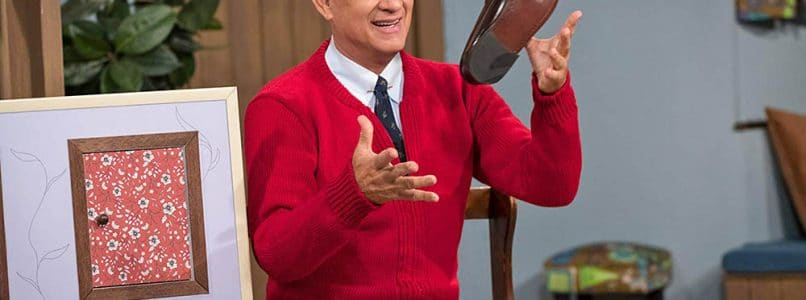
“Beautiful Day in the Neighborhood” is uplifting and powerful

Lloyd Vogel is a tenacious reporter for Esquire who always tackles the big stories—and if there’s dirt to be found, he uncovers it.

He writes about the crooked politicians and the lying businessmen. He finds out what people are really like when they’re not in the public eye.

In other words, he writes about “hard” news. And puff pieces? Those are for other reporters.

But then Vogel is given the task of writing a feature on Fred Rogers—the kid-friendly television host who, seemingly, is always kind.

Vogel is determined to uncover the real Mister Rogers. 

“I’m supposed to go easy on this guy because he plays with puppets?” he rhetorically asks his editor.

Surely—Vogel thinks—Mister Rogers isn’t always kind.

“Please,” his wife begs, “don’t ruin my childhood.”

The film A Beautiful Day in the Neighborhood (PG) opens next week, starring Tom Hanks (Toy Story series, Bridge of Spies) as Rogers, Matthew Rhys (The Post) as Vogel, and Susan Kelechi Watson (This Is Us) as Vogel’s wife, Andrea. 

The movie is based on a true story about Esquire journalist Tom Junod, who was assigned a story on Rogers that eventually landed on the cover of the magazine.

In A Beautiful Day in the Neighborhood, Vogel is estranged from his father and battling feelings of rejection, hatred and unforgiveness when he is interviews Rogers. Soon, though, it is Rogers who is asking Vogel the questions—and it is the hard-hitting journalist who is learning about kindness and forgiveness, and being changed for the better.   

It’s among the most uplifting and moving films in recent years and one of the best ones, too. Tom Hanks delivers an Oscar-worthy performance. Rhys and Watson are impressive. The film masterfully recreates the look and feel of Mister Rogers Neighborhood.  

A Beautiful Day in the Neighborhood isn’t a faith-based film in the vein of Overcomer or I Can Only Imagine, even though it makes clear that Fred Rogers was driven by his Christian faith. We see him kneeling beside his bed and praying for specific people, by name. (He was an ordained minister who viewed his TV show as a ministry.) His wife says he “reads Scripture.” Of course, we also see him exhibiting the fruit of the Spirit, on and off camera. 

Warning: minor/moderate spoilers!

(Scale key: none, minimal, moderate, extreme)

Violence/Disturbing

Minimum. We see a fight at a wedding. We watch someone have a heart attack and later die. 

Sexuality/Sensuality/Nudity

Minimum. We hear a discussion about someone “sleeping around.” A couple shares one or two brief kisses. A character exhibits cleavage.

Coarse Language

Minimum. H– (4), OMG (2) and d–n (1). (None of the coarse language is spoken by Mister Rogers.)

Other Stuff You Might Want To Know

Two characters share a drink of alcohol. (Neither is Mister Rogers.)

Life Lessons

Kindness can change the world: Mister Rogers occasionally was mocked, but as the movie demonstrates, his lessons on kindness and compassion resonated with multiple generations of people of every race. 

Forgiveness shouldn’t wait: Sickness and death have a way of forcing people to forgive and reconcile. God, though, doesn’t want us to wait. 

Fatherhood is priceless: Lloyd wants to be a better father to his child than his father was to him. 

Life is a vapor: Lloyd’s father discovers what’s most important in life—but doesn’t do so until he’s at the tail end of his life. It’s “not fair,” he says.

Worldview/Application

A Beautiful Day in the Neighborhood is the rare mainstream movie that promotes dozens of positive messages: kindness, compassion, forgiveness, reconciliation and the importance of family, among them.

All of these, though, are grounded in Scripture. Mister Rogers was an ordained Presbyterian minister who viewed his television show as his ministry. Yet he also treated individual people in his life as if the camera was still rolling.

He had a child-like wonder about the world that all of us should learn. Further, he was void of scandals in a world that was increasingly scandal-plagued.

In other words, he was the same person in private that he was in public. He wasn’t perfect—as his wife says in the movie—but he exhibited Christ’s love for others in a unique and rare way.

In the war-torn, defiant world of the 1960s and 70s, he was a breath of fresh air. Today’s society could learn a lot from Mister Rogers.

Discussion Questions

1. Why do you think Mister Rogers’ TV show was so popular?

2. What lessons can we learn from Mister Rogers’ life?

3. Do you think kindness, compassion and love can change the world? Explain your answer.

4. Why is forgiveness so hard? Is there anyone you need to forgive?

5. What lessons can we learn about life from Lloyd’s father? 

Entertainment rating: 5 out of 5 stars. Family-friendly rating: 4 out of 5 stars.

Rated PG for some strong thematic material, a brief fight, and some mild language.

SBTC DR volunteers aid fire victims at Madisonville”s House of Hope

MADISONVILLE  Adkins resident Deanna Real, trained in disaster relief, longed to serve, but a recurring autoimmune disease often prevented her from deploying with the SBTC DR team from Salem-Sayers Baptist Church.

“I was frustrated,” Real told the TEXAN.

All that changed Saturday morning, Nov. 9, when Real, healthy for the first time in months, said yes as Connie and Ronnie Roark asked her to help staff the SBTC DR Quick Response kitchen unit heading that afternoon to Madisonville to assist fire victims.

Real, the Roarks and Paul Bricker of Adkins packed quickly and drove 200 miles northeast, setting up the kitchen after dark and beginning to serve meals the following morning, Sunday. A shower/laundry unit from the Top O’ Texas Baptist Association also arrived manned by Richard Crosswhite.

The DR units were deployed at the request of Joshua Crutchfield, pastor of First Baptist Madisonville, which housed the volunteers. Crutchfield phoned SBTC DR Director Scottie Stice for assistance after the nearby House of Hope, a residential rehab facility, caught fire in the early hours of Nov. 9.

Real didn’t realize she would be serving men recovering from substance abuse until she and other volunteers pulled onto the rehab center’s grounds.

“God knew my heart,” Real said, explaining that her oldest son had been a drug addict for 12 years. While her son has been “clean” for 14 months, Real’s experience with addiction gave her empathy for the residents of House of Hope.

“God’s timing is perfect. I got healthy at the right time. He sent me where he wanted me to be,” Real said, calling the short deployment a “blessing” as the men prayed for the volunteers and vice versa.

“For someone in their situation to pray for me? Wow!” Real said.

The DR crew prepared meals and did laundry for 43 residents for three days before returning to their homes.

They also keep the coffee pot brewing, upon Real’s recommendation. She knew how much caffeine helps recovering addicts.

“After the fire, it was pure chaos. When the QR and shower trailers arrived, we offered them stability and structure. They clung to that,” Connie Roark said.

The blessings were mutual as volunteers and victims ministered to one another.

“The men loved [the volunteers] and they loved the men,” Brad Brock, House of Hope director, said. “We hated to see them leave.”

Shared testimonies and praise occurred. Real spoke to the group about her son’s troubles.

Bricker found the story of Bobby compelling. About to graduate from the highly structured 12-month House of Hope program, Bobby explained that he had been in and out of prison from age 17 to 35 and had lost custody of his children.

“Bobby’s mom and dad never ever told him they loved him,” Bricker said. “It broke my heart.”

But Bobby’s story was also one of victory, obedience and God’s provision as he “pointed to Jesus in everything,” Bricker said.

“We’ve been better, but we’re better than we would have been without you guys,” Brock told the TEXAN about the DR assistance.

House of Hope also benefited from the generosity of citizens from Madisonville and surrounding communities who flocked to FBC Madisonville with donated mattresses, clothing, kitchen supplies, food and other necessities to help the rehab center get back on its feet.

Brock founded House of Hope a dozen years ago, after battling substance abuse and addiction that began in his college days and continued for 17 years, until his salvation.

He was “radically saved and delivered,” realizing the only victory from drug addiction came from the cross of Jesus Christ.

Brock said he had “ruined” his name and his family’s name in Madisonville, but God told him to bloom where he was planted and minister to men fighting the same demons he once fought.

The facility that burned, nicknamed the Valley, once housed an elementary school. Madisonville ISD sold the defunct property to House of Hope for $101, and in 2009 the first residents occupied it.

Before the fire, the old school building’s gym housed a chapel, now ruined. Dorms, a kitchen, bathrooms, laundry facilities, cafeteria and weight room were among the areas destroyed.

The men left behind possessions as they fled the building in the middle of that Saturday night.

A second building acquired later by House of Hope and known as the Hill, once reserved for men in the second half of their rehab program, now houses all residents.

The daily schedule is strict: Bible study, work, worship. Area pastors often speak in chapel. Community members teach classes.

“It’s a Christian boot camp,” Brock said of the ministry that is supported by local churches, including FBC Madisonville, home to some board members and volunteers.

Residents pay nothing but are tested regularly for nicotine, alcohol and drugs, and dismissed for violations.

They hear about House of Hope through word of mouth or from pastors. Judges send men to House of Hope for a second chance.

“When you arrive, be a blessing,” Stice always tells DR volunteers.

In Madisonville, they were. And they were also blessed.

Crutchfield called the short deployment a great opportunity for his church to witness disaster relief up close.

“[It’s good] just to be able to let them know that the Cooperative Program makes ministries like this possible,” Crutchfield said.

For more information on House of Hope, visit houseofhopemadisonville.org.

What’s “Southern Baptist” mean?

It seems to be the frequent need of organizations to debate, and eventually agree, about what it means to be “us.” The Conservative Resurgence was in many ways a struggle to define “Southern Baptist,” and thus what we would be in the future. During the Resurgence the SBC pressroom was full of reporters each June. I would often jump in ahead of another editor to explain Southern Baptists to outside media. In those days of struggle, this one colleague would imply that missions and freedom to believe whatever you want pretty much summed it up. My version was different, though less popular with non-Baptist reporters.

An exclusive concern for orthodoxy (among some conservatives) and missions without a concern for orthodoxy (among some SBC “moderates”) have proven to be equally inadequate for our denomination. Things have settled down a bit now and those who remain with us generally agree on a few things that combine to make “Southern Baptist” a unique identity.

Local church autonomy-This trait distinguishes us from “organized” religion—hierarchical denominations that can dictate some things to local churches, even owning their buildings in some cases. Our churches decide, under the lordship of Christ, how they will conduct their ministries. They call as pastor whoever they believe they should and give to whatever causes they believe they should. This congregational polity can be a check against the weaknesses of only one leader but also depends on the congregation being made up of redeemed and maturing believers. Local church autonomy is built also on soul competence (the ability of an individual to discern God’s will for himself) and the priesthood of believers under the high priesthood of Christ. Soul competence does not mean, by the way, that everyone’s interpretation of Scripture is equally valid. This is the theological anarchy that led “moderate” Southern Baptists from being the center-left of a very conservative denomination to being the center-right wing of the gay rights movement.

Strategic cooperation-This one sets us apart from most Baptists. Although our brothers and sisters in other Baptist fellowships do work together to fund missions and educational enterprises, their “every institution raising its own funds” approach has been less effective. The Cooperative Program is the envy of other Baptist groups. Southern Baptists dallied with this independent missions funding plan for a while until their vision for expansion was greater than the societal plan could support. The growth and strength that have come through the Cooperative Program are unmatched by other evangelical denominations.

Confessionalism-Although modern Southern Baptists are only confessional in their institutions and a few state conventions and associations, we do generally agree on Baptist doctrine as described in the Baptist Faith & Message 2000. Baptists have used confessions to codify our interpretations of Scripture since the early 16thcentury and have re-crafted them to fit the challenges of each era, though the foundational doctrines regarding the authority of Scripture, the Trinity and salvation have not changed. Confessional Baptists don’t have to re-write themselves every time they change leaders, or every time the culture challenges biblical orthodoxy. A well-written confession will lash the fellowship to biblical essentials without tying its hands as it ministers within diverse cultures.

Missions-Each autonomous church is led by its Lord to reach beyond its walls with the gospel. Churches cooperate with one another to do things beyond their horizons or solitary ability. Churches are in confessional fellowship because they agree on not only the missionary imperative but also on the content of the gospel. When we work with other churches or build an infrastructure that will support worldwide outreach, missions is the reason we do it. Keeping this priority in place will drive us to these other traits that combine to make Southern Baptists distinctive.

The things we do together, the good works and the good news we share, spring from these characteristics. While there is no chance our churches will every cease being self-governing, a falling off in cooperation or confessional agreement will either sap our strength for the Great Commission or destroy our agreement on the gospel we share. We will no longer be a great missionary denomination if those things occur.

Dorothy Barker: Farmer”s wife made a difference in Conservative Resurgence

Editor’s note: This article continues a series on the founders of the SBTC.

MORTONA self-described “farmer’s wife from Morton, Texas,” Dorothy Barker played big roles in both the Conservative Resurgence of the Southern Baptist Convention in the 1980s and ‘90s and the founding of the Southern Baptists of Texas Convention in 1998.

Barker, 90, spoke with the TEXAN via telephone recently from her home in Morton a town west of Lubbock with a population of around 2,000. During the conversation, Barker sat surrounded by family members just returned from an assembly at Morton High School, where a granddaughter had been elected to the homecoming court.

Morton has always been home to Barker, and civic involvement a family requisite.

In an age when few women worked outside the home, Barker’s grandmother was the town’s first postmaster. Barker’s grandfather was the county judge; her father, a wholesale businessman who worked for Phillips Petroleum, served as mayor.

After attending Texas State College for Women (now TWU) and Texas Tech, Barker returned home to marry World War II veteran H.B. Barker.

H.B., a Morton native 11 years older than Dorothy, had left home for a stint in the U.S. Navy.

“I grew up while he was gone,” Barker said. 

“Our families knew each other. His family were farmers,” she said. The newlyweds bought land, farming mostly cotton and milo over the decades. 

Two sons remain involved in agriculture in the fuel and fertilizer industries. Barker, now widowed, still rents land to young farmers and serves as an adviser to them.

Church involvement also characterized Barker’s family.

“I think I was born a Baptist, but I became a Christian when I was about 23 years old,” she said, chuckling.

Although baptized at age nine, Barker said she occasionally drifted until she attended a revival meeting in her early twenties and responded to the “strong salvation sermon” preached that day.

“It dawned on me, you haven’t accepted Christ as your Savior. The pastor came and made sure I understood. I was baptized [again] at age 23,” she recalled.

She became active in church, teaching Sunday School and attending business meetings, which she found “fascinating.” 

When one of her four sons returned from Baylor University citing “strange doctrine,” Barker became concerned.

“He had a religion professor who cast doubt on Scripture, [suggesting] Moses imagined his experiences and that Adam and Eve were symbolic of humanity. I could tell [my son] was becoming confused,” Barker said, adding, “To me, if the Bible is suspect in any area, it is suspect in every area.”

Concerned that Texas Baptist colleges were not representing Southern Baptist doctrine, Barker became a messenger to BGCT annual meetings.

“It was the beginning of the reformation,” she said. “I started going to all the meetings. I didn’t miss a one.” She became “very visible” and also “very vocal” about issues, voicing concerns about her son’s religion professor. 

State Baptist involvement led to national opportunities for Barker, who was appointed to the board of trustees of Southern Seminary in 1986. She held the post for 10 years as one of three Texans and the only woman on the then 60-member board.

Barker’s tenure at Southern saw the hiring of Albert Mohler as president and the seminary’s return to conservative biblical doctrine.

“I stood strong on the board of trustees,” Barker said. “We did some good. Each year, another trustee or two or three would be elected by the SBC who understood the problems. We began to gain strength in numbers. That’s how you turn things around.”

Of her time as a seminary trustee, Barker added, “No way I could have served there, a farmer’s wife from Morton, Texas. It had to be providential.
I made a difference.”

After her time at Southern, Barker served eight years as a trustee of LifeWay Christian Resources, from 1997-2005, participating in the selection of Thom Rainier to succeed Jimmy Draper as the organization’s CEO following Draper’s retirement in 2006. Serving at LifeWay was like the “cream on the cake,” compared to the earlier challenges at Southern, Barker said.

Back in Texas, Barker understood forces compelling the formation of the SBTC. She attended meetings of conservatives, impelled by the dearth of such leadership at the state convention level.

Not only was Barker present at the SBTC’s inaugural meeting in Houston in 1998, but she also served on its initial board of directors and executive board.

“We were doing something. We weren’t just meeting and eating,” Barker said of that time, despite receiving criticism. “We were getting the convention organized.”

Barker, who attends now First Missionary Baptist Church of Morton, keeps up with the SBTC. Of the convention, she said, “I am so proud of it. I am pleased to have been a part of that.”

She also cautioned vigilance: “We can never let our guard down. I think there are people still who’d like to see the SBTC falter and I am concerned that we always elect godly, Bible-believing people to [convention] positions.”

Calling Jim Richards, in whose hiring she participated, “the man for the job” as SBTC executive director, Barker added, “I feel good about the way Southern Baptists are headed: souls are saved and people are on fire for the Lord.”  

SBTC to offer traveler security training

Every year church members travel to places around the world with varying levels of security risks, often on mission trips with their local church. The SBTC is providing traveler security training this Jan. 14-15 for church members going to higher-risk locations. David Dose, a former hostage survival instructor with the Department of Defense, will teach Elevated Risk B Travel Security Training at Cross City Church in Euless.

The course is crucial for travelers going to places where crime, terrorism and harassment may occur, and especially for leaders who may need to coach less seasoned travelers.

Eric Perkins, SBTC missions and church planting consultant, said, “With the ever-changing political climate in the world today it is imperative that our churches that are sending people into difficult areas be well informed.” Attendees will learn techniques for dealing with challenges including petty theft, carjacking, assault, unfriendly governments, sensitive information and hostage survival. Perkins said he “would highly encourage pastors, mission pastors, mission committees and those who are actively serving abroad be a part of this conference.”

Enrollment for the course is open and costs $25 per person. Registration is available online at: sbtexas.com/mtraining. 

REVIEW: “Midway” spotlights the heroes of the Greatest Generation

Dick Best is a cocky Navy bomber pilot from New Jersey who has never met a challenge in the air he didn’t face with bravado.

As one of his superiors says, Best “doesn’t care” that he might die during training or battle—nor that his recklessness might jeopardize others.

But Dick Best’s gusto just might come in handy if the United States is to win the Pacific against Japan.

The year is 1942, and the American military is still recovering from Japan’s attack on Pearl Harbor that killed more than 2,400 and destroyed 18 ships.

The U.S. is planning a major counterattack, and Best and his squadron could play a key role. The goal: lure the Japanese Navy to an area 1,000 miles northwest of Hawaii—known as the Midway Atoll—for an ambush.

There, the U.S. can deliver a crippling blow to Japan’s heretofore superiority in the Pacific and, hopefully, turn the tide. Otherwise, the Japanese will win and use Midway Atoll as a base to eye North America. 

“If we lose, then they own the Pacific,” Best tells his wife. “Then they raid the whole West Coast.”

The movie Midway (PG-13) opens in theaters this weekend, telling the true story of a pivotal World War II battle that took place merely six months after Pearl Harbor and virtually assured Japan would not advance to California.

The Japanese lost four carriers to America’s one at Midway and twice as many aircraft, too—and operated from a defensive position the remainder of the war.

Midway stars Ed Skrein (Alita: Battle Angel) as Best, Woody Harrelson (The Hunger Games series) as Chester W. Nimitz, and Dennis Quaid (I Can Only Imagine) as William ‘Bull’ Halsey.

Despite the name, the movie’s plot involves more than just the famous battle. The film opens in 1937 and then jumps ahead to the morning of Dec. 7, 1941, the day Pearl Harbor was attacked. We then follow Best and his friends as they mourn their friends’ deaths and prepare for a series of counterattacks—including another important battle, Coral Sea—leading up to Midway.

Thanks to spectacular special effects and characters based on real people, Midway is ultra-realistic. By the time the credits roll, you just might want to stand up and cheer for the men and women who were dubbed the “Greatest Generation”—the generation that won a war on multiple continents thanks to courage, hard work and self-sacrifice.

Still, Midwayis far from being a family-friendly flick, and is marred with excessive language that might cause many moviegoers to stay away.

Warning: minor/moderate spoilers!

(Scale key: none, minimal, moderate, extreme)

Violence/Disturbing

Moderate/extreme. Midway has multiple battle scenes—of ships sinking, planes exploding and men dying—but it lacks the blood and gore found in many other war movies. Even so, it might trouble those who have served in the military. We see lifeless bodies—a few of them charred—after the attack on Pearl Harbor. We see a room full of body parts that are covered with blankets. A Japanese pilot performs a kamikaze mission as his plane was hit. Japanese planes fire at a field of farmers. The film likely has dozens, if not a few hundred, explosions.   

Sexuality/Sensuality/Nudity

Minimal. A man make a joke about “chasing tail.” Men and women dance at a club. We see one or two pinups (in the background) of scantily dressed women.

Coarse Language

Extreme. H-ll (24), d–n (10), GD (7), b—-rd (6), a– (6), s–t (6), SOB (4), misuse of “Christ” (2), misuse of “Jesus” (2), f-word (1). We also hear two or three ethnic slurs about Japanese people.  

Other Positive Elements

Dick Best is married and has a young daughter. Despite his bravado, he is a loving father and husband who cares for his family. (One scene shows him kissing her goodnight.)

An intelligence officer references his workload when he says of his wife, “When the war is over, I plan on spending the rest of my life making it up to her.” 

Other Stuff You Might Want To Know

Smoking is prominent. We see men and women drinking alcohol. A man says, “I don’t believe in God.” (Although, later in the film, we hear someone say, “God bless those boys.”) Midway, unfortunately, includes few faith-centric elements.

Life Lessons

Family is essential: Best, despite his brashness, misses his wife and daughter. At one point, he tells a friend he wants to survive the war so he can watch her grow up.

War isn’t glamorous: Too often, we romanticize war. But as Midway shows, war should be avoided at all costs. People die. Children grow up without a parent—and husbands and wives without a spouse.    

Courage is a virtue: Wars couldn’t be won without soldiers who are willing to die. At the Battle of Midway, there were thousands of brave men who were ready to put their lives on the line.   

Worldview/Application

War is horrible. Before the Fall, it didn’t exist.

Sometimes, though, war is necessary. Indeed, World War II is often seen as the best modern example of a just war. Hitler killed 6 million Jews. The Japanese killed between 15 and 20 million Chinese civilians. How far would these two regimes have gone if they weren’t stopped?

In the middle of this, the U.S. was attacked.

Tom Brokaw called this group of men and women the “Greatest Generation.” They defended freedom. They fought the embodiment of evil.

And they did it with traits grounded in Scripture: courage, self-sacrifice, selflessness and perseverance.

Midwaylargely avoids the topic of faith. But it rightly characterizes these men and women as regular people who put their lives on the line to save a world in peril. 

What Works

The story. The special effects.

What Doesn’t

The film has too much language—and not enough faith.

Discussion Questions

1. What made the Greatest Generation so great?

2. Is war ever necessary? Explain your answer.

3. What are the limits to a just war?

4. How would the world be different today if the U.S. had remained neutral?

5. List five positive character traits of the Americans in Midway.

Entertainment rating: 3.5 out of 5 stars. Family-friendly rating: 2 out of 5 stars.

Rated PG-13 for sequences of war violence and related images, language and smoking.

SBTC 2019 annual meeting highlights “Who’s Your One?”

ODESSA – With the SBC’s “Who’s Your One?” initiative providing the theme, the 22ndannual meeting of the Southern Baptists of Texas Convention Oct. 28-29 at First Baptist Church of Odessa emphasized the urgency of evangelism and passed resolutions on racial reconciliation, reporting sexual misconduct and mental health.

Messengers approved a $28.9 million budget for 2020, continuing the SBTC’s practice of sending 55 percent of undesignated receipts to the national Cooperative Program while retaining 45 percent for Texas CP ministries. The 55 percent reflects the largest percentage of CP giving of any state convention.

After a welcome from Executive Director Jim Richards, SBTC President Juan Sanchez, pastor of Austin’s High Pointe Baptist Church, gaveled the convention to order Monday evening.

Richards welcomed groups from El Paso and Midland-Odessa, announcing a time of prayer for pastors and staffs from those cities in the aftermath of August’s mass shootings.

“Texas has experienced some of the most tragic consequences of human depravity,” Richards said, praising the response of local pastors to their communities and outlining ways the SBTC has assisted.

Applause erupted as the El Paso contingent stood. Messengers surrounded them while Sanchez prayed in Spanish and English that the Lord would bless, protect and “use them in the midst of tragedy in this historic moment” to advance the gospel.

Reminding attendees that three years ago the SBTC had voted to hold the 2019 meeting in Odessa, Richards also thanked pastors and staffs from that area for their “consistent witness and testimony,” inviting them to stand, surrounded by attendees, as Sanchez again prayed.

Monday night speakers Sanchez and International Mission Board President Paul Chitwood delivered messages centered on evangelism.

Sanchez preached from 2 Corinthians 4:1-6, recalling lessons from his own time in the U.S. Navy, when the goal was to “accomplish the mission.”

Believers have a “clear mission”: to go into the nations and make disciples; a “clear strategy”: to preach Christ; and a “clear mission field”: the unbelieving world hostile to God, Sanchez said.

In Corinth, the apostle Paul opposed a “celebrity” culture that prized clever speech, not unlike today’s social media-driven society. Sanchez urged the preaching of the gospel “without shameful tactics.”

As for reaching the “one” person with that gospel, Sanchez cautioned perseverance: “Don’t get discouraged. As long as that ‘one’ has breath and so long as Jesus has not yet come,” there is time, he said, calling Christians “the original Impossible Mission Force” attempting to reach the “spiritually blind.”

“The God of the possible makes the dead come to life and the blind to see,” Sanchez said, adding, “Proclaim the truth of the gospel. Leave the rest to God.”

Chitwood similarly called upon attendees to focus on the “one” that God would have them evangelize, recalling a visit by two Baptist deacons to his modest childhood home in the eastern Tennessee mountains where his single father raised him and his two brothers.

“I had no clue how kind the Lord was being to us, how our lives for eternity would over time forever change because of the faithful witness of two Baptist brothers, out looking for their ‘one,’ knocking on doors, inviting people to church,” Chitwood said, introducing his text, Revelation 22.

Andrew Hebert, pastor of Amarillo’s Paramount Baptist Church, preached Tuesday morning’s convention sermon, beginning his message on 2 Corinthians 4:7-11 with an illustration of the Navajo Code Talkers of World War II, who, like believers, were “entrusted [by] headquarters with a critical message.”

With Paul as his example, Hebert urged the audience to carry the gospel in both “weakness” and “boldness,” reminding them that “small faith in a big God equals big faith” and that “hardship” is a “worthy sacrifice” when enduring in evangelism.

Messengers approved the 2020 budget, and Executive Board President Danny Forshee, pastor of Austin’s Great Hills Baptist Church, described the findings of the special needs task force which outlines resources for churches and proposes a Special Needs Sunday.

Accompanying the executive board’s affirmation of the “Who’s Your One?” initiative, Richard Taylor, SBTC evangelism associate, presented a five-step strategy for accomplishing it.

Forshee then spoke to the tragedies in El Paso and Odessa, describing SBTC responses.

Adam Greenway, president of Southwestern Baptist Theological Seminary, preached on Luke 5 and linked cooperation and evangelism, noting that the four friends who carried the paralyzed man on a stretcher to see Jesus did so together. He called the text an “example of those who found their ‘one.’”

Jesus praised the faith both of the creative, determined friends and the paralyzed man, Greenway emphasized, stressing urgency in evangelism so that it might become “impossible for anybody to die in Texas and step out into a Christ-less eternity.”

He encouraged persistence: “One hundred percent of those we do not share Christ with will not respond. One hundred percent of the people you do not invite to your church on Sunday are not going to come. More than you imagine will respond.”

Tuesday afternoon featured Charles Lee, pastor of Acts Fellowship Church in Austin, who spoke on 2 Corinthians 5:1-10, urging the eternal perspective in evangelism and recommending perseverance.

“Eternity is around the corner,” Lee said, “but you know, there are some co-workers, some friends, some acquaintances, who are not going to be there, at least for now. Who’s your ‘one?’”

Caleb Turner, assistant pastor of Mesquite Friendship Baptist, spoke on 2 Corinthians 5:11-15, beginning with an illustration of a 1985 New Orleans tragedy in which a man drowned in a pool with 100 lifeguards present. The lifeguards, or laborers, lacked focus, Turner said.

With a sobering reminder that “our friends are drowning,” Turner emphasized urgent evangelism, lamenting that some churches may have become “too big” to remember “the least of these.”

Like the Apostle Paul, we must be “compelled” to convince others of the truth of the gospel. Like Paul, we respond to critics by example.

“Is our life a living billboard for Christ or a commercial for the devil?” Turner asked, affirming that God knew Paul and knows us. Controlled by the love of Christ, we share Christ. Anything else renders us flying blind in the cockpit.

Following the report of the resolutions committee, Richards offered the last sermon of the day, thanking FBC Odessa pastor Byron McWilliams and his wife, Andi, church staff and volunteers, and outgoing president Sanchez.

Starting with a story of near-drowning in his own childhood, Richards expressed gratitude for the man who saw him “in desperate need at the deep end of the pool,” as he began his message on 2 Corinthians 5:16-21.

“So many are at the deep end of the pool. Someone must go rescue them,” Richards said, referencing the “Who’s Your One?” campaign, calling his text—with its repeated emphasis on reconciliation—“ideal” for underscoring the theme.

As Saul became Paul on the road to Damascus in a “dramatic transformation,” so salvation comes to those who surrender themselves to Christ, Richards said.

He described many who prayed for his salvation as a teenager, his own “dramatic transformation.” Among those who prayed was his best friend.

“I was his ‘one,’” Richards said.

In convention business, Joyce McKinley, secretary, reported total registrations of 1,029: 772 messengers and 257 guests.

Messengers elected Kie Bowman, pastor of Hyde Park Baptist Church of Austin, as the 2020 SBTC president. Tony Mathews, pastor of North Garland Baptist was elected vice president and Frances Garcia, Primera Iglesia Mexicana of Odessa, elected secretary. Outgoing officers Sanchez, Vice President Joshua Crutchfield and Secretary Joyce McKinley completed their terms.

Messengers approved resolutions expressing appreciation for Sanchez, FBC Odessa and first responders in the El Paso and Midland-Odessa shootings. Also approved were resolutions affirming the “Who’s Your One?” initiative, repudiating the prosperity gospel, and supporting mental health ministry in the local church. A resolution endorsing racial reconciliation passed with minor amendments and a bill praising the authors and supporters of HB 4345, which protects those who report the sexual misconduct of former volunteers and employees, passed without debate.

The 2020 SBTC annual meeting will be held Nov. 9-10 at Hyde Park Baptist Church, Austin.

Veterans Day: They served honorably

Conversations I have with military veterans often follow a similar pattern and surface certain themes.

“When and where did you serve?” is usually a good starting point. Next, I usually inquire about memorable events or special persons encountered during a veteran’s season of service. This prompt might generate funny stories or very serious reflections.

In response to these expressions, I may find myself laughing at a hilarious retelling of a particular episode, or on the verge of tears (even crying at times) as a veteran honors me by sharing a glimpse of his or her life flavored by military service.

As such conversations continue, the focus typically meanders toward what motivated the person to join the military. Answers include a wide range of possibilities like “I had a friend in high school and we decided to join together” or “I joined for the incentives and benefits that would help me get a college education (or gain experience for a career)” and of course “I wanted to serve my country.”

No matter the reason(s) for joining, each veteran experienced some kind of separation from their loved ones and other sacrifices associated with military service.

Becoming a veteran starts with raising a right hand to offer an oath; it ends with receiving a piece of paper (called a “DD-214 Form”) rendering the length and quality of one’s military service. What happens between these two instances is full of challenge and adventure. Fulfilling one’s duty and completing the commitment to serve with honor requires devotion and courage. Success with these efforts should be considered among the noblest of gestures by our nation’s citizens.

Whether serving in times of peace or times of conflict and combat, such honorable service is critical to defending the Constitution and preserving our way of life. Expressions associated with life in our country such as “religious liberty,” “freedom of speech” and “the right to defend ourselves”—mentioning only a few—do not flourish or continue to exist for that matter, without those in society who are willing to serve honorably to protect such cherished ideals and the corresponding activities.

Whether discharged from a category of military service as an active duty member, a reservist or a member of a state’s National Guard—whether in a fully intact condition, discharged for medical reasons or laid to rest in a special place after making the ultimate sacrifice—completing military service honorably is the expectation for earning the title “veteran.” Veterans and their families recognize the values and costs associated with this term. Regrettably, many living in America today do not understand this term because they have not met or talked with a veteran to gain better insights.

Ernest P. Roy (USMC, KIA during the Battle of Okinawa), Walter C. Lee Jr. (USMC), Phillip E. Lee Sr. (USMC), Robert B. Johnson Sr. (USN) and Robert Charles Perkins (USANG) are the veterans in my immediate family. These five veterans served before I was born or while I was a very young boy. Yet, their legacy of service is savored amidst our family to this day. These men have been respected over the years for their example, expecting little in return for their service. Except for my Grandfather Roy, who died in combat, each of these veterans have talked with me about their time in the military. As they aged, they also expressed how experiences serving in the military during their younger days were formative and helped shape their life and character.

Having served honorably, all veterans deserve respect and the simple recognition marked by the words, “Thank you for your service.” In return, you most likely will hear a humble reply: “It was a privilege and honor to serve,” reflecting the words of Proverbs 15:33: “The fear of the Lord is what wisdom teaches, and humility comes before honor.”

Hopefully, our intentional conversations will motivate a new generation to serve in our military or take the time to render respect and listen to our veterans. God knows they deserve it because they served honorably. May we who are serving today be counted among them one day!  

Endel Lee serves as catalyst for church planting in military communities with the North American Mission Board. He also serves as senior chaplain in the Navy Reserve with over 36 years of combined military service.