Tag: Featured

SBTC DR relieves Baptist teams to serve Florida hurricane survivors

PERRY, Fla.—Though national media attention regarding Hurricane Idalia has ceased, recovery from the disaster continues. The category 4 storm slammed into Florida’s Big Bend region on Aug. 30. Southern Baptists of Texas Disaster Relief teams answered the state’s call for assistance in late September and remained working in Taylor County in early October.

“We were on alert status even before Idalia hit,” SBTC DR Director Scottie Stice said. “On out-of-state deployments, we don’t respond until the host state requests us. Our deployment was put on hold until Florida and Southeast Baptist DR teams cycled through. We came in and relieved them the last week of September.”

The Big Bend—also known as Florida’s Nature Coast, where the panhandle meets the peninsula—is an eight-county area densely forested and rural, far removed from big cities and popular tourist attractions, according to FloridaNatureCoast.org.

Taylor County, the southernmost county in the Big Bend, has a population of about 22,000, ranking it 54th in population out of the state’s 67 counties. In 2021, about 18% of the residents lived below the poverty line, USA Today reported.

Serving disaster survivors in rural areas such as Taylor County presents challenges. Homes are far apart and rural roads sometimes difficult to clear.

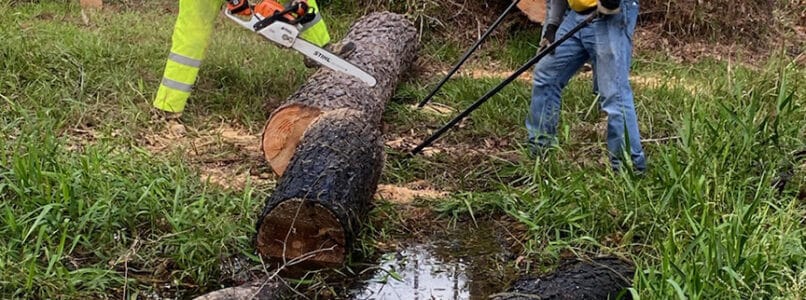
An SBTC DR chainsaw team under the direction of Monte Furrh of Bonham arrived in the Perry area first. Six volunteers worked 10-hour days for a week and completed seven time-consuming chainsaw jobs. That task included removing large limbs—known as widow-makers due to their dangerous potential to harm if left in place—from damaged trees or helping homeowners with downed trees.

“The work is with massive live oaks. It takes time,” Stice said.
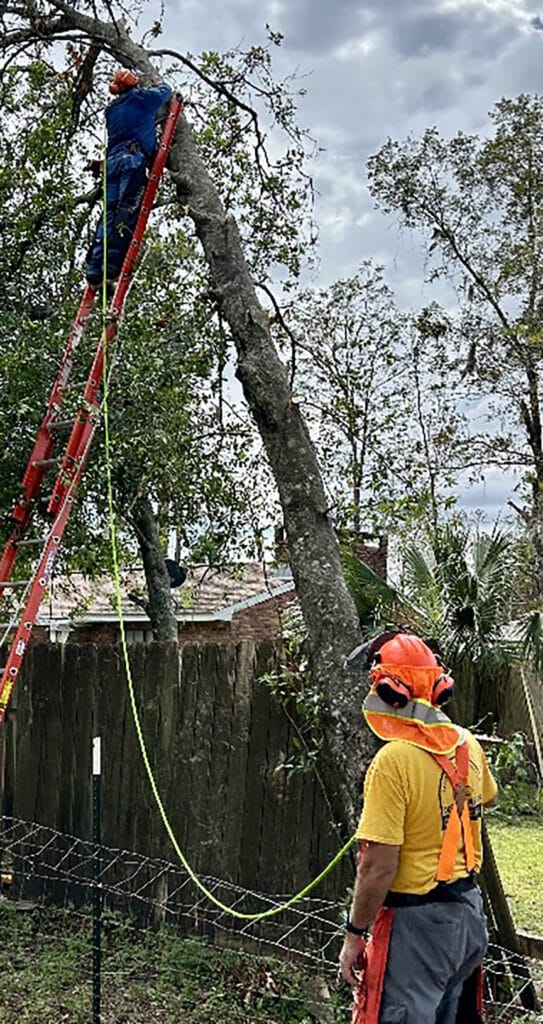
Furrh’s team was relieved by another North Texas team directed by Jesse Hauptrief of Anna on Oct. 1. The team is scheduled to work through week’s end, Stice said. SBTC DR team volunteers come from across Texas, he added.

Florida homeowner Randy Newman posted his thanks for the SBTC DR team’s help on Facebook. “Them showing up to our house was a godsend,” Newman wrote. “They worked all day cutting trees, most of them ‘widow-makers.’ They started the day with a prayer for safety, our community, and for me and [my wife] personally. I can’t explain the true compassion they have for all of us involved in the storm.”

Thus far, SBTC DR teams have recorded one salvation, many spiritual contacts, and many Bibles distributed, Stice said.
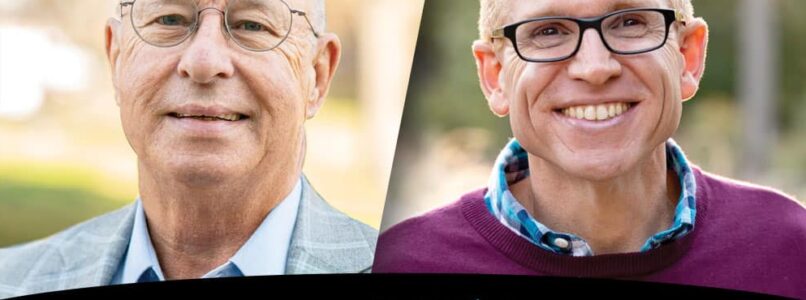

 

25 years of answered prayer with Chris Osborne & Nathan Lino

In November, the Southern Baptists of Texas Convention will mark 25 years of answered prayer at its Annual Meeting at Cross City Church in Euless. Each month leading up to the meeting, the Texan will feature a brief conversation with past SBTC presidents about how they have seen God answer their prayers for the convention over the past quarter century and how they are praying God will bless the convention moving forward. This month, we feature past SBTC presidents Chris Osborne (2003-2005) and Nathan Lino (2015-2017).

Chris Osborne

What were some of your earliest prayers for the SBTC?

I thoroughly enjoyed my time as president and there was one particular thing I prayed about. We were committed, and still are, to the idea of the inerrancy of Scripture and its vast importance in the lives of the churches. My prayer was that as we stood strongly in this vein, that we not become a people who moved from that into silly legalism. I did not want us to become, as Jesus said, people who “strain at a gnat and swallow a camel.”

What is your prayer for the next 25 years of the convention?

It is still my prayer for us that we remain solid on the Bible without going beyond its teaching into areas that will bind us to wrong-headed ideas. I loved and still love this convention and have the highest hopes for it in the future.

Nathan Lino

What were some of your earliest prayers for the SBTC? 

I prayed for our state convention plant to make it—for God to give Dr. [Jim] Richards [the SBTC’s first executive director] wisdom and perseverance, our convention money, and spiritual protection from the enemy. Our convention started with a convention planter literally running the convention from the front seat of his car. I prayed the new plant would become a convention that made it long term. 

How have you seen God answer your prayers regarding the convention? 

As some church plants become far more than we could ever dream or imagine, so did the convention that Dr. Richards planted. That we are a convention of 2,700 churches with a budget of $28 million facilitating the scope and scale of ministry we see today is a miracle of Jesus Christ. 

During your service as president, how were you praying for the convention? 

My big prayer during my presidency was to see a wave of under-40s pastors actively engage our convention. 

What is your prayer for the next 25 years of the SBTC? 

I pray that seeking the manifest presence of the Lord is a primary priority of our convention. Our churches are in need of revival and our state is in need of spiritual awakening. Our secular culture is turning on the Lord and the mission of the church in ways that are catching us unprepared. The only hope of the church in fulfilling our mission during the next 25 years is that we are filled with the manifest presence of our Lord Jesus Christ. 

Q&A: Kaunitz reflects on two-year SBTC presidency, the power of the Holy Spirit, and the primacy of prayer

‘I’ve never been more encouraged or excited’

Todd Kaunitz, lead pastor of New Beginnings Baptist Church in Longview, will conclude two terms as president of the Southern Baptists of Texas Convention at the convention’s Annual Meeting in November. Kaunitz recently spoke with Texan Editor Jayson Larson about how he has seen God move not only in the convention, but in himself, through a laser focus on prayer and a continued commitment to the Great Commission.

Prayer has been a focal point during your time as president. What do you know about prayer today that maybe you would say you didn’t know about it even a year ago?

TK: On a personal level, I feel like in many ways I’m learning how to pray for the first time. Even though I’m three years into this new prayer journey, I feel like the Lord is just showing me more and more about what it looks like to be a person whose posture of life is in submission to Him in prayer. From the pastoral side, I’ve learned so much. I’ve been humbled by the number of pastors I’ve been able to cross paths with, to be able to watch their prayer lives, and hear them talk about prayer. It’s been amazing to network with and learn from like-minded pastors who prioritize leading corporate prayer in their churches. I had no idea before this journey what I was missing personally and what our church was missing. I never want to go back to doing life and church without prayer being the highest priority. 

During your service as president, you, Nathan Lino (senior pastor at First Baptist Church Forney), Jason Paredes (lead pastor at Fielder Church in Arlington) and Nathan Lorick (SBTC executive director) began working together to host prayer retreats for pastors. How have you seen God use those retreats in the lives of those pastors and their churches?

TK: What we’ve seen is a hunger in the hearts of our SBTC pastors to allow prayer to be more incorporated into their daily lives and into the body life of their church. What I’ve witnessed through these prayer retreats is how God has knitted our hearts together with these pastors. 

I mean, the stories we are hearing through these retreats are so similar—stories of brokenness, of getting to the end of ourselves, of finding that what we’ve been missing all along is intimacy with Jesus and more of the power of the Holy Spirit in our lives and churches. We’re learning that what was lacking in our ministries wasn’t programs or strategies, but the power and the presence of the Holy Spirit. We have heard  story after story from pastors who have experienced personal spiritual renewal and who are implementing prayer as the ministry of first importance at their local church. They are leading their churches to become churches that are built upon prayer.

"I never want to go back to doing life and church without prayer being the highest priority."

The 2023 Annual Meeting is fast approaching. What are some of the victories we are going to be able to celebrate, and what are some of the challenges that lay ahead? 

TK: One of the things we are looking forward to at this year’s Annual Meeting is that it’s our 25th anniversary, so we get to celebrate the great work God has done. We get to honor 25 years of fruitful ministry, fruitful partnership. But what I’m most excited about is, we’re going to get a chance to dream about the future. Dr. Lorick, the SBTC staff, and a group of pastors and leaders from all over the state have been working on a fresh mission statement and strategy that we get to run toward over the next 25 years. I think it’s going to be a great balance of celebrating God’s work in the past and anticipating His work in the future. There are so many great things happening. 

As far as challenges, we’ve got to make sure we’re keeping the main thing, the main thing. We’re a big family, and just like any other family, there’s different expressions of how we walk in the shared values we have. As we gather and make business decisions and mission decisions, it’s critical that we make sure we’re holding tight to the commonalities we share as a family and not get distracted by some of the differences that are more peripheral or non-essential to the gospel movement we have been called to together. I think keeping that central is going to be key for us moving forward.

There’s been so much controversy and uncertainty at the national SBC level that has created a lot of discouragement in pastors—and I am one of those pastors. But the closer I get to our state convention, the more encouraged I am. I’ve seen key leaders in our convention who have different positions on various topics that could be divisive, but these leaders are talking through some of these tough issues with humility and grace and in a way that brings us closer together rather than driving us apart—it just encourages me so much. I’ve never been more encouraged and more excited about what’s happening at the state level. To see the partnership we share with theologically conservative churches that are passionately committed to the Great Commission, that’s a very special gift God has given us and we shouldn’t take it for granted. We should count it a privilege to be a part of such a great state convention that is so unified and so missionally focused.

“I am praying we will see a movement of the gospel that advances the Great Commission across our state and around the world and that we would see the greatest gospel movement in the history of the church.”

What will your prayers for the SBTC look like over the next 25 years?

TK: There are three key things I’m praying for our state convention. Number one is that we would become a praying convention. I know that historically, God has had given us leadership that believes in prayer and that believes prayer should be primary for us. I pray that in the future, we will see a prayer movement that would usher in revival and spiritual awakening and that the power of God would be unleashed. Number two, I pray the Holy Spirit would unify us, that we would stand together in our core doctrines and in the missional calling we have—that we would do that without wavering regardless of what culture says or does.

Thirdly, as we pray together and stand unified, I am praying we will see a movement of the gospel that advances the Great Commission across our state and around the world and that we would see the greatest gospel movement in the history of the church. That’s what I’ve been praying for these past two years, and that’s what I’ll continue to pray for in the days ahead.

Families who planted Houston church came for NASA, stayed to spread the gospel

F

amilies who moved to the Clear Lake community of southeast Houston to start the U.S. space program more than five decades ago started something else that continues to impact the world: Clear Lake Baptist Church. 

They met in homes for a while and sent mailers to the community to gauge interest—and they had a great turnout, said John Aaron Matthew, pastor of Clear Lake Baptist Church. “They have continued to minister here in the community and meet needs, to be a light for all these years,” he said.

Some of the founding members are still there, having retired from NASA or related contractors IBM or Boeing, and newer generations of space program workers have come along. “It’s pretty fun to have these people as deacons and church members,” Matthew said.

“It’s cool to know that those who are working at the highest levels of science believe in God as our Creator and they are worshiping Him even from the space station and even as they’re working on these projects.”

One new member recently graduated from college and moved to Houston to work for Mission Control, and another church member has trained astronauts. The pastor is friends with the daughter of an astronaut who perished in the Challenger explosion. 

When Matthew was on a trip to Israel with the Southern Baptists of Texas Convention last year, his friend Bob Hines was the pilot on a SpaceX mission to the International Space Station. 

“As I was posting pictures of what we were seeing from the ground, he sent me pictures of us from space and said, ‘Looks like you guys are having a great time,’” Matthew recounted.

Popular opinion doesn’t link science with God, but Matthew has heard countless testimonies of God’s involvement from members dating to the beginning of the space program. Hines, for instance, was praying for people on earth while he was in the space station, Matthew said. 

“It’s cool to know that those who are working at the highest levels of science believe in God as our Creator and they are worshiping Him even from the space station and even as they’re working on these projects,” Matthew said. “Person after person at high levels at NASA have faith, and they are worshiping God, and they view what they’re doing as part of using their gifts and abilities to glorify God. They see Him in creation all around.”

John Aaron Matthew, pastor of Clear Lake Baptist Church in Houston, travels to India for a missions partnership in which he teaches biblical theology to support church planting.

A New Orleans native, Matthew graduated from Southwestern Seminary before working in college ministry with the Tennessee Baptist Convention and earning a Doctor of Ministry from Southeastern Seminary. Along the way, God drew his heart to church revitalization. 

He discovered Clear Lake, which had been used by God to do great things but was in a season of decline, and God moved him there with his wife Emily and two children in 2015. At the time, the church was mainly senior adults and his 5-year-old and 3-year-old were two of about 10 children attending.

“We haven’t seen fast, explosive growth, but as we’ve been faithful to preach and to pray and to love and to stay, we’ve seen God bring health and growth to our church in a meaningful way,” Matthew said. “Our church is spiritually healthy, loving, and unified.”

Attendance on Sundays ranges from 150 in the summer to 200 on a high attendance day, and the children’s ministry has grown to about 40 kids, he said.

“It didn’t happen overnight, but now we’ve got a leadership team of about 30 people that went to the Equip Conference and were encouraged,” Matthew said. “It’s a challenge to develop leaders, and it takes time, but we have new leaders stepping up and a growing ministry to young families.”

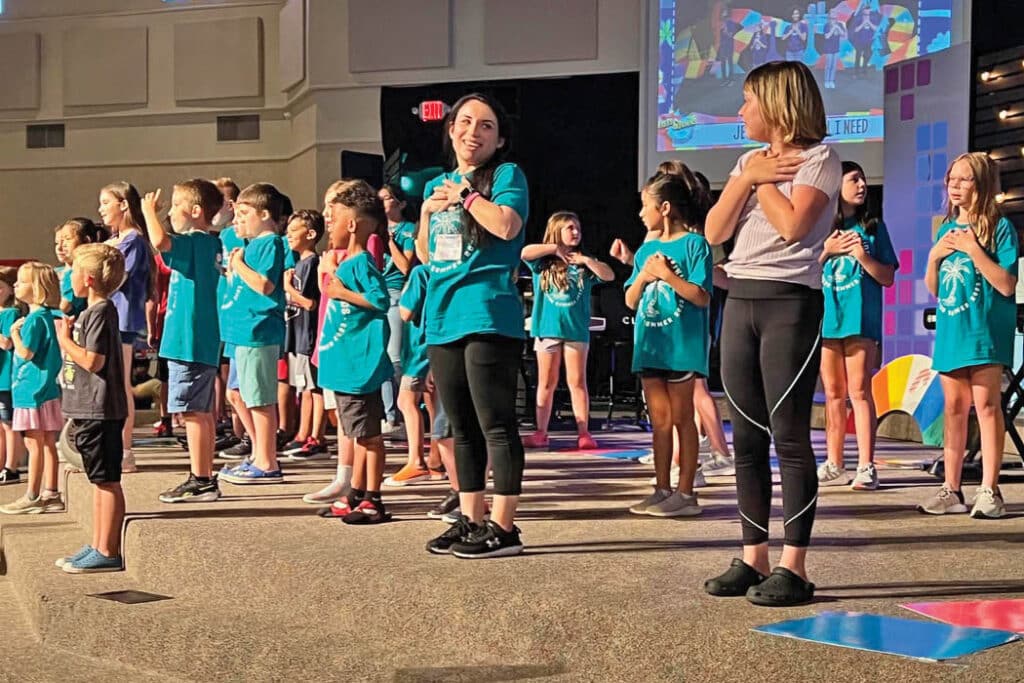
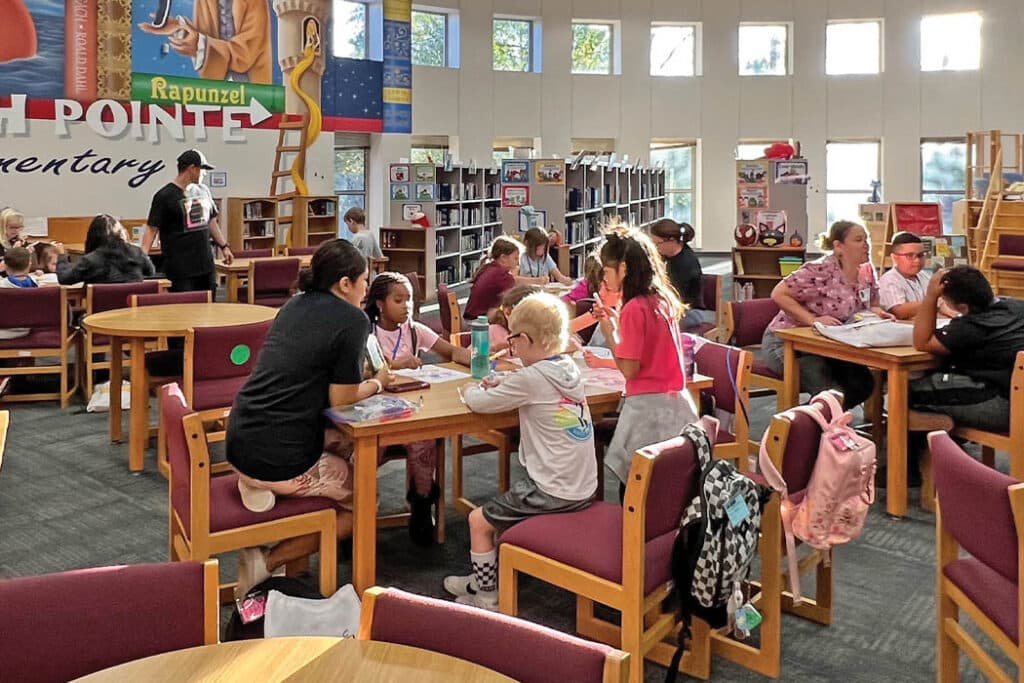
The children’s ministry at Clear Lake Baptist Church in Houston grew from about 10 kids in 2015 to 40 children most Sundays now.
Clear Lake ministers to about 30 children every week through an afterschool program it started at a local elementary school. SUBMITTED PHOTO

God used a love for reaching the nations to draw Matthew to Clear Lake. Houston is the most diverse city in America, he said, with more ethnic groups than any other city. Ministry to international students had been part of Matthew’s college work, and the University of Houston campus in Clear Lake appealed to him.

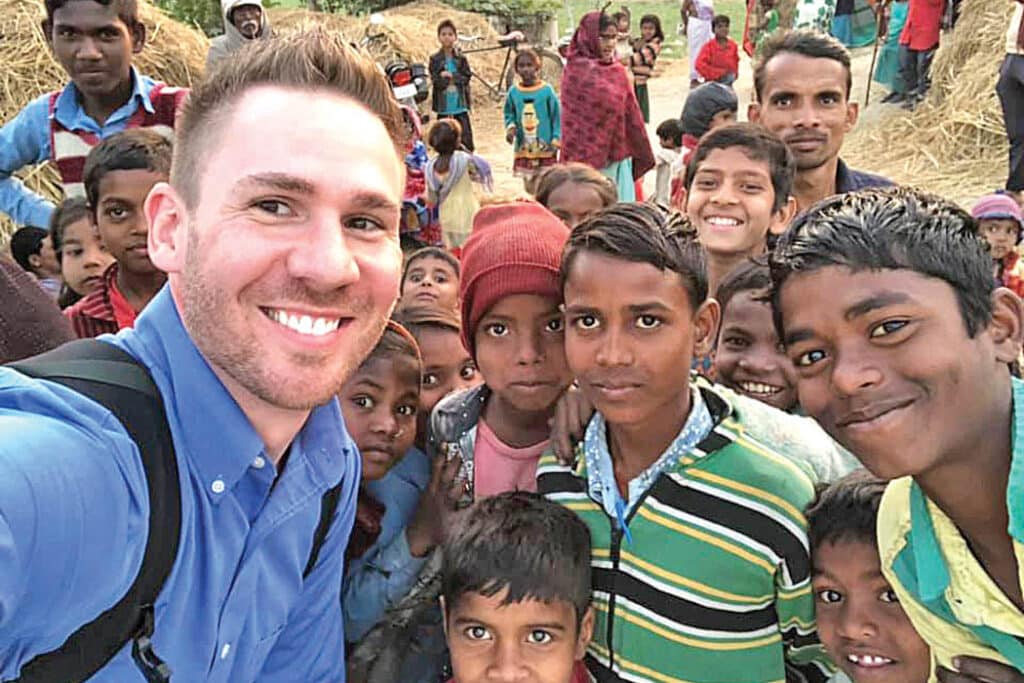
Also, Matthew had a previous missions partnership in India, and he led Clear Lake to get involved. “As a small church that doesn’t necessarily have a ton of resources, we still can make a Great Commission impact,” Matthew said, adding that the church was introduced by the International Mission Board to a church planting network in India. 

“We’re able to fund monthly support for 10 church planting families among 10 different unreached people groups in India,” he said. Matthew also travels occasionally to teach biblical theology to about 100 Indian church planters. 

“We just got a report that this network of churches that we sponsor has shared the gospel with nearly 1.3 million people” and saw more than 158,000 decisions made for Christ, he said. 

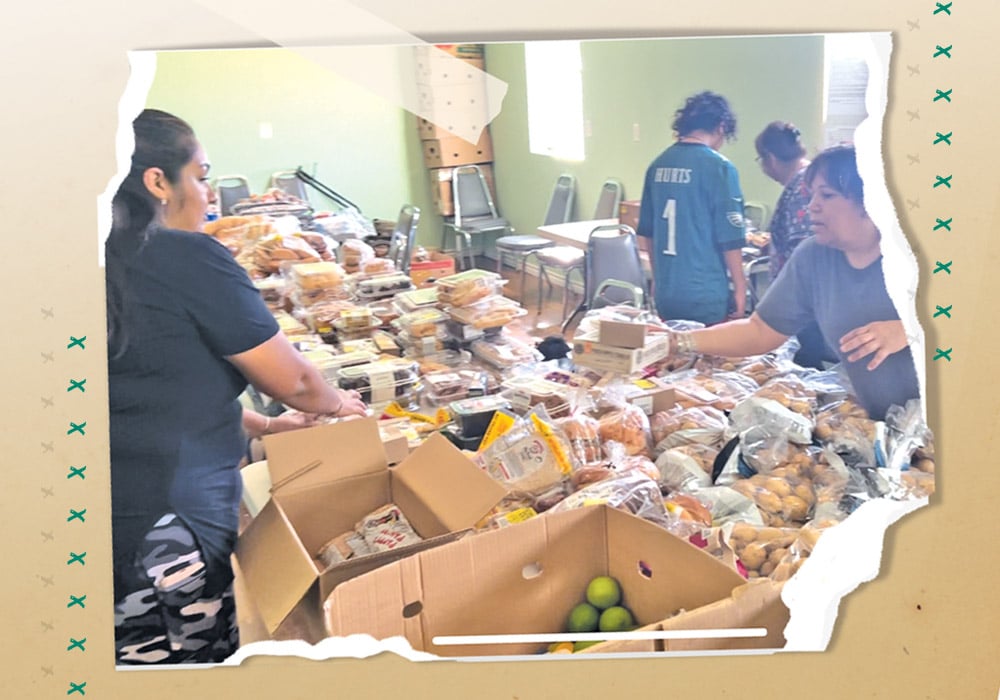
Locally, Clear Lake established a food pantry to feed the community. When COVID demands pressed beyond their ability to provide, they reached out to five other churches for help. Now Clear Lake partners with those churches to run an independent food pantry providing groceries for about 300 families per week. 

The church also started an afterschool program in a local elementary school, ministering to about 30 children each week, said Matthew—who also serves as chairman of the SBTC’s Texas Ethics and Religious Liberty Committee and on the leadership team of the convention’s Young Pastor Network.

“When you invest in a church and you take time and you don’t give up, you see fruit,” Matthew said. “Fruit doesn’t come quickly, typically. It takes years of tending and cultivation. But when you walk through difficulties, you get to be a part of experiencing the spiritual fruit that God brings in season.”

Fort Worth pastor bestows priceless gift by donating kidney to staff member

A blessing, to give and to receive

Rudy Kebreau and Randal Lyle are bound by far more than their mutual faith and pastoral calling these days. Lyle, senior pastor at Meadowridge Community Baptist Church, gave Kebreau, his next generation and children’s pastor, a priceless gift this summer when he donated a kidney to his friend and associate.

It was an unlikely match made this side of heaven that even astounded transplant doctors who rarely, if ever, see perfect matches between Anglo donors and Haitian-American recipients. Yet, after extensive testing, Lyle met all the markers for donating a kidney to Kebreau. 

“God gave me good health and God brought us together,” said Lyle, 52. “We want the Lord to be glorified in this. He put it all together.”

The pastor sees the transplant process as an object lesson for his congregation. “We are a multi-ethnic church,” Lyle said. “I think it was a testimony that, in a sense, we are all the same. The issue was never anyone’s background or skin color or anything.”

“The church had been praying for Rudy and trying to figure out how to help him. Donating a kidney was not on my radar.”

From Boston to the Metroplex

Kebreau, 48, never expected to leave his native Boston for Texas. But God called and Southwestern Seminary beckoned, so he and his family moved to Fort Worth.

Kebreau, his wife, and two daughters started attending Meadowridge a decade ago, during his last semester in seminary. Lyle had been the pastor about nine years at that point and Meadowridge was blooming again following a revitalization effort started 10 years prior with the assistance of Wedgwood Baptist Church.

“Everyone [in the family] liked the different departments,” Kebreau recalled about the church. “We decided to make it a home. … We came for the church.”

Soon the church came calling for Kebreau, when Meadowridge’s children’s minister left. Kebreau, who by then had completed a Master of Arts in Christian school education at Southwestern, had to be persuaded to apply for the job.

“I put in my resume just so everybody would leave me alone,” Kebreau said with a chuckle. “The Lord just did what He was going to do.” Kebreau came on staff in March 2014 and was an immediate blessing, Lyle said. 

“It was the Lord’s providential timing,” Lyle said. Little did he or Kebreau understand then just how providential the timing was.

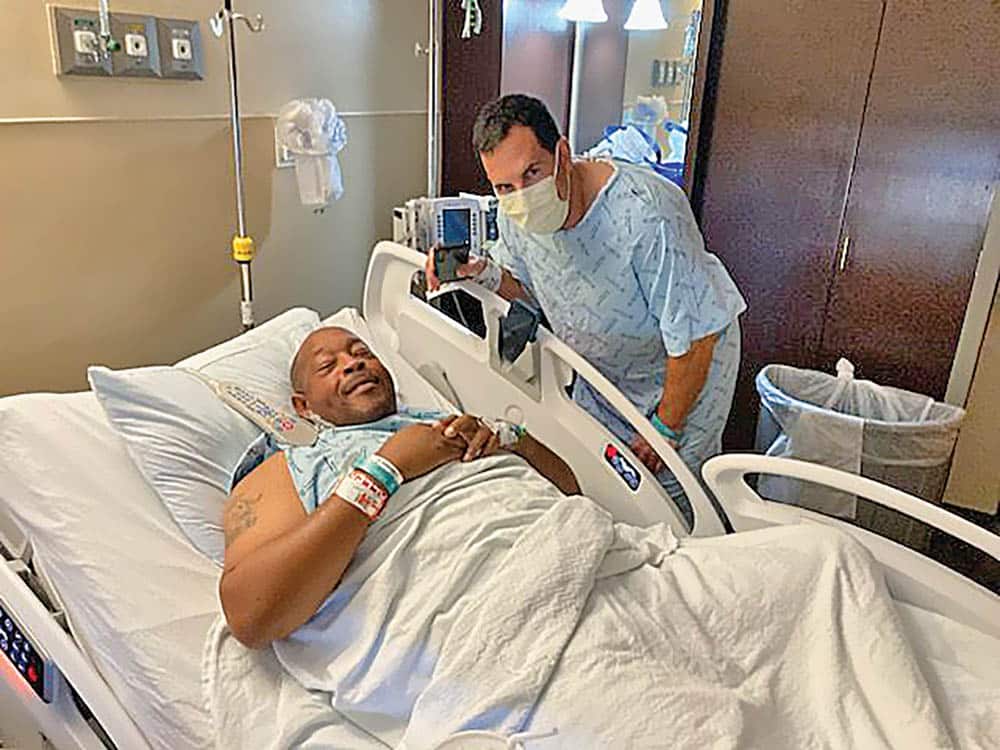
Lyle visited Kebreau’s hospital room following the successful procedure. Kebreau is continuing to recover following the transplant and hopes to be back at work soon. SUBMITTED PHOTO

‘Why would I not help?’

Kebreau, who through a variety of circumstances had lost insurance coverage while in seminary, had let his diabetes go unchecked for years. His ankles began swelling and his blood pressure became dangerously elevated. Consultation with a nephrologist revealed Kebreau’s kidneys were failing.

It seemed like the worst news possible. Kebreau had lost his mother to kidney failure years before. He reluctantly went on home dialysis and was placed on a transplant list at Texas Health Fort Worth. The Kebreaus received the impression it would take years for Rudy to get a kidney.

“The church had been praying for Rudy and trying to figure out how to help him,” Lyle said. “Donating a kidney was not on my radar.” Yet from time to time, he wondered if he could donate.

“Whatever God blessed you with is to bless other people,” Lyle said. “I knew my good health was for more than going to the gym.”

At the same time, Lyle was reading A Serious Call to a Devout and Holy Life, a book by 18th century English theologian William Law, a man who influenced George Whitefield and John Wesley. As part of his thesis, Law exhorts wealthy Christians to use their gifts for God’s glory. 

Lyle realized that exhortation had deeper implications. “It’s as if the Holy Spirit prompted me, ‘You’ve got an extra kidney,’” he said. “If I have an extra kidney and a brother who needs help, why would I not help?”

Lyle’s wife, Samantha, “didn’t bat an eye” when the pastor gave her the news.

“OK, if that’s what God is telling you to do, go ahead,” she urged.

Lyle submitted the online transplant application and the transplant center contacted Lyle, who was soon undergoing psychological and physical testing and counseling required for potential donors.

“I felt healthy,” he said. “But I didn’t know if I could pass the test. They drew lots of blood. They checked for every disease known to man, did chest x-rays, heart exams, kidney tests, organ tests.” 

Not only did the test results come back fine, but Lyle matched every marker needed to be Kebreau’s kidney donor.

The two pastors learned the good news in late March 2023 and announced it to the church in April. At Kebreau’s insistence, they set the date for the procedure for late June, after Meadowridge’s vacation Bible school and following his daughter’s high school graduation in May.

On June 28, Lyle endured a laparoscopic procedure to detach the healthy kidney, although the actual kidney removal necessitated a larger abdominal incision. Two surgeons were present, one to remove the kidney and the other to supervise the preparation and transplant of the kidney to Kebreau, leaving him with a total of three kidneys (the original kidneys are not removed in transplants).

Making every day a ‘kidney day’

So far, Kebreau’s recovery has gone well. He recently had his dialysis port removed, takes anti-rejection medicines, and must stay in relative isolation at home until December. He hopes to be permitted to go back to his office at church on days when the facilities are empty even sooner.

“I feel great,” Kebreau said.

For Lyle, the recovery has also continued smoothly. He was not allowed to lift anything over 10 pounds for six weeks; it was about eight weeks until he could run again. He has lingering tightness from the abdominal incision but is otherwise back to normal.

Normal, but changed.

During his brief hospital stay, nurses and techs would come in. Many expressed astonishment that he had donated a kidney to a person who was not a relative. 

“Seeing their reaction, I realized that every day needs to be a kidney day for me,” Lyle said. “I need to be thinking, ‘How do I show the love of God in such a way that it’s a big deal to someone else?’”

Lyle learned he was only the second living kidney donor so far in 2023 at Texas Health. He told the transplant team he would be happy to talk to others about what to expect.

He said he would do it “100 times again” if he could, advising people to “slow down [and] figure out how to let your light shine before men.”

And make every day “a kidney day.”

‘A great woman of God’: Mary Frances Melton passes away at age 90

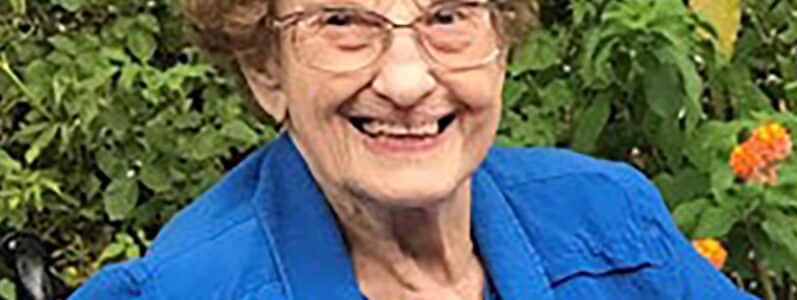
ABILENE—Mary Frances Teaff Melton died Wednesday morning, Sept. 20, in Abilene. She was 90 years old.

A Texas native, she married her husband of 72 years, T.C. Melton, in 1951. Mary Frances was a graduate of Hardin Simmons University and taught in public schools for 20 years.

The Meltons served churches in West Texas for decades as pastor and wife. Later, they became an encouragement to pastors in that part of the state and great supporters of the Southern Baptists of Texas Convention as T.C. became a consultant for the convention.

Said SBTC Executive Director Nathan Lorick: “The Meltons have been such a blessing to the SBTC. Mary Frances served the Lord faithfully with such a sweet spirit. Our hearts and prayers are with T.C. and the Melton family as they grieve the loss of a great woman of God.”

SBTC Executive Director Emeritus Jim Richards, Lorick’s predecessor, knew the Meltons well.

“Mary Frances Melton was a supportive pastor’s wife and vital ministry partner for over 70 years,” Richards said. “It is impossible to tally, this side of heaven, the ways God blessed His people through her. I’m praying for my friend T.C. as we all await the day when we’ll see her again.”

Services are being held under the direction of Hamil Family Funeral Home, 6449 Buffalo Gap Road, in Abilene. A graveside service will be held at Rose Hill Cemetery at 10 a.m. Saturday, Sept. 23. A funeral service will follow at First Baptist Church, 301 Locust, in Merkel, Texas.


Budding Hispanic plant in San Angelo is already looking to plant more churches

Multiplication Mindset

S

antiago Machado’s path to following Christ and pastoring Centro Cristiano Beraca was a dark and difficult one.

He grew up in a household where everyone, including his mother, practiced witchcraft. When he turned 16, he began serving in the military in his native Cuba, where he encountered many problems—including a wreck in a military truck that crashed because of his negligence. He survived the wreck but was sentenced to three years in military prison.

Machado describes his life at that point in very simple, sobering terms: “Very bad in every way.”

That is, until Jesus showed up in Machado’s life in a most unexpected way. 

At the beginning of his incarceration, Machado asked a friend to go to his home and tell his mother what had happened to him. The friend did as he was asked and returned to report Machado’s mother had given her life to Christ after hearing the gospel a month earlier. Not only that, but the friend told Machado he had also given his life to Jesus after hearing the gospel from Machado’s mother.

Upon hearing the testimony of his friend, and how Jesus had changed his mother’s life, Machado—in an act of desperation—decided to give his life to Christ, as well. He began reading the New Testament his friend gave him and, before long, started seeing God working in the circumstances of his life.

“The vision of the church is not to remain static. We have to raise up missions and churches. This is our passion.”

‘God had plans for me’

Fifteen days into Machado’s imprisonment, the prison director took 50 prisoners in a large truck to perform hard labor. As the prisoners returned from the job, Machado and another inmate were asked by a captain to put a flashlight in the back of the truck because it was getting dark. While the two men made their way to the back, the truck was hit by another vehicle. Many in the vehicle were killed, including the captain. 

Machado crawled out of the truck and fell onto the road. He was found by emergency workers just outside the vehicle, conscious but in shock. “I could speak,” Machado said, “but I felt that God was telling me not to speak. My lips were sealed.”

Machado did not speak for the next three months—not in the hospital, and not when they released him back to the prison. Because prison officials did not know what to do with him since he wasn’t speaking, they returned him to his military unit. After 20 days back with his unit, a doctor declared Machado unfit to continue in the military, so he was released from his service. As Machado sees it, God worked a miracle that day. Out of a three-year prison sentence, he served only 15 days.

“God had plans for me,” Machado said.

Living in the Lord’s service

Returning to his mother’s home, Machado began to serve the Lord in the church. He would go with his mother to share the gospel in their community, fueling his passion for seeing lost people saved. It was at this church Machado met his wife, Irene, beginning a family that includes two children and a marriage that is 35 years strong and counting.

The Machados were eventually sent as missionaries to Punta Brava in Havana for three years, beginning in 1986. He would go on to pastor eight churches and start 15 home study groups. Eight of those groups sprouted into churches that are still operating.

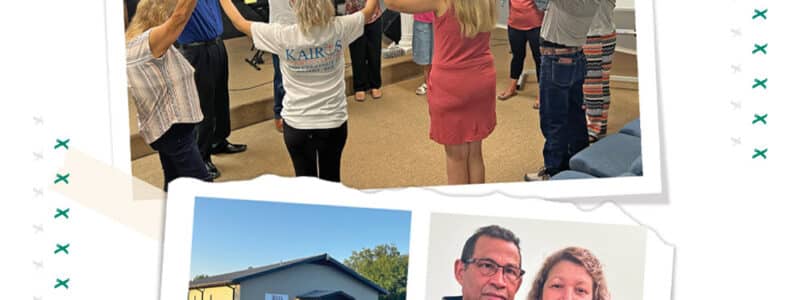
In 2012, Machado received an offer to pastor a church in San Angelo, Texas—which he accepted. But as the years passed, he began to sense the Lord calling him to plant a new church focused on missions and evangelism—two things very close to his heart. Sensing God moving him in a new direction to become a planter, Machado stepped out in faith and left his church and the financial security it provided. That’s when he met Edgar Trinidad, pastor of Kairo Christian Center in San Angelo. 

As Machado and Trinidad got to know each other, they discovered they had a shared vision for planting a church in San Angelo. Trinidad eventually proposed a partnership that would allow Machado to serve as a volunteer associate pastor at Kairo while learning more about planting a church. Machado accepted the challenge.

A new plant, a new path

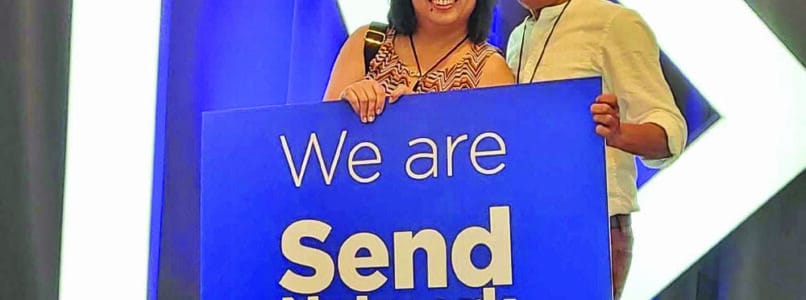
Machado worked under Trinidad’s leadership for two and a half years. His training included work with Send Network SBTC, a church planting partnership between the Southern Baptists of Texas Convention and the North American Mission Board. After Machado was certified as a planter by the convention, he and Trinidad began exploring a location to plant. The Lord directed them to North San Angelo, where Trinidad’s church was able to purchase a building that would house the new plant. 

The first service at the new church, Centro Cristiano Beraca, was held Oct. 1, 2022. As the church nears its one-year anniversary, 25-30 people are now attending on Sundays.

“God has given us many strategies” to reach the community, Machado said. For example, Centro Cristiano Beraca opens its doors to feed the community every week. It provides an opportunity for the church to meet physical needs and minister to people spiritually, Machado said. The gospel is preached before food is served—something that has led 20 people to make decisions to follow Jesus or be baptized.

And though it is still a young church, Centro Cristiano Beraca is already looking to raise up the next generation of planters so the gospel mission can move forward.

“The vision of the church is not to remain static,” Machado said. “We have to raise up missions and churches. This is our passion.”

What’s your story? ‘Here I am Lord, use me!’

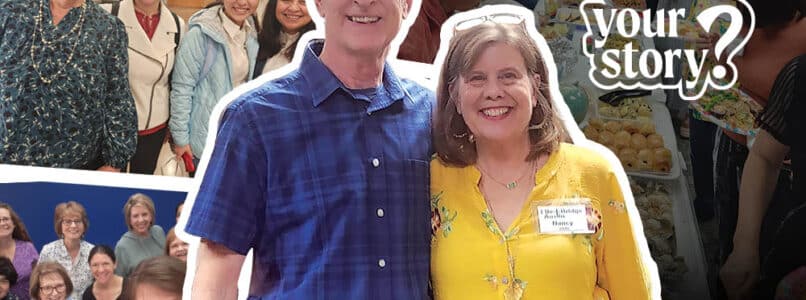
My first English as a Second Language (ESL) student was named Claire. At that time, about 12 years ago, I was a volunteer with the Christian Women’s Job Corps and we were asking a group of women what they wanted to learn. We got the usual answers pertaining to job skills until Claire said, “I want to learn English and I want to learn about God.” I wasn’t sure how I was going to help at the Job Corps, but when she spoke up, it was just like, “Oh yes, that’s where I want to be.”

So, it was a one-on-one semester with Claire, and then the next semester we had maybe five students and the next year, five or six. The program just kind of evolved until there were fewer people who needed job skills and there were more and more people coming in who needed ESL. So the coordinator at the time said, “We’re going to change this to an ESL program.” I worked as a volunteer teacher for a couple of years, until the coordinator retired. The program had no leader at that point, and I was about to retire from my job, so I was happy to step in and serve in that capacity. 

I served as coordinator of the ESL program for the next nine years. At first, we were called Life Bridge and came under the umbrella of a ministry in Austin. Since then, we’ve become part of the Great Hills Baptist Church ministry. In 2022, when we became part of Great Hills’ ministry, we had 159 people attend at some point and 93 regular attenders. We had another 30 to 40 who were learning online. The Great Hills transition has been huge for us.  

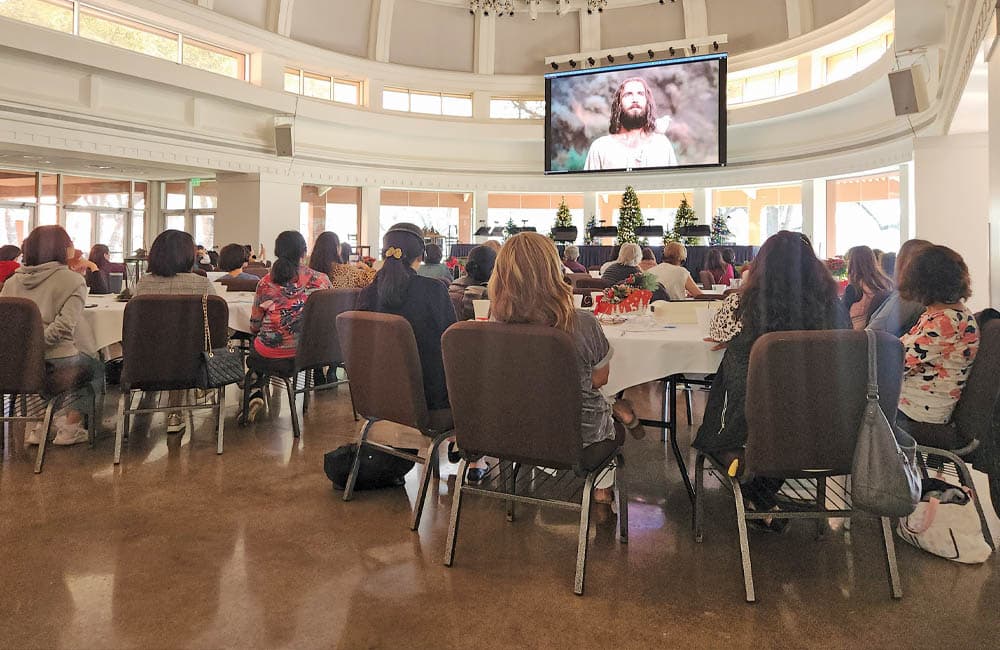
And the wonderful thing was, these people were hungry for the gospel. We do one hour of Bible study and then about an hour and a half of English on top of that. Sometimes in the past, people would skip Bible study because it was the first hour and they would just come for the English. Last year, they were coming for the Bible. They were hungry to know more. In 2022, we showed “The Jesus Film” and Daniel Van Cleave, the pastor we worked with, wanted to have everybody in the same room hearing it in their own language at the same time. We worked it out so that we could show the movie on a big screen. Everybody was able, using their phones, to hear it in their own languages using earbuds. We had people listening in 12 languages at the same time. 

ESL students watching “The Jesus Film” in their own languages using earbuds.

"What’s my story? My God is faithful! Greater is He who is in me than he that is in the world."

It was so exciting because they got to hear in two hours, in their own heart language, what we’d been trying to teach all year long in English in bits and pieces. So, for everyone to hear the story of Jesus in their heart language was amazing. You could hear a pin drop in the room when they were watching this movie and there were gasps like, “Oh!” when Jesus rose from the dead.

We had decision cards in their own languages, and we had some who wanted to follow Jesus. We had others who wanted to know more. So, one of our Bible study teachers started a Bible study on Sunday mornings to answer their questions and help them explore the Bible. That same person is going to be starting an official ESL Sunday school [class] because there are people coming to the church wanting to have an ESL class on Sunday mornings. We have just seen this hunger and a response to the gospel this last year like never before. God has been so faithful. Sometimes I just feel like I’m on this ride watching Him work—I’m just one little spoke in the wheel. God’s doing this amazing thing that I just get to participate in and watch, and I praise Him mightily for all that He’s doing.

I have made friends—lifelong friends—both with students and the teachers. I never expected that. There have just been so many blessings in addition to seeing the faithfulness of God. Last year, we started seeing more people than ever before following the Lord. There was one young woman from Iran—and it’s dangerous to become a Christian if you’re an Iranian—who came running down the hall about five or six years ago saying, “Nancy, Nancy, I’m your sister.” And I said, “What?” She said again, “I’m your sister,” and she meant, “I’m your sister in the Lord”—that she had made a decision to follow Christ. You can’t trade that for anything. It’s just been the most wonderful journey. 

I’ve recently retired as coordinator and now direct our online ESL program. My husband, Wayne, and I have five grandchildren scattered all over, so it came time to retire, and I realized I could still teach by Zoom from just about anywhere.  

What’s my story? My God is faithful! Greater is He who is in me than he that is in the world. The evil one will throw you curveballs, but the Lord always proves Himself greater.

What's your story?

Want to share a story of what God is doing in your life or your church? 

Share your story here

SBC president Bart Barber shares optimism for future during NAMB visit

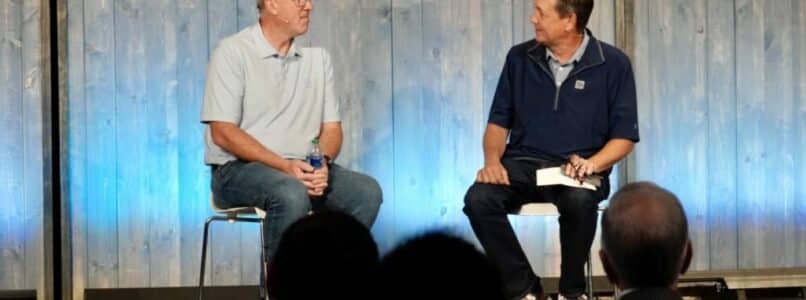
ALPHARETTA, Ga.—Southern Baptist Convention President Bart Barber shared his optimistic outlook for the future as he visited the offices of the North American Mission Board (NAMB) on Sept. 6.

“I’m going to predict that spiritual awakening is coming for America, and that we’re going to have the opportunity to benefit from that and participate in that, and it’s not just wishful thinking,” Barber said in response to a question from NAMB president Kevin Ezell about the future of the SBC. “As a student of our history, the spiritual awakenings that we’ve had before have come in times of profound darkness. Just because that feels like a trend right now doesn’t mean that we’re stuck in that.”

In describing the challenges facing the next generation, Barber described their situation as inheriting a “raw deal.” He referred to statistics that show how 46% of adolescents today are reporting that they consistently deal with feelings of anxiety and depression.

“They’re unhappy with what their culture has handed to them,” Barber said. “There’s going to be a profound opportunity to point them toward answers to the longings and questions that they face, and that’s always [been] there. But, I think it’s going to come in a deeper, more profound way. I think that Southern Baptist churches are going to be one group of churches that are still around actually preaching the Gospel whenever that moment comes. I’m optimistic about where things are headed.”

Before speaking to the future of the SBC, Ezell asked Barber to share more about what the last year and half have been like serving as president, and Barber discussed the joy of meeting Southern Baptists from across the nation. Hundreds of people and churches have sent him messages of encouragement, letting him know that they have been praying for him.

But neither Ezell nor Barber shied away from the ongoing challenges facing the SBC.

“There have been some ways that God has blessed us amazingly over the last couple of years, but there have also been some obvious ways that God’s hand that’s on the SBC to bless the SBC, is also on the SBC to humble the SBC,” Barber said. “Serving in a time like that poses some additional challenges.”

Despite the challenges, however, Barber maintains that the SBC remains the best way for Baptist churches to partner together for the sake of the Great Commission.

“Over the course of time, we have repeatedly found reasons to cooperate instead of reasons to separate,” Barber said of the history of Southern Baptists. “There have always been reasons to separate from the beginning … but even with reasons to separate in front of us all the time, God’s continually led us to reasons to cooperate that have overcome the reasons to separate.”

Barber called the SBC’s Cooperative Program “genius” and went on to use the church he pastors, First Baptist Church of Farmersville, Texas, as an example of how a congregation in a small town supports missionaries around the world and can travel to serve alongside and learn from those on the mission field.

“Even the things that we do on our own,” said Barber, who pastors FBC Farmersville in North Texas, “are enhanced and made stronger, made wiser and more efficient, by the fact that we’re able to draw from the knowledge, planning, encouragement and training that comes out of this thing we’ve all built together. It’s a beautiful, I believe divinely inspired and planted, thing that’s going on in the Southern Baptist Convention.”

Before closing the meeting, former SBC president and current president of Send Relief, Bryant Wright, prayed over Barber and the days ahead for the Southern Baptist Convention.

What’s your story? ‘Here I am Lord, use me!’

The Lord moved me from my home in Manila, Philippines, in 2004. I’ve been here in Texas since 2011. God also gave me a hunger to know His direction for my ministry. I began to see it during my third year at Criswell College. We were doing a practicum in Oak Cliff and I was working with a multi-language church. As I listened to people in Texas worshipping in their mother tongue, I got the sense that God wanted me to preach His gospel in my native Filipino dialect. 

Having received a direction from the Lord, my wife, Alpa, and I began to visit Filipino restaurants from DFW to Plano. There was one particular restaurant in Plano, owned by four ladies, where I asked them, “If I bring people and do a Bible study here in your restaurant every Friday night and pay half of the bill … will you allow me to do the Bible study?” They laughed and said, “Of course, it will increase our business.” These ladies were my “persons of peace” to enable my ministry. So I started a Bible study in the Filipino restaurant in our dialect, and I also invited the owners of the restaurant. I shared the gospel with them and they prayed to receive Jesus as their Lord and Savior.

Soon, four of my regulars approached me and asked, “Will you bring that same Bible study to our town, Greenville?” I asked, “Where is Greenville?” They said, “It’s way far east. If you are from here, you just go east on I-30 and you will not miss Greenville.” 

So I went, and we started Bible studies there maybe six months before my graduation. I also started attending Southern Baptists of Texas Convention church planting seminars and I found a sending church. We moved to Greenville in 2019. I instantly fell in love with the city, the culture, and the people. I think it’s God’s thing. 

We started a Bible study in my home and I began to transition to preaching. After a couple of years, we had 50 people meeting with us, and then the pandemic hit. In order to work within the quarantine regulations, we told our people that the first 25 to register during a week could attend one Sunday, and then another 25 could attend the next. In a way, God used it to grow our church. As things began to open up again, we were near 70 people some weeks. We needed a new place to meet and rented a building temporarily. 

“What’s my story? It’s not what you know and what you have. It’s your heart that is willing to say, ‘Here I am, Lord, use me.’ That’s all there is.”

With the help of the Hunt Baptist Association, we were able to find and buy the building of a church that had closed. By this time, we had started outreaches in Forney and Plano. My family travels from Greenville to these locations on Sunday afternoons. Our plan is to disciple leaders to preach and pastor these congregations as freestanding churches, sent by my church, Genuine Faith Community Church. And now, we even have a chance to start a Hispanic congregation in Richardson. We have people meeting in 10-15 homes as well. The Lord is so amazing. It blows my mind. Glory to God! This is all His doing. I just said, “Lord, here I am. Use me in any ways that your name will be glorified.”

It is very important for a pastor or a servant or a missionary to have a willing heart. Last year, a stranger came to my house saying that he’s also a pastor from the Philippines and he said he’s here to plant a church. So, I allowed him to reside in my house for six months and he became a friend and a brother. He helped me in our church here in Greenville. I asked if he would, with or without anything, plant a church in the Philippines. He said he would, so I told him, “Go home [to the Philippines], wait for me there, bring me to where you are, show me what you’re doing, and we will plant a church—with or without anything.”

At the time, my son was studying in the Philippines and graduated college last June. So my wife and I, even without enough, went home for my son’s graduation. I challenged my church of 50 people to bring me to the Philippines. My pastor friend now had a group meeting in a Muslim part of the country. I met with 24 pastors and introduced church planting to them. Some of them were meeting in little brush shelters—not really buildings at all. 

We visited various provinces and islands, speaking to city officials, sharing the gospel, laying the groundwork for churches all across the country. Isn’t it amazing how the Lord is making me witness His salvation and His way of bringing His salvation to Filipinos in the Philippines?

Who am I? Who am I? I witness the glory of God, and not because of my capacity. If your heart is willing, God will use you and show you how amazing His church planting is.

What’s my story? It’s not what you know and what you have. It’s your heart that is willing to say, “Here I am, Lord, use me.” That’s all there is.

What's your story?

Want to share a story of what God is doing in your life or your church? 

Share your story here