Author: amadmin

2,000 turn out to oppose Houston ordinance; vote expected on Wednesday

Our Houston-area correspondent Bonnie Pritchett says around 2,000 people showed up today (May 13) to voice opposition to Houston Mayor Annise Parker’s proposed nondiscrimination ordinance—including pastors representing Houston’s wide ethnic diversity and a large group of African American leaders including NAACP representatives.

The proposed ordinance is on the agenda for a vote during Wednesday’s meeting (May 14), but Pritchett says several council members seemed less firm in their support than before. We will post a story late tomorrow or on Thursday following the council meeting. 

Apparently, the section pertaining to open use of public restrooms and showers for transgendered people was scrapped because of wide public opposition. 

“We should not have to be here,” Max Miller, president of the Baptist Ministers’ Association of Houston and Vicinity and pastor of Mount Hebron Missionary Baptist Church, told council members. 

According to Mount Hebron’s website, Miller has served on the Mayor’s Ministerial Advisory Committee and is a member of the NAACP Houston chapter. 

He said the proposed ordinance insults the intelligence of those who fought for and are protected by the Civil Rights Act. Miller said advocates of the ordinance have charged opponents with being divisive. Pointing to the crowd, Miller said, “As you have seen, we stand together.”

Houston City Council delays NDO vote

Houston’s controversial proposed nondiscrimination law was delayed on Wednesday as city council members gave pause amid increasing scrutiny from citizens following two overflow crowds at public hearings.

Texas Values Action President Jonathan Saenz said the council’s decision to delay a vote on the ordinance until next week is a rejection of Mayor Annise Parker’s attempt to fast track the law through the chamber without proper scrutiny.

A news release from Texas Values is here

A similar San Antonio law passed in late summer, but not without some amending and prolonged debate.

The proposed law would give explicit legal protections without regard to sexual orientation, gender identity or marital status and seeks to open public-use restrooms and showers to transgendered people according to their perceived sex.

UPDATE: Houston public invited to Tuesday (1:30) hearing on nondiscrimination ordinance

The proposed Houston nondiscrimination ordinance (read story here) to expand special civil protections to citizens based on sexual orientation, gender identity and marital status will be the focus of a public hearing at 1:30 p.m. tomorrow (Tuesday, May 6) at the City Hall chambers, 901 Bagby St. in Houston, second floor.

The ordinance is on Wednesday’s city council agenda and could come to a vote. The ordinance will be restrictive toward business owners with conservative religious beliefs. As drafted and offered by Mayor Annise Parker, it would also open the use of public facilities, including restrooms and shower rooms, to people based on their perceived gender identity. This is a case where the feel-good cause of the moment is superseding good sense among some in the Houston civic and business communities and elsewhere. 

Those with a biblical worldview must speak kindly but boldly. 

Texas Values Action is working hard to get the word out. If you are a pastor or concerned citizen in Houston, let your voice be heard.

Am I my brother”s keeper? Yes (so vote)

The head scratching you see over Houston Mayor Annise Parker’s proposed nondiscrimination ordinance (see the cover story) is but one more example of Christian negligence in civic duty. 

What more could be deduced when only 13 percent of eligible voters turned out last November to re-elect, for a third term, the first openly lesbian mayor of a major American city, who was intent on liberalizing her city’s social policies? One could support, theoretically, a lesbian conservative who didn’t have an ax to grind, provided she was the best available choice. But this was different.

Houston’s Union Association has 500-plus churches, some of the largest of which have thousands of members living in Houston proper. And I’m not including other theologically conservative congregations outside our fold. Where’s the electoral beef?

In San Antonio, with 1.4 million people, only 29,454 votes were cast last May in an election that gave a third term to Mayor Julian Castro, who championed a LGBT-tilted nondiscrimination ordinance passed last summer despite the courageous efforts of a few Christian leaders.

Houston’s Parker, taking a cue from Castro, must have been emboldened. Rumors flew last fall that such an ordinance, which expands existing civil rights protections covering all Americans to include new categories of sexual orientation, gender identity and marital status, would be coming soon.

The Houston Area Pastor Council tried to get the word and the vote out, but to little success.

So untethered to political consequences in her third term, Parker quickly moved to issue a directive to the city’s human resources director a few weeks after the last election that “same-sex spouses of employees who have been legally married in another jurisdiction be afforded the same benefits as spouses of a heterosexual marriage”—a move that violates the Texas Constitution and is on hold pending a lawsuit.

All this while federal politicians try to deal with the gummy mess known as Obamacare that is now stuck to our proverbial shoe. That gummy mess—if left as is—will force Christian parachurch ministries to provide contraceptive coverage that includes abortion-causing drugs or at least subsidizes those plans, remember? Private businesses, which have less of a legal leg to stand on, might have a steeper hill to climb regarding the HHS mandate. Just ask the Green family, owners of the Hobby Lobby chain of more than 500 arts and crafts stores, if staying home on election day has deleterious consequences.

The turnout in the 2012 presidential election was figured at 58.2 percent of eligible voters, with 2008 around 62 percent.  How many of the 40 or so percent of eligible voters who stayed home in those elections are in your church pews?

The meaningful abortion-restricting measure that pro-life legislators and Gov. Perry last summer pushed across the finish line was a poignant reminder that civic duty beckons and is worthwhile.

Across the board, Texas is still a mostly conservative state despite efforts to turn it blue. But righteous laws don’t just happen because good intentions outweigh bad ones in the hearts and minds of citizens. Couch potatoes lose; those who choose “The Voice” over just 10 minutes of daily news are amusing all of us to death.

Scripture puts it simply: “When the righteous are in authority, the people rejoice; But when a wicked man rules, the people groan” (Proverbs 29:2).

It requires practicing our civic duty in this truly exceptional republican democracy. America is still the last best hope for man on earth as far as human devices go. Until Christ rules as king here, God has blessed us with an unusual ability to have a say in our society.

Romans 13, set in a less generous civic context than what we have, applies also in a government by the people and for the people. We are subjects to the governing laws and those who execute them, but the governing authorities are subject to us. What a blessed irony, if we only took the time to be informed and act accordingly.

One of the graces of America is radical religious liberty. From here, we can speak freely, share our stories, our convictions, our hope in Jesus, and preach his Word unfettered by censors. We stand to win the lost if we choose to work in the harvest as Christ commanded.

Also from here, we can launch missionaries and missions enterprises the world over—all because we operate from a position of strength, to wit, our freedom and our prosperity.

But shame on us if we squander that freedom and prosperity.

Some local elections are scheduled for May 10, with primary runoff elections May 27. Get informed and vote.

In Houston, pastors” group rallies against nondiscrimination law that could threaten religious businesses owners.

HOUSTON—Just months after a hotly contested nondiscrimination ordinance passed in San Antonio, Houston faces a similar proposal as Mayor Annise Parker, the first openly lesbian mayor of a major American city, prepares to present to the City Council on May 7 an ordinance that would add sexual orientation, marital status and gender identity to a list of racial and other protected categories.

The City of Houston has nondiscrimination codes that apply only to municipal entities. Parker’s proposal would extend those codes to the private sector, prohibiting discrimination in employment and in places of public accommodation such as restaurants, clubs, and other private venues.

Additionally, the proposed ordinance “may broaden the types of employment decisions that could constitute discrimination” under existing federal law, according to the law firm Vinson & Elkins, which issued a summary of the proposal.

The proposal also includes what was eventually dropped from the San Antonio law: Public accommodation of restrooms, shower rooms or similar facilities according to a person’s “expression of gender identity.”

Last fall, with rumors of a San Antonio-like ordinance swirling, the Houston Area Pastor Council (HAPC) urged like-minded residents to register and vote, hoping to deny Parker a third term and a shot at advancing her policies. Their efforts failed, with Parker winning an endorsement from President Obama and 57 percent of the vote in an election that drew a reported 13 percent of eligible voters.

Jared Woodfill, an attorney and the Harris County GOP chairman, reviewed the proposed ordinance for HAPC and called it an end-run by an agenda-driven mayor serving her final term and uninhibited by political ramifications. Houston now faces its own cultural battle, pitting those who hold a biblical sexual ethic against the mayor’s allies and those willing to acquiesce to it.

“The opposition is very loud and vocal on their issues,” said Woodfill, referring to the lesbian, gay, bi-sexual, transgender (LGBT) population advocating nationwide for inclusion in city ordinances.
Steve Branson, pastor of Village Parkway Baptist Church in San Antonio and an outspoken opponent of the San Antonio law that passed, 8-3, last September, said, “Houston is much more organized than we were. We fought here and lost.”

With no unifying group comparable to HAPC, Branson said San Antonio was caught flat-footed in their response to the ordinance championed by Mayor Julian Castro, considered a rising star among Democrats. The lack of unity left opponents vulnerable to media and public criticism, Branson said, noting he was labeled “the anti-gay pastor of San Antonio.”

Hyperbolic attacks and accusations of bigotry worked to stifle some opponents.

In a press release introducing the Houston ordinance, Parker stated, “We don’t care where you come from, the color of your skin, your age, gender, what physical limitations you may have or who you choose to love. It’s time the laws on our books reflect this.”

The ordinance includes, among other categories, sexual orientation and gender identity as protected characteristics against discrimination in contracting, housing, and public accommodations, and private employment at businesses with at least 50 employees. The city already has such guidelines regarding municipal employment.

Specifically, the ordinance would bar discrimination based on sex, race, color, ethnicity, national origin, military status, religion, disability, genetic information, and pregnancy—characteristics covered by federal statutes—and also sexual orientation, gender identity, familial status and marital status. 

“Religious organizations” are exempt from compliance “so long as those organizations meet the criteria set forth in the ordinance.” But Woodfill said the burden of proof is on the religious organizations to prove their exempt status and the vagaries of the code would make identification difficult.

Individual business owners will not be exempt from compliance even on religious grounds.

Woodfill said the law would likely allow the city to provide benefits to the partners of same-sex couples and recognize their marriages from other states, in violation of city code and Texas law. In November, only two weeks after her re-election, Parker signed an executive order allowing the city to offer benefits to same-sex couples legally married in other states.

The executive order preceded the Jan. 16 marriage ceremony of Parker and longtime companion Kathy Hubbard in California, which legally recognizes such unions.

After Woodfill filed suit against the executive order, a state judge issued a temporary restraining order, halting its implementation. The case is now before a Houston federal judge who will determine if it will be heard in a state or federal court.

“Marital status” is a term conspicuously missing from two-and-a-half pages of definitions in the 34-page document despite its designation as one of the ordinance’s protected characteristics. Woodfill said he believes that is an intentional ploy to allow city attorneys to build policy based on the mayor’s executive order.

Despite an urgent push to include the new LGBT-related characteristics as a protected class, Woodfill said the City of Houston has presented little evidence of wide discrimination.

“There is no evidence of any discrimination that rises to the level of imposing the threat of fines and punishment on all citizens and most businesses in the city,” HAPC stated in a press release.

But Janice Evans, chief policy officer and director of communications in the mayor’s office, told the TEXAN by email, a city of Houston’s size and prominence should not leave its citizens without a means of redress on a local level.

“This is not about any one specific group. It is about protecting the rights of everyone, including young African Americans who are regularly turned away from clubs, elderly people who are denied jobs, returning vets who have been prohibited from bringing their service dogs with them to restaurants,” she said.

Woodfill said current federal laws protect public- and private-sector employees and citizens in private or public establishments. But the ordinance, if passed, would require municipal and private venues to make accommodations for customers and employees based on their sexual orientation and gender identity—including the access to bathrooms and showers.

The ordinance states, “It shall be unlawful for any place of public accommodation or any employee or agent thereof to deny any person entry to any restroom, shower room, or similar facility if that facility is consistent with and appropriate to that person’s expression of gender identity.”

The proposal appears to provide legal cover to a business acting in “good faith” in attempting to judge such gender questions, but only if the complainant “represented or expressed gender to others (e.g. behavior, clothing, hairstyles, activities, voice or mannerisms)” in a manner “not consistent with the gender designation of the facility the person attempted to access.” 

Whatever happens in Houston, Woodfill said churches must engage the culture with the gospel and attempt to bring biblical wisdom to public policy. When churches make their voices heard, Woodfill said elected officials will take notice.

SBTC board calls ministry staff, grants funds for gospel work

ARLINGTON—The Executive Board of the Southern Baptists of Texas Convention elected two ministry associates and approved $650,000 in grants from reserve funds for gospel work in India and Montreal, and dorm expansion at Jacksonville College.

During the board’s spring meeting on April 29 in Arlington, they also approved affiliation requests for 55 churches while removing affiliation for 41 churches, 38 of which have disbanded. Three others disaffiliated.

Through the end of March, Cooperative Program receipts were $6,658,338—$41,044 below budget but comparable to last year through March, Joe Davis, chief financial officer, reported.

The board elected Wes Hinote as minister-church relations (MCR) associate and Lance Beaumont to fill a vacancy as church ministries associate.

Hinote serves as pastor of First Baptist Church of Plum Grove and has served in student and music ministry in other Texas churches. A native of Orange, Hinote will help connect younger pastors with the convention’s work through the SBTC’s Forge ministry among other duties, MCR Director Heath Peloquin told the board.

Hinote holds a bachelor’s degree from Dallas Baptist University, a master of divinity from Liberty Baptist Theological Seminary and a master of arts in expository preaching from Louisiana College.

Hinote and his wife Rhonda have two daughters.

Beaumont will fill a vacancy left by Ken Lasater, now serving as music minister at First Baptist Bowie, and will facilitate the needs of churches in worship arts, music education and worship technology. He serves as associate professor of music and worship at Northwest Christian University in Eugene, Ore.

Beaumont has served numerous Texas churches, most recently from 2007-2012 as associate worship leader at Coggin Avenue Baptist Church in Brownwood while serving as assistant professor of music at Howard Payne University. He holds a bachelor of music and a master of music in guitar performance from Texas Christian University and is completing a doctor of music education at Boston University.
Beaumont and his wife Brandy have three children.

MINISTRY GRANTS
The ministry grants include $300,000 to help with construction of new dormitory space at Jacksonville College, an associate degree-granting institution affiliated with the SBTC.

College President Mike Smith told the board the dorms will help accommodate student population growth at the East Texas school. Describing the college as a mission field, Smith told of seven students who made professions of faith during weekly chapel this year and students from all over the world who are hearing the gospel, some for the first time.

Smith said Oklahoma City-based Hobby Lobby purchased nine acres adjacent to the school in December with plans to sell it to the college after one year for $1. The family-owned arts and crafts chain gives away millions of dollars annually, mostly to Christian causes.

The board also approved $250,000 to the Canadian National Baptist Convention for a church multiplication center in Montreal, Quebec, one of the North American Mission Board’s SEND focus cities where former SBTC missions associate Chad Vandiver serves as NAMB’s church planting coordinator.

Vandiver and his Montreal pastor, David Pothier, shared with the board how five new Montreal churches baptized 170 converts last year. Nine churches have been planted in the last two years including La Chappelle Church, where Vandiver is a member.

A year ago the church consisted of four people meeting in a living room. At Easter, more than 700 people worshiped together. The church baptized 100 people in the last year.

SBTC Executive Director Jim Richards told the board his trip to Montreal in December evidenced “a move of God that I haven’t seen since the Jesus movement of the ’70s,” with many young people coming to saving faith.

The goal is to plant, over five years, 50 healthy, reproducing churches throughout seven cities in Quebec, where only one-half of 1 percent is identifiably evangelical.

The mainly French-speaking province is home to nominally Catholic natives as well as immigrants from Muslim, Hindu and Buddhist countries.

A third grant of $100,000 was designated for the Indian Baptist Society of Bangalore, India, to accommodate increased ministry in training and equipping pastors and church leaders. The society’s training center works in concert with International Mission Board missionaries.

FINANCIAL REPORT
Davis told the board that January was strong but CP giving tapered off some since then. All told, CP giving is nearly on budget pace, however. With CP gifts, other income streams and under spending, the net operating income through March was $490,402.

CP receipts through the end of 2013 finished just $4,803 shy of the $25,919,116 budget, and were $708,956 ahead of 2012 receipts, Davis said.

Total net operating income for 2013 was $1,969,289.

EXECUTIVE REPORT
Addressing the board, Richards reminded them that the convention staff serves “at the pleasure of the churches” and the convention is not merely a doctrinal entity but exists to further the Great Commission through the funding mechanism of the Cooperative Program. Through it, Baptist churches collaborate in a state, national and international strategy to reach the nations.

Richards said that while some churches have increased their CP giving, others are pulling back. He said he is “heartbroken” that there are Southern Baptists “standing in line to go overseas” but there is not enough money to send them.

According to the IMB’s latest count on April 7, there were 4,810 missionaries under support—a drop from the previous decade when the force exceeded 5,000.

OTHER BUSINESS
The board amended a longstanding succession plan for the executive director to reflect the current staff structure. Among other things, when the old plan was approved, the board had allocated funds for an associate executive director—a position that was never filled. The funding was eventually reallocated but the succession plan was never updated to reflect current staff.

The amended plan also designates the group that would appoint an interim executive director, who would be elected on a majority vote of the Executive Board chairman, vice chairman, and convention president. An interim executive director would not be eligible for election as executive director.

Trip to India convinces SBTC team: More support needed to enhance gospel work among largely unengaged region

Regardless of age, gender, race or stage of life, the impact of an overseas mission experience can be jarring, heartbreaking and life changing.

Jim Richards, 61-year-old executive director of the Southern Baptists of Texas Convention, and Ryann Mathews, a 22-year-old student and daughter of an SBTC pastor, were part of an SBTC group that traveled in March to India to labor alongside Southern Baptist workers and local pastors in witnessing and preaching among Hindus and Muslims. A veteran of more than a dozen mission trips around the world, Richards’ experiences far exceed those of Mathews, who was traveling abroad for the first time. Despite the disparity, the Holy Spirit similarly moved them as the team grieved for the desperate physical and spiritual poverty of the Indian people and reflected on widespread shallowness in churches back home.

“It was absolutely heartbreaking to see the people blinded. It makes the pages of the Old Testament just leap to life,” Richards said.

More must be done to reach the lost with the gospel, Richards and Mathews agreed, and to rouse American churches from indifference.

That goal may seem insurmountable in places like India, where the government forbids evangelism, Christian converts are ostracized by their families and Christians make up less than 2 percent of the population in a nation of 1.2 billion people.

The dark spiritual condition was profoundly evident in the deplorable living conditions of India’s street people and their veneration of carved images in a Hindu temple ceremony. The SBTC team sadly watched as worshipers presented offerings to a lifeless statue while their fellow Hindus, living in squalor, begged in the streets for daily needs.

“The people are so religious, so devout. But for what?” Mathews asked. “It broke my heart. They have a god for everything. Jehovah God has everything!”

Yet amid the darkness shine small points of light—namely, several International Mission Board workers and about 50 native church planting pastors. Answering the call by IMB President Tom Elliff to adopt Unreached and Unengaged People Groups (UUPGs), the SBTC joined hands with the missionary in southern India, partly due to the convention’s relationship with a North Texas church plant reaching Indian immigrants.

This was the convention’s second trip since adopting the IMB couple about four years ago. The team appraised the effectiveness of the partnership and provided resources in the form of preaching, mentoring and encouragement.

“A people group is unreached when the number of evangelical Christians is less than 2 percent of its population. It is further called unengaged when there is no church planting strategy consistent with evangelical faith and practice under way,” according to the IMB website.

Richards said it is imperative that Texas churches and associations join the effort in engaging and reaching the lost overseas. While the IMB pays salaries and some ministry expenses, there are few financial reserves to fund specific projects the missionaries undertake.

The SBTC has helped fund projects through the India Baptist Society—including the construction of a multi-purpose facility used by the missionary and the pastors—and facilitated an ongoing connection with national workers. Richards spent two days in one region teaching pastors. Some traveled 8-10 hours and slept on the meeting room floor just for the opportunity of training and fellowship.

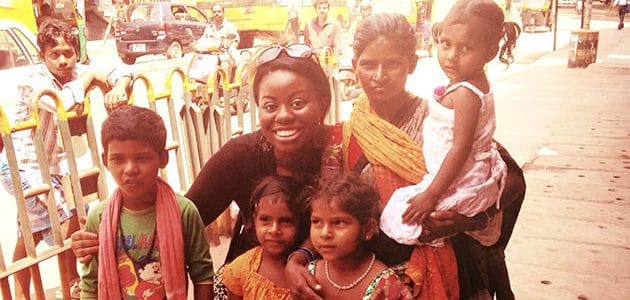
Mathews spent her week “just genuinely loving on” street children and their parents. Witnessing the nature of their existence was physically, emotionally and spiritually overwhelming, she said.

Fascinated with India since high school, Mathews said she believes her mission opportunity was divinely orchestrated. Her father, Tony Mathews, pastor of North Garland Baptist Fellowship and a seasoned mission-team volunteer, did not try to soften the reality his daughter would experience.

“Whatever preconceived ideas you have about missions, throw them out,” Ryann Mathews said. “I was broken. Totally.”

Richards said: “Observing people who have never been on a mission trip is like watching a light being turned on. A person’s entire countenance changes when they see the lostness and needs of others in some very difficult places.”

The team returned to the states with a renewed burden for the lost abroad and at home. Having fellowshipped with Christians whose lives and livelihoods are threatened if they heed the Great Commission, Richards said, “I see the shallowness of the church in America. It grieves my heart that we take Jesus flippantly.”

Mathews said she has no shame or guilt for her material possessions as some do after witnessing dire poverty. Instead, she realized she had taken for granted something less tangible yet far more valuable—her freedom.

During her visit, Mathews had frequent opportunities to engage a young Muslim mother who made saris for the women on the SBTC team.

“I would tell her ‘Jesus loves you’ and ‘He died for you,’” Mathews recounted.

At the end of the week the woman gave each team member a handmade bookmark on which she had written, in Arabic, “Jesus is Lord.”

Mathews said she believes the woman wanted to profess Christ but was afraid of the repercussions.

The consequences of conversion, for Muslims and Hindus, can mean being ostracized from their families, losing their jobs, even death. Hindus, who believe in millions of manifestations of their one god Krishna, must fully process the concept of one God for all people before placing their trust in Christ.

When they do, Richards said, “They are repenting of all other gods and that Jesus Christ is the one and only true and living God.”

Each trip supports Christians in the mission field, emboldens the volunteers’ witness at home and sparks in them the desire to return to the field. Mathews said she knows she will go back but not when. On their last day of ministry in the streets, the mother of a toddler to whom Mathews grew especially attached asked Mathews when she would come back.

“I’ll try in a year” was all Mathews could think to say.

Crestfallen, the mother replied, “That’s too long.”

In India, Baptist workers bring hope to hopeless slums

EDITOR’S NOTE: *The names of the American workers living in India have been changed to protect their work.

Seneca Calhoun did not feel right leaving. For one week she had labored in the slums of a largely unreached region of India, pouring herself into the lives of women and children and an American couple called to minister there. To return to the United States without knowing when she would be back broke her heart.

“One lady didn’t want me to leave. She wanted to leave with me,” Calhoun told TEXAN Digital.

She was one of seven SBTC volunteers who traveled to India to assist the couple and about 50 indigenous pastors.

The tearful Indian woman was a recent convert to Christianity—risky in a country dominated by Hindu and Muslim prohibitions. Anti-conversion laws and familial ostracism puts all new believers, especially women, in harm’s way. And in the slums women and children suffer at the hands of abusive husbands and fathers who often drown their own despair in alcohol or give their pre-pubescent daughters in marriage to adult men.

Yet into those dire circumstances Ben and Sara* speak hope, drawing people into the light of Christ one at a time in a land of 1.23 billion souls.

“This is a dark place. Satan definitely is working here,” Sara said via email. The couple has served five years in the region. “People here worship 330 million gods of stone. To see one come to (Christ) is such a thrilling experience.”

The SBTC has partnered with Ben and Sara and the India Baptist Society for the past four years. The mid-March trip was the second involving convention representatives.

Although it was her second trip to the region, Calhoun was nonetheless moved by the deep spiritual depravation. Given the opportunity to minister to middle-class and poor women, Calhoun recognized the same needs in them all.

“I could see the hurt in some of these women’s eyes. And the pain,” she said.

And for those without any material means, the suffering is only compounded. In the cities’ slum regions—squalid plots of land crammed with makeshift homes pieced together from scavenged scraps of tarps, cardboard, and, if fortunate, sheet metal—living is barely preferred to death for many of the women.

“It is a common practice for husbands to beat their wives. I’ve patched up several women who have come to me with bruises and cuts. The women are very sad here. They easily talk of dying and how good it will be to get out of their troubles. They only stay alive for their children,” Sara said.

Alcohol serves to fuel the violence. Ninety percent of the men in the slums are alcoholics who spend the wages for their manual labor on their addiction, Sara said. If their wives earn money it is confiscated to buy more alcohol instead of food for the family.

But Sara and the SBTC team of women were a welcome contrast last month. They graciously entered a tent home offered for an intimate gospel meeting, which was quickly filled to overflowing with women and children. A small grass mat, put out for the guests, covered the dirt floor as Calhoun’s head brushed the tarp ceiling.

As was her routine, Sara told Bible stories and led the humble assembly in songs and prayers. Calhoun, who couldn’t help noticing how young the mothers were, watched as they listened intently and mimicked the worship, not fully comprehending but learning.

Sara said she parlays the spiritual teaching into academic and vocational education.

“The lack of education makes such a difference in how both the children and the parents think,” she explained. “It’s a vicious circle to break—getting the kids in school and teaching them there is more than just slum living.”

Benefiting most from the education are young girls who, if of no economic value to their families, will be given in marriage to adult men. As of this writing in mid-April, Sara and Ben called for prayer partners to intercede on behalf of an 11-year-old girl pledged in marriage by her parents to a 21-year-old man.

Ben said March had been a wonderful month for the girl. She had completed the English curriculum with excellent marks and her English was progressing rapidly. But the first of April the girl’s mother took her from the city school to a Hindu temple in their home village 12 hours away and pledged her in marriage.

Although illegal, the ceremony is culturally binding. Ben said he could pay police to intercede on the child’s behalf. But the family could counter with a bribe to maintain the contract.

“The law is what you pay it to be,” he said.

Pleading for intercessory prayer, Sara in an email newsletter: “This child has not even ‘matured’ yet, but will be married off soon! [She] is a true believer in Christ and has renounced Hindu idols and worships Jesus only. Frankly, she is fearful, worried, and does not want to be married. Her pitiful plea to us was, ‘Auntie, I am too little. I don’t want to be married.’ But we are asking God to intervene.”

The religious and cultural hierarchy of the predominantly Hindu society relegates the slum residents to the margins of society where they have no hope in this life or beyond. But those seeking relief from mere survival find sanctuary in the Help and Hope Center, a house-turned-multi-purpose facility led by Sara and Ben. Children come for meals, lessons, showers (with lice shampoo) and hugs—lots of hugs.

“When they’re there they smile all the time,” Calhoun said.

In an effort to teach young girls a marketable skill and protect them from the ravages of childhood marriage, Sara started a sewing class. With only one machine and five students, lessons are taught by a “dear Muslim friend,” including even the teacher in the overarching gospel lesson being taught at the Center in word and deed by Sara and Ben.

The needs of the people they serve are overwhelming. Sara said there are days when she just goes home and has a good cry.

Calhoun witnessed the strain but also the incredible resilience. She said she would return repeatedly to encourage her friend and the women she met. Meanwhile, she said she will minister in prayer from Texas.

Sara said she feels those prayers.

“Without it, we can do nothing. Often I feel so tired and discouraged, and then I think of those back home who are praying for us. I feel those angels lift up my arms and give me the push I need to get back in the battle.”

In addition to prayer, the greatest resource the couple has for reaching the lost in India is its own people.

“If we can win some and train some—then pray over that work—we believe God will use them to do the work. This culture is so steeped in rituals and traditions that an American can’t break. Only (God) can change them.”

Maybe it”s complicated and maybe it”s not

The Planned Parenthood Federation of America’s latest effort to whitewash their sepulcher is puzzling. Knowing that most evangelical Christians find their work pretty repulsive, the country’s largest abortion provider has trotted out their chairwoman, Alexis McGill Johnson, who describes herself as a Christian, to tell us that abortion is “complicated.” Everyone who is shocked to hear a pro-abortion liberal Christian describe the killing of more than a million unborn children a year as “complicated” raise your hand. No one? Me neither.

Mrs. Johnson is only saying what liberals, liberal Christians, liberal Baptists and even liberal Texas Baptists have been saying since 1973. Perhaps we should stipulate that unmarried pregnancies, single motherhood and unfit parents are a big, complicated mess. Will that move the dialogue on to explaining the sordid source of Planned Parenthood’s power and income? When asked about the greater success Planned Parenthood has had drumming up abortion business in minority communities, the chairwoman pointed out not only is this also complicated but it is also a civil rights issue comparable to the Voting Rights Act.

In an effort to downplay the abortion business Planned Parenthood does, she pointed out that only about 10 percent of their business is abortion. Why then does this industry leader raise and spend millions to build giant abortion clinics; why do they turn out thousands to disrupt the Texas Senate’s deliberations? As I suggested last year in a TEXAN column, it may be because this mere 10 percent of their business actually generates a third of their income. I remind you that it was not Planned Parenthood’s right to hand out condoms, refer people to actual doctors for breast exams or even give terrible, anti-family advice that was at risk when Texas passed a bill to require higher medical standards for the state’s abortion industry. It was the ability of substandard clinics to make money from abortions—even late-term abortions that dispatched a thousand orange-shirted protestors, and a gubernatorial campaign.

But let’s look at 10 percent for a moment. What percentage of abortions are late-term each year? The answer is 1.5 percent. Those 15,000 or so human beings sound like a worthy cause for pro-lifers but piddling business for abortionists. And yet, they fight as though this small percentage matters. What percentage of Americans identify as homosexual? Gallup says 3.4 percent but some say it’s higher, though not 10 percent. And yet that portion of our population has launched a hundred court cases and now will likely force some Americans out of business and cost others their jobs. What would you say about a man who spends 90 percent of his weekly 119 waking hours feeding the hungry and volunteering in a pediatric cancer clinic, but the other 11.9 hours as an arsonist? How about a florist or baker who gladly accommodates 97 percent of her customers who want help with a wedding but who will not accept the 2 or 3 percent who want to have a same-sex ceremony? What are her chances? No one is mollified by hearing that Planned Parenthood manages to set the industry standard for abortion but with only 10 percent of their customers. Nothing could be further from relevant.

A big thanks to ChristianPost.com for running this interview. It shows how incredibly clueless American radicals can be. Those who were pro-abortion before reading the story will say, “See there!” And those who were not will say, “So what?” I guess it also points to the huge span of beliefs called Christian in our day. We know that but it’s a little startling when we see someone use casually a term that for us holds a very specific and holy meaning. Perhaps there is a cynical use of “Christian” in this case. Pro-lifers have no reason at all to muddy the meaning of the word; the chairwoman of the Planned Parenthood Federation of America has more to gain if she can shave off a few undecideds. She didn’t say anything about abortion that an atheist couldn’t have said. It’s complicated, yes. It’s all about rights and freedom, yes. But attaching the term “Christian” added nothing to the same rhetoric pro-abortion America has been using for decades.

“Complicated” doesn’t mean that same thing as “tragic” or even “difficult,” by the way. Sometimes it’s very difficult to do or live with the right decision. Often, taking the right path will make our lives much messier. I’m not sure the difference between right and wrong, or life and death, is always complicated in itself. But when it is, alive and dead are still the same outcomes. Feeling conflicted about it is of very little use.