Tag: Featured

A desperate call for prayer from Thailand

Fort Worth couple serving with IMB says Buddhist culture is a major obstacle, but God is moving

ISAAN, Thailand—Noei was a housekeeper for an International Mission Board worker in Bangkok, Thailand, for many years when she accepted Christ as her Savior. 

She became a trusted assistant in ministry, not just a housekeeper, but when she retired and moved back to her home in rural Isaan, she lost touch with Christianity. 

Less than 1% of Isaan is Christian, and Noei and her husband, Seri, prayed for God to send a shepherd to look after them. That was 10 years ago. They forgot about the prayer and became entrenched in Buddhist culture again. 

God didn’t forget the prayer, though. He arranged for a Korean-born man to meet a Korean born woman in the U.S. and travel to Isaan as IMB workers in 2021. When Joshua and Sarah Jung found Noei and Seri, they had Buddhist statues in their home and were wearing Buddhist necklaces.

“We told her, ‘God still loves you. God is still waiting for you. He wants you to come back,’” Joshua  recounted. Noei wasn’t ready to live for Jesus again, but she was willing to attend Bible study with the young missionaries. 

One day, she was in a motorcycle accident but was unharmed. That was enough to convince her God still had plans for her, and soon both Noei and Seri were serving the Lord again, now with a shepherd in Isaan. 

The Jungs were sent to serve through the IMB in Thailand by Hanmaum International Baptist Church, a Korean congregation in Fort Worth. The church prays for them at weekly prayer gatherings and individual members provide financial support and encouragement. 

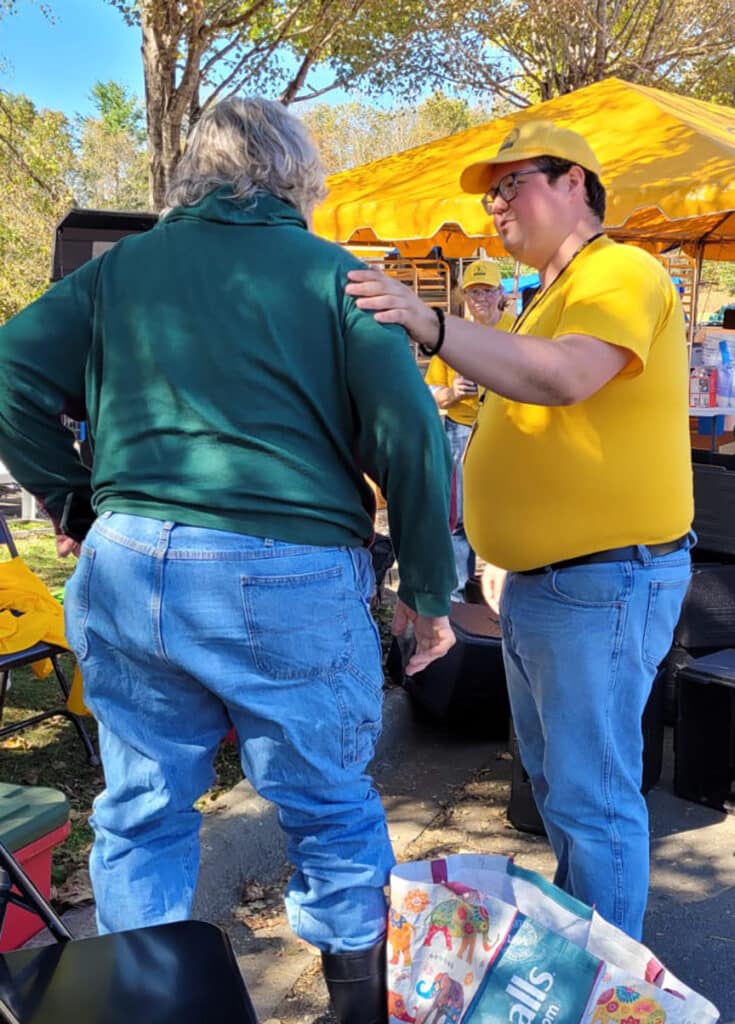
Making connections, such as through holiday events, can open doors for more meaningful conversations about Christ, which can lead to participation in Bible studies. SUBMITTED PHOTOS

Joshua was himself involved in a motorcycle accident in Korea when he was 5 years old, and he was seriously injured. His mother, a nominal Christian at the time, prayed God would spare her son. If He would, she would offer him as a missionary someday. She didn’t share that prayer with Joshua until he was preparing for ministry at Southwestern Baptist Theological Seminary.

“She hid that prayer from me for many years,” Joshua said. “Also, she probably forgot about it. After that day, she told God she wanted me to become a rich person who could support missionaries. That was her second prayer. I guess God listened to the first prayer. God called me to the mission field.”

Isaan, where the Jungs serve, covers about one-third of Thailand—about 21 million people. The population is largely uneducated and very poor. 

“There is a saying that to be a Thai is to be a Buddhist,” Joshua said. 

Missionaries can freely share the gospel there, he said, but hearts are hard toward Jesus. 

“They turn their backs and get very harsh with their family who want to become a Christian,” he said. “We teach children English and Bible stories, and some of the kids want to become a Christian. Once they become a Christian, their grandparents stop sending the children. That happened to us many times.”

It’s the grandparents in charge of the children, he said, because the parents often have left for Bangkok, Chiang Mai, or another country in search of work. That makes the population of Isaan very old and very young.
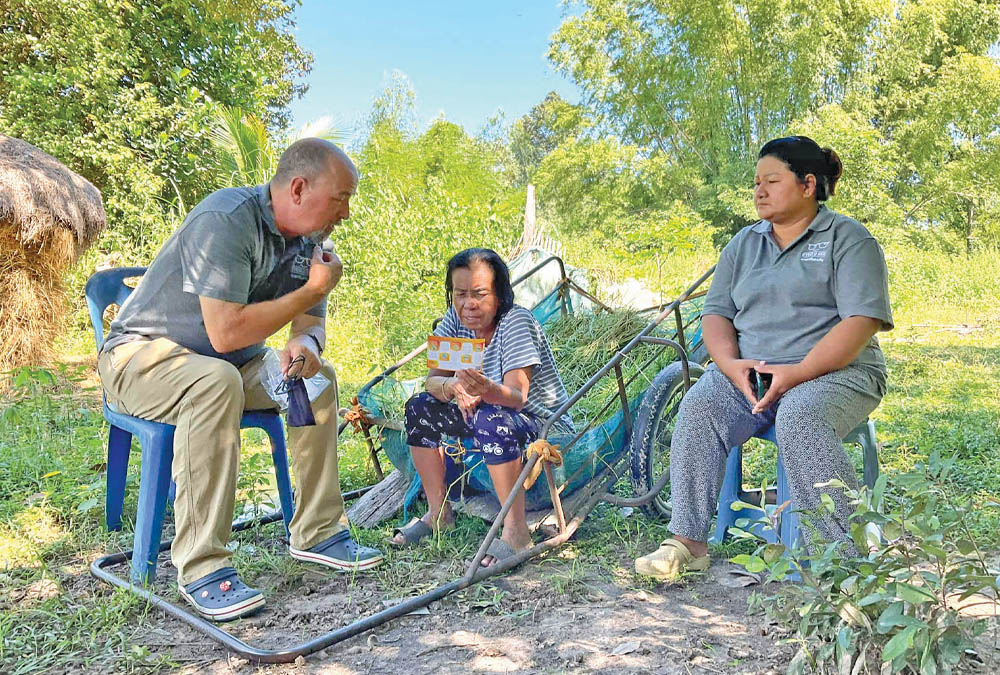
“Isaan is a very, very hard place. When we share the gospel and ask if they’ve heard about Jesus Christ, they’ve never heard the name of Jesus.”

One way the IMB team makes inroads in the unreached, unengaged people group there is through a sewing ministry founded many years ago in Bangkok. Now in the rural regions, the missionaries teach women to sew dolls at home to earn a small income. Each person who is taught to sew also is taught the Bible. 

Another way of gaining access is through an eyeglasses ministry. The missionaries travel to villages handing out eyeglasses, and each person who receives glasses hears the gospel. “Through that we make connections,” Joshua said. 

Because Buddhism is so prevalent in Thailand, holidays are Buddhist holidays, funerals are held at Buddhist temples, and ceremonies are Buddhist ceremonies, he said. Helping people leave that culture and follow Christ is a monumental task, and churches are key in grouping believers together for support. 

The Jungs focus on church planting, and on Sundays he preaches in a small group in Isaan. Sarah, who recently underwent radiation therapy in Bangkok for early-stage breast cancer, takes turns with other members of their team leading Bible study with the sewing ministry. 

“Isaan is a very, very hard place,” Joshua said. “When we share the gospel and ask if they’ve heard about Jesus Christ, they’ve never heard the name of Jesus. A lot of missionaries who come here have a very hard time. Pray for the Isaan people so whenever they hear the gospel their hearts will be open.

“Pray for our team. It’s a large area, the largest in Thailand, and we only have [a small number of workers]. Pray that God will send workers and raise up local leaders.”
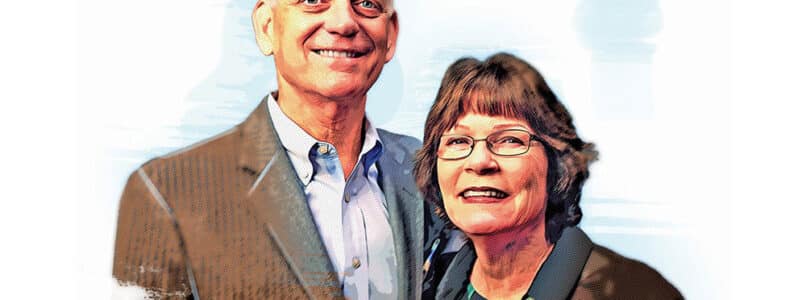

Inaugural recipients announced for Richards Endowment for Kingdom Advance

HOUSTON—The Jim and June Richards Endowment for Kingdom Advance, established by the Southern Baptists of Texas Foundation (SBTF) in 2021, has designated its first allocations to ministries in Texas. The announcement was made during the November board meeting of the Southern Baptists of Texas Convention (SBTC) Executive Board by the convention’s executive director, Nathan Lorick. 

The endowment’s purpose is to support “individuals or organizations which promote kingdom causes through religious ministry consistent with the doctrinal statement of The Southern Baptists of Texas Convention” according to the endowment’s establishing documents. The initial funding for the endowment came from SBTF’s reserves.  

“SBTF formed the Richards ministry endowment to acknowledge the continuing legacy of Jim and June Richards and to honor their years of service to the Southern Baptists of Texas Convention,” SBTF Executive Director Bart McDonald said. “I am excited to oversee distributions that will continue Dr. Richards’ legacy.” 

In addition to allocations to Reach Texas, the SBTC’s state missions offering, the endowment provided funds to the SBTF Jubilee Fund, an effort to preserve the properties of churches in crisis or disbanding. A further gift was made to Austin church planting resident Brock Braxton. 

Jim Richards said of Braxton, “I watched Brock grow up and answer a call to ministry, and he has strong connections to the SBTC. June and I are happy to be able to facilitate this investment in the next generation of pastoral leaders.” 

Jim is executive director emeritus for the SBTC and is well-known as the convention’s founding executive director. He served in that role from 1998 through 2021. The convention grew from 120 churches to more than 2,600 churches during his tenure. Prior to coming to Texas, he pastored for 21 years in Louisiana and then served as an associational executive director in Northwest Arkansas. 

June is a faithful pastor’s wife, mother, and grandmother who assisted Jim through decades of ministry. She has been widely known among SBTC staff members and church leaders as a constant prayer warrior and encourager. 

Jim and June have three grown children and six grandchildren. They have retired to East Texas, though Jim still serves as a consultant to the convention while maintaining a busy preaching schedule.  

AM24: Lorick testifies to Cooperative Program impact during executive director’s report

HOUSTON—A widow in her 80s giving from a fixed income. A church planter in his 40s moving his family to a far-away city for the sake of the gospel. Seminary students with a passionate calling to reach future generations for Christ.

Some give. Others benefit. All impact the kingdom.

They are the ones who come to mind when Southern Baptists of Texas Convention Executive Director Nathan Lorick thinks about the Cooperative Program, the primary giving model that funds mission efforts worldwide through the Southern Baptist Convention.

Addressing messengers Tuesday (Nov. 12) at Sagemont Church during the final day of the SBTC Annual Meeting, Lorick made an impassioned plea for churches to continue to give joyfully and sacrificially as Southern Baptists prepare to mark CP’s 100th anniversary in 2025—a campaign that will be referred to as CP100.

“If you’re looking for an example of God multiplying the impact of your church, I can’t think of a better return on kingdom investment than the Cooperative Program,” Lorick said. “… I am asking the churches of our convention to prayerfully consider how God might lead your church to give in this anniversary year. Anniversaries are usually accompanied by gifts to honor the occasion. CP100 is an opportunity for record giving and record sending—acknowledging God’s favor for our cooperative work.”

Lorick said the SBTC, as well as Southern Baptists worldwide, will celebrate the milestone in a number of ways next year. The SBTC is challenging its churches to do three things:

  1. Pray for record giving. While thanking churches for giving a record $1,752,383 through the Reach Texas State Missions Offering this past year, Lorick said more than 1,000 of the SBTC’s 2,786 churches had not given through CP this year as of September. “One-thousand churches giving at least $1,000 would invest $1 million more into our cooperative mission to support more international missionaries, Texas church planters, and seminary students,” he said.
  2. Promote the effort by planning a CP Sunday on Oct. 5, 2025. Churches can use that day to emphasize the importance of CP giving, Lorick said.
  3. Post brief videos on social media testifying of the impact CP has had on people’s lives. The SBTC is asking those who post those videos to use the hashtag #cp100story.

“Can I challenge you to pray about leaning in with your Cooperative Program giving?” Lorick asked. “We all face challenges, but nothing allows us to impact Texas and the world like the Cooperative Program.”

European initiative announced

Lorick also used his annual report to announce an initiative with the International Mission Board to connect SBTC churches with opportunities to advance the gospel in Europe.

Pastors and church mission leaders were invited to participate in a vision trip to Europe May 1-9, 2025. The trip, Lorick said, is designed to create strategic pathways to mobilize SBTC churches to partner with and support IMB’s 550 missionaries, projects, and global partners across Europe. Nearly 11% of those missionary units are from SBTC churches, Lorick said.

Vision trip attendees will gather in London for training and then be assigned to one of seven strategic locations: Nantes, France; Copenhagen, Denmark; Leeds, England; Bucharest, Romania; Budapest, Hungary; Ljubljana, Slovenia; and Athens, Greece. More information about the vision trip can be found on the SBTC’s website.

Noting the Christian population of Europe is 1.1% of the continent’s 820 million people, Lorick said, “Europe is not only one of the least engaged continents in the world, but it is also the most strategic, as it continues to be the most influential continent in the world—representing nearly every people group and every language.”

The initiative is similar to other efforts developed by the SBTC over the past couple of years in Nevada, Puerto Rico, and India.


AM24: Annual meeting messengers unified in convention business

HOUSTON—Messengers to the 2024 Southern Baptists of Texas Convention Annual Meeting, gathered at Sagemont Baptist Church Nov. 11-12, conducted the business necessary for the convention’s year-round work amidst two days of fellowship and inspiration.

SBTC Executive Director Nathan Lorick, reflecting on the two-day meeting, was excited about the content and demeanor of this year’s gathering.

“This year’s annual meeting was incredible,” Lorick said. “We were able to present that we will plant more than 60 churches by the end of this year. We also received our highest state missions offering in the history of the SBTC, and we currently have more churches affiliated with the SBTC than ever before. I am grateful for the unity and spirit of the churches that make up the SBTC.”

Messengers conveyed a spirit of harmony in the discussion and resolution of each item. The SBTC is a confessional fellowship, meaning each affiliated church has affirmed the Baptist Faith and Message 2000, in contrast to the Baptist General Convention of Texas, which this week rejected a motion to affirm the BF&M 2000 at its annual meeting, according to an article in Baptist Press.

“Many of our brothers and sisters cannot in good conscience affirm this Baptist Faith & Message,” David Lowrie, pastor of the BGCT-aligned First Baptist Church in Decatur, was quoted as saying in the Baptist Press article. “It was written by Southern Baptists for Southern Baptists. It represents well many of the values of Southern Baptists, but it wasn’t written for us. It doesn’t represent us.”

Bruce Webb, a BGCT pastor of The Woodlands First Baptist Church, said Texas Baptists have intentionally rejected the Baptist Faith and Message 2000 for more than two decades and should continue to do so, according to Baptist Press.

All SBTC churches affirm BF&M 2000. This allows messengers each year to discuss the details of their common ministry confident that they agree on basic doctrines related to the nature of Scripture and the priority of the Great Commission.

SBTC messengers conduct important business

Only one motion was submitted from the floor at the SBTC Annual Meeting, asking the convention to consider ways to assist congregations with insurance costs. The Committee on Order of Business assigned the motion to the SBTC Executive Board for consideration.

During the Tuesday morning business session, messenger Rob Collingsworth of Redemption City Church in Fort Worth raised a point of order regarding a motion adopted in 2022 that intended to clarify the SBTC Constitution’s qualifications for affiliation in Article IV. Collingsworth called the motion a “procedural violation” and a “de facto amendment to our constitution” that violated the process for making an amendment. The chair allowed messengers to consider the question of whether the motion in 2022 expanded the meaning of the constitution. After a lengthy discussion, messengers declared the 2022 motion in order.

The convention’s executive board recommended a budget for 2025 of $27,833,488, which is equal to the budget adopted by messengers in 2023. The budget shows no increase because the 2024 budget exceeded what was collected in 2023. Cooperative Program receipts will continue to be allocated with 55% sent to the Southern Baptist Convention for worldwide ministries and 45% being retained for ministries in Texas. Messengers approved the budget without discussion.

Executive Board Chairman Caleb Turner, pastor of Mesquite Friendship Baptist Church, recognized Bart McDonald on the occasion of his 10 years as the executive director of the Southern Baptists of Texas Foundation and its 20th anniversary, which will be celebrated in 2025. SBTC’s chief financial officer, Joe Davis, was also honored for his 25 years of service in that role.

The Resolutions Committee recommended four resolutions to the messengers. Messengers expressed gratitude for the “hospitality, service, and generosity” of Sagemont Church for hosting the convention meeting. A second resolution expressed “profound gratitude” to SBTC President Danny Forshee for his service as convention president. A third resolution commemorates the 100th anniversary of the Cooperative Program in 2025, noting the benefits the SBTC has enjoyed in missions, evangelism, church planting, and church strengthening as it partners through the Cooperative Program. The final resolution addressed chemical abortions, acknowledging that this method accounted for 60% of all abortions in 2023. The resolution concludes with a commitment to “uphold the sanctity of life even at the earliest stages.” All four resolutions were approved without amendment.

Convention officers were each elected by acclamation. Forshee, pastor of Great Hills Baptist Church, was elected to a second term as president. Ed Johnson III, church planter of Harvest Fellowship Baptist Church in Desoto, will serve as convention vice president. The convention’s secretary for 2025 is Amy Hinote of First Baptist Church in Justin.

Upon the recommendation of the Committee on Order of Business, messengers selected East Texas as the site for the 2027 annual meeting.

At final count, 1,122 people attended the annual meeting—864 registered messengers and 258 registered guests representing 351 churches.

Planters commissioned in moving ceremony

Thirty-seven Send Network SBTC church planters were commissioned during the first night of the annual meeting. Those planters represent churches from every corner of Texas, from Abilene to College Station to San Antonio. They’re dispatched to locations big and small, from Houston and Fort Worth to Murphy and Mabank. Many of the planters stood hand-in-hand with their spouses and children.

It’s been a year to celebrate for Send Network SBTC, the church planting partnership between the SBTC and the North American Mission Board. Send Network SBTC recently completed the largest assessment weekend in the history of the national Send Network, with 31 planters assessed. By the end of this year, Send Network SBTC will have planted between 60-65 churches—the largest number since 2005.

The gospel hits the streets of Houston during Crossover event

Ten or so teams representing a dozen area churches participating in Crossover Houston on Nov. 9. The event was held in conjunction with the 2024 SBTC Annual Meeting that began the next day. The Houston initiative was patterned after Crossover events held prior to the national Southern Baptist Convention each year.

“It’s a great opportunity for us to join efforts in spreading the message of hope and redemption to folks in the Houston area,” said Tony Mathews, SBTC’s senior strategist of Missional Ministries. The SBTC coordinated the event with Sagemont Church, host of the annual meeting. The event included not only outreach, but also evangelism training for participants.

AM24: Annual meeting’s first day ends with ‘amazing hour’ of prayer

HOUSTON—Danny Forshee, president of the Southern Baptists of Texas Convention and lead pastor of Great Hills Baptist Church in Austin, called it his “favorite part of the entire convention.” Carol Yarber, who with her husband, Ronnie, and many others was instrumental in founding the SBTC a quarter-century ago, called it “absolutely essential.”

Messengers ended the first day of the SBTC Annual Meeting at Sagemont Church in Houston (Nov. 11) with a prayer meeting led by Forshee. To those in attendance, plenty was at stake.

“Considering the state of the country, the state of the state, we must pray for lost people to know Jesus,” Yarber said.

Lights dimmed and heads bowed as the praise team assumed spots on stage while Forshee energetically offered encouragement.

“Be strong. Don’t quit. Be faithful. The Lord has got your back,” Forshee said, cautioning from James 4:6-7 against isolation and the schemes of Satan.

Noting that the meeting’s structure could be emulated by every church in “every season, no matter the size,” Forshee explained the first part of the night’s gathering would feature prayer following the ACTS pattern of adoration, confession, thanksgiving, and supplication.

Across the auditorium, many rose, lifting hands and joining in the singing of Cross Church’s “Jesus Is Better,” growing louder in a crescendo of praise: “More than my healing, I want the Healer. More than direction, I want the Shepherd.”

Russ Ponder, senior pastor of First Baptist Hamlin, drew upon 1 John 1:9-10 and Proverbs 28:13 to invite worshipers to confess sin. A prayer of thanksgiving led by BJ McCurdy, pastor of New Shores Church in Sweeny, then commenced with the reading of Psalm 105:1 and 92:1.

People gathered at the stage to cry out to God during Monday night's prayer meeting. SBTC PHOTO

Amens rippled throughout the worship center as listeners were reminded God had found us “in the pit” and set us “on the rock—Jesus.”

The words of the traditional “Holy, Holy, Holy” filled the room as the audience joined singers and musicians to saturate the space with song. Hands raised, hands clasped, hands were outstretched, and few remained seated.

Announcing that he was “going off script” and following the lead of the Holy Spirit, Forshee returned to the stage to ask audience members to pray for the person next to them. Throughout the auditorium, people embraced or laid a hand on a neighbor’s shoulder as voices rose and fell in appeal to the Lord. Some stood alone, watching silently or speaking softly with eyes closed.

Corporate supplication followed as five pastors led prayer centered on the five markers intended to help SBTC churches identify and measure disciple-making movements: Ed Fenton of First Baptist Malakoff on churches that are prayer-energized; Brian Haynes of Bay Area Church in League City on churches that are evangelism-prioritized; Eric Patrick of Harvest Ministries in Aubrey on disciple-making normalized churches; Cole Hedgecock of First Baptist Rowlett on sending-maximized churches; and finally, in Spanish and English, Enrique Puig of Houston’s First Baptist, on churches where partnerships are synergized.

Few left the auditorium early, and several expressed surprise the prayer meeting lasted an hour, as Forshee noted at the end.

Said Forshee: “It was an amazing hour.”

AM24: After milestone year, next wave of church planters commissioned in moving time of celebration, prayer

HOUSTON—The numbers are undeniably encouraging.

This year, Send Network SBTC—the church planting partnership between the Southern Baptists of Texas Convention and the North American Mission Board—conducted 71 assessments of potential planters. Of those, 34 were conducted in Spanish, 32 in English, three in Mandarin, one in Korean, and one in Romanian.

Additionally, Send Network SBTC recently completed the largest assessment weekend in the history of the national Send Network, with 31 planters assessed. By the end of this year, Send Network SBTC will have planted between 60-65 churches—the largest number since 2005.

But there’s another number that drives the mission of Send Network SBTC. During a church planter commissioning service held during the opening night of the SBTC Annual Meeting at Sagemont Church, church planters reported 926 people proclaimed faith in Christ and were baptized over the past calendar year.

“These are people who have gone from death to life,” said Jason Crandall, Send Network SBTC’s church planting lead, “and we get to celebrate that. That is the center of what we’re called to do.”

Thirty-seven planters were commissioned at Monday night’s service representing churches from every corner of Texas, from Abilene to College Station to San Antonio. They’re dispatched to locations big and small, from Houston and Fort Worth to Murphy and Mabank. Many of the planters stood hand-in-hand with their spouses and children.

“Church planters, you are the answer to prayers,” said Julio Arriola, director of Send Network SBTC. “ … The Lord is answering the prayers of the churches of the Southern Baptists of Texas Convention.”

‘What the Lord has called us to do’

Among those commissioned was Tim Williams, the 31-year-old pastor planter of The Vine Church in Mount Pleasant. The church is a relaunch of Gladewater Baptist Church, which had existed since 1871—about 27 years after Texas became a state.

Williams was called to pastor Gladewater Baptist Church in December 2021. At that time, the church had nine members, and leaders soon began praying and pondering its future. That future, they decided, would be most fruitful through a replant guided by Send Network SBTC. Gladewater closed in December 2023 and immediately began a nine-month preparation process of relaunching the church.

With the support of sponsor church Holly Brook Baptist Church in Hawkins and others, the relaunch happened on Sept. 24, 2024. Today, the church is multigenerational, multiethnic, and growing—with about 100 people regularly in attendance. With roughly 52% of Mount Pleasant’s population now Hispanic, the church plans to begin a Spanish-speaking service in January.

“This is what the Lord has called us to do,” Williams said. “The coolest thing for me is, throughout this replanting process we’ve had one person come by transfer of letter from another church. Everyone else has either come as a new convert or they were unchurched Christians. … It’s been really cool to see the Lord work in people’s lives.”

Dakota Adair, a 29-year-old first-time planter, stood on the stage during the commissioning service with his 3-year-old son, Elijah. Adair pastors Heirloom Church in Kyle, one of the state’s fastest-growing areas. Twenty years ago, Kyle—about 20 miles southwest of Austin—had about 8,000 residents. That number has ballooned to about 70,000 people.

With the support of its sponsor church, Epic Life New Braunfels, and many others, Heirloom Church was planted to reach Kyle’s growing and incredibly diverse population.

“Our church is very eclectic,” Adair said. “We’ve got Texas State [University] students, empty nesters, retirees … God has really just brought people together, so we’re just trying to keep things simple—love God, love people, and preach the Word.”

SBTC Executive Director Nathan Lorick told messengers he believes the convention will soon lead the way in all of North America in being “a network of churches planting new churches and seeing people won to Christ.”

“We are so excited for you,” Lorick said to the church planters before praying over them. “We are so grateful you took a step out in faith with no guarantees, trusting God to build His church, trusting God to have partners come alongside you. God has and is and will continue to bless your efforts. We’re for you. We’re with you. We’re side by side on this journey together.”

AM24: Crossover Houston leads to salvations on eve of SBTC Annual Meeting

HOUSTON—The team of four knocked at the door of a home a few streets from Sagemont Church and waited. A Hispanic woman peered cautiously outside and saw Sagemont members Y Tran, Ca Tran, and Giselle Higginbotham—accompanied on this particular Saturday morning by Tony Mathews, senior strategist for Missional Ministries at the Southern Baptists of Texas Convention.

“Sorry, Español,” the woman at the door said. Three team members glanced immediately at Higginbotham, standing at the rear and the sole Spanish speaker in the group.

“I was hiding in the back and everyone looked at me,” Higginbotham said. “I was only supposed to be praying. I am very timid. I had never shared the gospel.”

Higginbotham embraced the challenge and shared Christ in Spanish with the woman.

“I was praying about being a little more comfortable and bold about sharing the gospel with people, and I think God has a sense of humor putting me in a spot I couldn’t get out of,” Higginbotham said.

The Hispanic woman didn’t come to salvation, Higginbotham noted, but the group did offer to pray for her and extended an invitation to attend an upcoming Sagemont En Español church service. “We are hoping that God will work in her heart,” Higginbotham said.

Y Tran—a college student and Vietnamese speaker like her high school-aged sister, Ca—shared with a Vietnamese man in his own language that day, as well.

Getting ready

The quartet was one of 10 or so teams representing a dozen area churches participating in Crossover Houston on Nov. 9. The event was held in conjunction with the 2024 SBTC Annual Meeting starting Monday. The Houston initiative was patterned after Crossover events held prior to the national Southern Baptist Convention each year.

“It’s a great opportunity for us to join efforts in spreading the message of hope and redemption to folks in the Houston area,” said Mathews, adding that the SBTC worked with Ben Niscavits, Sagemont’s executive director of missions, to coordinate logistics and volunteers.

Participants met at Sagemont’s youth building Saturday morning for training in the 3 Circles method of evangelism led by Carl Bradford, Southwestern Seminary’s assistant professor of evangelism and dean of Texas Baptist College. Bradford also serves as an SBTC evangelism consultant.

Bradford described the 3 Circles as “emphasizing practical steps for starting a conversation and guiding it naturally toward the gospel.”

At the end of the training, teams equipped with the straightforward, powerful-yet-adaptable evangelistic tool headed to area locations to share Jesus with the lost.

“Ben [Niscavits] identified several potential areas for witnessing including malls, parks, and neighborhoods. He also knew places presenting opportunities to engage with Buddhists, Hispanics, Muslims, and Hindus,” Mathews said, adding that these places included at least one mosque.

Launching out

Crossover teams were composed of a mixture of males and females with as much language diversity as possible, Bradford said. In addition to 25 from Sagemont, individuals from a dozen churches registered for Crossover, Mathews said. Several SBTC staff members participated, as well.

Team members approached homes and introduced themselves, asking if there was anything they could pray with them about.

“[Prayer] becomes a segue into other conversations,” Bradford said. A prayer request about a wayward child, for example, might become a conversation about the brokenness of the world and ultimately about Jesus, the solution.

Bradford noted his Crossover team appreciated the opportunity to “go the extra step” when people said they were Christians. Spiritual conversations ensued as team members asked people to describe their faith journeys.

“Some had never gone out and done anything like this before,” Niscavits said. “It was a pretty great growth opportunity for them.”

Tony Mathews (far right) poses with (from left) Y and Ca Trans and Giselle Higginbotham, who shared the gospel during Crossover Houston on Nov. 9. SUBMITTED PHOTO

Ice cream, rocks, and Jesus

Sagemont member Jamie Moreno accompanied a team to a nearby park where two little girls were walking around selling decorative rocks.

“We had the opportunity to share with them about Jesus being the rock of salvation, and they allowed us to pray for them,” Moreno said. “They were so sweet.” Moreno even bought their rocks for a dollar.

Software consultant Chad Porter from Pearland, also a Sagemont member, along with his Crossover partner Martin, headed for a nearby flea market just off I-35, where they encountered vendors and customers of multiple ethnicities.

The pair struck up a conversation with Pepe, who was selling ice cream.

“He looked disturbed, like he was going through something rough,” Porter said. “We asked if we could pray for him.” Pepe agreed and the men took the conversation further, asking about Pepe’s ideas of heaven. He admitted he had never thought about the subject. The men shared their faith, and Pepe gave his life to Christ.

“You could just see his whole [countenance] kind of changed. He had joy in his heart,” Porter said. They invited Pepe and his family to Sagemont.

Pepe was not the only one changed. Chad and Martin were moved emotionally, too. “We were shaking,” Porter said.

“Oh man, it was a great day,” Mathews said. “We are just so happy that we all went out in diverse groups and the Lord really blessed.”

By midday, when Crossover concluded with a debriefing and praise session back at the church, the numbers told the story: Teams engaged 224 people, had 114 spiritual conversations, presented the gospel 72 times, and saw three people give their lives to Christ.

A great day, indeed.

SIDE BY SIDE: SBTC churches gather to pray, celebrate what God has done over the past year

Messengers to the Southern Baptists of Texas Convention Annual Meeting will gather for a powerful time of prayer, worship, and fellowship at Sagemont Church in Houston on Nov. 11-12.

Giving that grows

Hays Hills goes above and beyond to see the gospel delivered around the world

Hays Hills Baptist Church strives to “bring life-changing hope to an ever-changing people through the unchanging gospel.”

To make that mission statement a reality, the church is setting an example of what it looks like to engage in ever-increasing generosity.

When Aaron Kahler transitioned from a staff position to serving as lead pastor in 2017, he felt led to challenge Hays Hills to give 20% of its annual budget through the Cooperative Program by 2030.
That effort, which the church refers to as “Neighbors & The Nations,” describes the commitment the congregation has made to support those working to bring the gospel to unreached and unengaged people locally and around the world. 

The plan was for the church to increase giving by 1% annually until it reached its 20% goal. But that’s not what happened.

“In God’s grace, He did far more abundantly than we could have imagined and we went all the way over to 21% given in year one,” Kahler said. “The church just bought in wholeheartedly to giving to the cause ….”

Kahler said Hays Hills recognizes the potential to multiply its impact through CP giving, “not only in our church being effective today, but for our church and other Southern Baptist Convention churches to be effective 100 years from now.” Giving through the Lottie Moon Christmas Offering, which Kahler said has increased substantially, is one of the main ways Hays Hills seeks to have a global, cooperative impact. 

On a more local level, Kahler said the impact is evident in the support provided to missionaries from Hays Hills who have served with the International Mission Board, in guidance provided to church leaders on multiple occasions by the Ethics and Religious Liberty Commission, and even in how he has been personally equipped to preach by Southwestern Baptist Theological Seminary. All are entities supported by CP giving.

Though the gospel work never seems to be accomplished as fast as he’d like, Kahler said he is more encouraged now than he has been in his 13 years serving at the church because of God’s faithfulness. Planted in one of the fastest-growing suburbs of Austin, the church has seen Buda’s population more than double to over 15,000 residents over the past decade. Hays Hills has advocacy groups for each of its missionary partners, which has strengthened the missions culture within the church in an effort to reach the growing population. 

Additionally, Hays Hills is beginning to see more evangelistic fruit through its college and career ministry and through its young couples ministry. 

“All of those areas of ministry that the Lord is blessing are areas I do not touch at all,” he said. “It is ministry our people are engaged in because of their love for Jesus, His church, and the lost.”

The greatest kind of legacy

Family passes on legacy of faith to reach multiple communities in need

Many years ago, the gospel changed the Gameros family. It started with Javier Gameros, who grew up in a Mexican Catholic family that, as he says, taught him the rites and practices of religion without helping him understand that God wanted a personal relationship with him. Over time, God used a series of people and circumstances to help Javier come to know that truth. He heard the plan of salvation for the first time at age 8 from a Baptist pastor hosting a Bible club in his neighborhood. At age 19, Javier accepted Christ after hearing the gospel again from his sister, Susana.

Javier later met and married Margarita, and soon they answered a call to vocational ministry. While Javier and Margarita committed to serve the Lord with all their hearts, they knew their greatest influence would happen at home among their five children.

“Ministry was something I saw and learned every day,” said Vidreael Gameros, one of the family’s three sons. “My parents taught us how to love and serve the Lord through a life of obedience and sacrifice. … The same leader I saw [from my father] in the pulpit was the same leader I saw in the home, and that impacted my life in a big way.”

Javier eventually was called to pastor a church in Manvel known today as Un Nuevo Comienzo Venciendo Con Dios, which means, “A new beginning, overcoming with God.” It’s a fitting name, Javier says, noting a severe economic and moral decline has caused what he calls “spiritual poverty” in parts of the city.

Even as he served his own community, Javier was burdened by other nearby communities suffering in similar ways—one of which was Holiday Lakes, a predominantly Hispanic community located about 30 miles south of Manvel. At the time, Holiday Lakes had no Hispanic Southern Baptist church. 

“I saw the urgent need to not stop, but to expand the gospel and see more souls saved since society, the family, and the church are being attacked and their precepts are being erased,” Javier said.

But who would be willing to plant a church in Holiday Lakes? He looked no further than his son, Vidreael, who had sensed a calling to ministry since childhood. Vidraeal began a church planting residency training program through Champion Forest Baptist Church in Houston and also received training through Send Network SBTC, the Southern Baptists of Texas Convention’s church planting partnership with the North American Mission Board. 

After working with his father, Vidraeal was sent to plant Iglesia Bautista Holiday Lakes about three years ago. The church officially launched about a year ago and is seeing fruit despite many challenges, including natural disasters, a large drug trade, and the presence of witchcraft. 

The work is challenging, but Vidreael said he feels like he is never alone because of his family and the connections and equipping offered through the SBTC.

“It is a blessing to have access to a family that is running the same race,” he said. “[The SBTC] has helped us find connections we need to facilitate challenges in ministry, and it has connected us to other brothers and sisters who love the work of the Lord. … We are celebrating the transformation God is doing in the families in Holiday Lakes.”

In other words, the same gospel that once changed the Gameros family is now changing families across the region.  

One mission, many hands

Churches from near and far are pitching in to assist Celina plant at the center of a population boom

Welch, pictured at left, is seen baptizing a man during a recent service. SUBMITTED PHOTO

As Robert Welch looks around the middle school where Legacy Hills Church meets each Sunday, he sees the faces of people who otherwise might not be there if it weren’t for the churches across Texas that have worked alongside his.

Over the past year, Legacy Hills members have deeply invested in the community, hosting kids camps, community events, and outreaches to build relationships in one of the fastest-growing regions in the state. But when you’ve planted a church in a city that has more than tripled in population over the past five years, you can never have too much help.

To date, 17 Southern Baptists of Texas Convention churches and two associations have in some way helped Legacy Hills solidify its gospel footing in the city. Some of those churches have sent volunteers to Celina, sending missions teams and financial support. Others have taken up offerings at their own vacation Bible schools and sent the proceeds to Legacy Hills so it could host its own outreaches to kids. Still others have committed to pray weekly, asking God to bless the gospel work happening there.

The results have been tangible.

“The majority of families that are now deeply involved with Legacy Hills have come through community events, camps, and outreaches that our partners have helped with,” Welch said. “Our partners were the first to share the gospel with their children. Many of our families are literally the result of the opportunities that our partners helped us create.”

New Beginnings Baptist Church in Longview is Legacy Hills’ sending church. George Willis, NBBC’s pastor of missions, said the relationship has been mutually beneficial to the kingdom. 

“We believe in equipping and empowering members of our congregation,” Willis said. “We want them to understand their kingdom platform, their giftings. So when we partner with other church planters, they get the opportunity to see what it looks like to be part of kingdom growth all over. If we just stayed here in East Texas, it would be a disservice to the church to not be utilizing our people to be sent out and serve all over the world.”

Added Todd Kaunitz, New Beginnings’ lead pastor/elder: “We believe the church is the number one vehicle God is using to take the gospel to the world … so everything we do with our missions ministry is aimed toward either partnering to strengthen [existing] churches or to plant churches—whether that’s in East Texas, East Africa, or in Celina. … This is about the kingdom of God, so whatever we can do to expand the kingdom, we want to be all in.”

That mindset, Welch said, reaffirms what he believes the SBTC is all about. 

“It’s not just about one church or one kind of church,” Welch said. “The mission that God has called us to cannot be done by one church. The mission Jesus has called His church to is accomplished by churches of every shape and size working side by side to accomplish one singular mission.”

Fostering strong partners

Churches forge special relationship that benefits residents in two areas

When an established church partners with a plant, conventional wisdom says the younger church reaps most of the benefits. Old River Baptist Church in Dayton and Cross Community Church in Houston are working together to show that the benefits can flow both directions.

The relationship between the two churches originated in the friendship between their pastors. Old River’s Wes Hinote said he and Cross Community planter Del Traffanstedt have known each other for years—“through pastor circles”—dating back to when Traffanstedt served an Odessa congregation.

“We knew each other through Southern Baptists of Texas Convention pastor retreats, and today, our two congregations are within an hour of each other,” Traffanstedt noted.

When Hinote came to Old River seven years ago, he found a loving congregation primed to adopt a missional focus. He recognized an opportunity when he learned of Cross Community.

“When Del planted Cross Community in an underserved area of Houston, I was able to speak with my congregation about the needs,” Hinote recalled. 

Old River began financially supporting Cross Community. When the urban church’s vibrant English as a Second Language program encountered problems through the loss of its curriculum provider, Old River stepped in to assist.   

“They were caught off guard,” Hinote said. “I got wind that they were having problems and told Del, ‘Hey, this is what we are here for. What do we need to do to make sure ESL doesn’t take a step back?’”

Cross Community’s ESL outreach (pictured below) is a vital part of its ministry. The program was started only six months after the church launched. The ESL ministry attracted more students than anticipated to its multi-semester Wednesday evening program which incorporates Bible stories and prayer. Now more than 70 participate. Nearly half attend the church and several have joined.

But the loss of their curriculum provider threatened to disrupt all that. Students pay a nominal fee for the course, affirming dignity but not covering the $180 per person cost. 

“We count on our church partners to subsidize that cost. Our students cannot afford the whole amount. Our church plant in an urban area cannot afford it. We need churches like Old River to come alongside us,” Traffanstedt said. “Wes and his church pray for us and help fund ESL.”

Recently, Cross Community began playing an important role in its sister church’s new family ministry.

It began when a church family, who had both fostered and adopted children, came to Hinote about starting FAM, or Family Advocacy Ministry, at ORBC. Hinote immediately thought of Traffanstedt, who also had fostered and adopted children.

“We have fostered 10 children and adopted three,” Traffanstedt said, adding that he had started family ministries at two previous churches in addition to Cross Community.

“We were able to coach the family and Old River’s lead volunteers,” Traffanstedt said. “We prayed for them and recommended resources from the North American Mission Board.”

“The first call I made was to Del and [wife] Charmaine to pick their brains,” Hinote recalled when the family in his church approached him. “Cross Community was a big help. It’s all part of the blessing of being part of a mission that is not your own. Our SBTC churches have a lot to offer one another. Size doesn’t matter. Location doesn’t matter. Mission matters.”

Giving their best in the worst of times

Spring Baptist Church has become a ‘go-to’ when it comes to helping others following disasters

When Hurricane Beryl slammed into Southeast Texas in early July, Spring Baptist Church was already prepared to work side by side with Southern Baptists of Texas Convention Disaster Relief and its partners to serve survivors. 

This wasn’t the church’s first hurricane.

“Hurricane Harvey [in 2017] was terrible, but Beryl was in some ways worse, with extensive tree damage,” said Spring Baptist Church Pastor Mark Estep. “Because of Harvey, we were ready to help.”

In Harvey’s immediate aftermath, the church converted an unused building into a laundry facility through a chain of events that saw God’s provision of skilled workers and materials. An electrician and plumber “happened by” to offer their services free of charge, and then seven washers and dryers were donated.

“God provided a laundromat within a few hours,” Estep said. Soon after, the church added four RV slips with electricity and sewer hookups to serve DR trailers, bunkhouses, and mobile command posts.

Church members were trained, as well. Spring Baptist has 50 credentialed SBTC DR volunteers among its members. Just about all of them pitched in during Beryl.

Like many SBTC churches, Spring Baptist is a “go-to” church when disaster strikes nearby, SBTC DR Director Scottie Stice said.

“During Beryl, they housed teams, provided a kitchen, made their laundry facility available,” Stice said, adding that Spring Baptist maintains a quick-response unit mobile kitchen and a recovery unit which are “very active.” Southern Baptist DR teams are housed in the church’s renovated youth building, to which showers and bathrooms were added after Harvey. 

“It’s not like home, but we want to make volunteers comfortable,” Estep said. The church even erected a new pole barn to store SBTC DR trailers and equipment plus a church bus. 

During the six weeks after Beryl, Spring Baptist received over 380 requests for help with downed trees, said Jason Mayfield, the church’s associate pastor. “SBTC DR responded with SBDR cleanup and recovery teams from Texas, Georgia, Florida, and Tennessee.” Teams completed 121 jobs, with the remaining requests handled by others. Five salvations occurred among survivors and many gospel conversations ensued.

“SBTC DR is not only a blessing to our whole church, but to our whole community,” Mayfield said.

“I don’t know what we would do without the SBDR teams coming here. They minister in such a powerful way. They are the hands and feet of Jesus,” Estep said. “It’s not just talk with them.”

Estep explained that he, too, has been a beneficiary of DR ministry.

As Beryl’s winds raged, Estep and his young grandson sat in a recliner, watching a tree in the yard whipping back and forth until a huge branch broke off and burst through a large plate glass living room window.

“It sounded like a shotgun,” Estep said. DR crews helped secure the window, temporarily sealing the void where the glass had been.

That assistance “meant the world to us,” Estep said. “When you are victimized during a disaster, you realize how important DR is.”

Several hurricanes and serious storms have pummeled the Spring area since Estep arrived as pastor in 1997. Working with SBTC DR, Estep’s staff and congregation embrace the opportunity to minister to survivors.

“God knows we are a church that is going to help,” Estep said. “It’s in our DNA.”

Sagemont experiences growth surge amid emphasis on gospel invitations, evangelism

Come one, come all

People are responding to the gospel in a way Bob Crites has not seen in the nearly 30 years he has been at Sagemont Church. 

“It’s almost like a revival mentality,” said Crites, the church’s chairman of deacons. “We expect to see people saved every time we go to church.”

Sagemont is a historic congregation located in Houston, the fourth-largest city in the country, according to the U.S. Census Bureau, that is also one of the nation’s most diverse metro areas. The church’s attendance has increased by about 800 people since March, and so far this year it has baptized more than 260 and tallied at least 450 professions of faith—not counting the 400 recorded on Easter Sunday alone. 

“We’ve been very intentional at encouraging the church to pray for lost people by name and to learn how to share the gospel,” said Levi Skipper, Sagemont’s senior pastor. He added that church leaders have sought to cultivate a welcoming culture so people will want to invite their friends, coworkers, and neighbors to church. 

“My commitment to them is that I’m going to preach Jesus every single Sunday,” Skipper said. “You will not come in and hear me preach and not give an invitation to accept Christ.”

Skipper, who most recently served as a vice president at the Georgia Baptist Mission Board, preaches verse by verse through books of the Bible and always ends up at the cross, he said. “I share the gospel, I encourage people to pray to receive Jesus, and then I encourage them to come forward.”

An average of 20 people have been going forward each Sunday to signify a commitment to Christ, and Sagemont has been ushering them onto a disciple’s pathway defined by four steps: worship, connect, grow, and go.

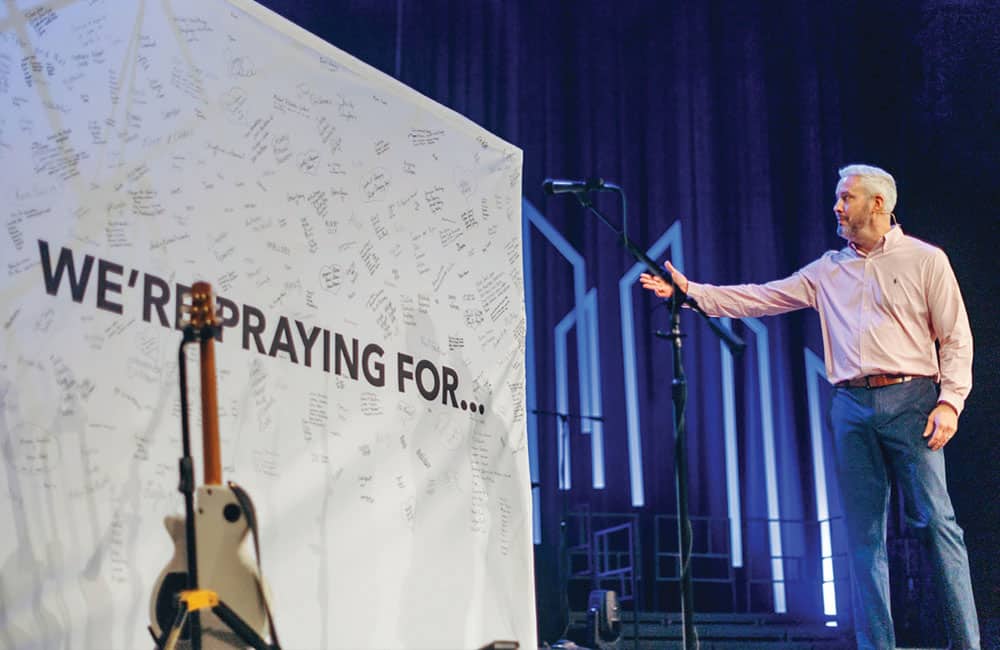
Sagemont Church in Houston has focused on evangelism this year, including writing the names of spiritually lost people on a fabric wall and praying for them. SUBMITTED PHOTOS

“We’ve been very intentional at encouraging the church to pray for lost people by name and to learn how to share the gospel.”

On Easter, each person who entered the worship center received a card with three options to indicate a level of commitment. During the sermon, Skipper asked everyone to take out their cards and respond. Some indicated they were already members of Sagemont, others noted they had prayed to receive Christ that day, and others wanted more information. 

Everyone dropped their cards in buckets on the way out of the service, and Sagemont began following up on those that needed to take the next step. 

Sagemont also has been intentional about leveraging events to move people along the disciple’s pathway, Skipper said. In July, 300 volunteers were trained to share the gospel with thousands of people at a patriotic event on campus. 

“You train them how to do it, but then you have to give them an opportunity to do it,” he said of evangelism. At the patriotic event, the pastor and volunteers walked around sharing the gospel conversationally. 

Another way Skipper teaches the congregation to share Christ is by using a similarly worded invitation during the sermon each week. “I do that on purpose because in doing that, I’m actually training believers how to share Jesus. They probably don’t even realize they’re being trained.”

“I’m always in the service ... asking the Holy Spirit to move in our midst and seek out people who are lost.”

Some older men in the congregation have told the pastor they pray every Sunday specifically for the invitation. “I would not want to underestimate the fact that the Lord could just be answering one of those guys’ prayers,” Skipper said. “Their prayers mean more than they would ever imagine.”

Crites is among those praying.

“I’m always in the service—before the invitation and while the pastor is preaching—asking the Holy Spirit to move in our midst and seek out people who are lost or those who are stagnant in their faith and convict their hearts and move them to more fellowship in Jesus,” Crites said. 

Ken Heibner responded to the invitation earlier this year. “If you could see the change in Ken, it’s pretty remarkable,” Skipper said. “ … It’s amazing what the Lord has done.”

Heibner’s children, ages 12 and 8, had accepted Christ at Sagemont, and the youngest was being baptized on Skipper’s first Sunday as pastor. Though his wife usually took the children to church, Heibner was there that day for the baptism. 

Skipper soon took Heibner to lunch and shared Christ, but he wasn’t ready to commit. The pastor then invited Heibner to a small discipleship group with other men. Eventually, Heibner decided to follow Jesus. 

“The reason why I liked Levi is there wasn’t any kind of pressure to accept things,” Heibner said, noting that it took time for his eyes to open to what he had been missing. The group of men encouraged him by telling their stories of coming to Christ and by helping him feel like he could ask questions, he said. 

Before he was saved, what seemed like hypocrisy from churchgoers had kept him away, Heibner said. “My experience with Sagemont hasn’t been that way. It’s like everybody that I’ve met is pretty genuine, and they’re all there for the same reason.”

Crites—and the entire congregation—is excited to see the changed lives.

“Only the Holy Spirit can do that, and we’re so thankful that He’s moving in our midst right now,” Crites said. “It’s been fun.”

‘God will continue the work He began’: SBTC DR reflects following Hurricane Helene response

Exactly where Southern Baptists of Texas Disaster Relief teams would deploy in the wake of Hurricane Helene was a mystery on Oct. 3, until a call for assistance in mass feeding came from Send Relief.

“A charitable entity contacted Send Relief and said they wanted to help with mass feeding after Helene, including one at Spruce Pine, N.C.,” said Scottie Stice, SBTC DR director. The town, with a population of about 2,200 nestled in the Appalachians off the Blue Ridge Parkway, had been devastated by Helene. Businesses, homes, and the town’s wastewater treatment plant were destroyed by flooding.

At 3:30 a.m. the next day, SBTC DR associate Wally Leyerle left his home in Flower Mound for Flint Baptist Church near Tyler, where volunteers had readied the SBTC DR mass feeding unit housed at the church. The team of 19, plus drivers who would deliver the DR trailers to the disaster area and return home, caravaned northeast toward western North Carolina.

There they met another SBTC DR team headed north to join the Spruce Pine effort after completing two weeks on a feeding crew in Florida.

What should have been less than a one-day trip took two. North Carolina greeted them with impassable roads, multiple detours due to damage, and near escapes.

“Later that week, we found out that one of the bridges we had traveled on with 40-foot trailers collapsed two days after we passed over it,” Leyerle recalled.

After arriving at the parking lot of a major Spruce Pine retailer, they set up camp with five 40-foot trailers, a kitchen trailer, two support trailers, a 30-foot tent, a 20-foot tent, a forklift, two generators, and two 48-foot food storage trailers.

“Our footprint spanned one whole side of the parking lot. The retailer allowed us to block off a whole section just for DR,” Leyerle added.

Appalling conditions

“When we got to Spruce Pine, we found a community with no power, no potable water, no functioning bathrooms, no trash service, and an entire population still in shock from the storm,” Leyerle said.

The first meals went out Sunday, Oct. 6.

“At 11, we opened up our feeding lines by holding hand-lettered signs announcing, ‘Free Hot Food,’” Leyerle said.

The people came … in cars, in trucks, on tractors. They came, thankful for the hot meals available at lunch and dinner.

“In all, we served 1,200 meals that day. Not bad for zero publicity except for some social media and word of mouth,” Leyerle said. Counts steadily grew until one day the team distributed more than 2,400 meals.

“The people were very receptive. We stationed chaplains and counselors near the head of a drive-thru feeding line. The chaplains initiated conversations with all drivers and passengers, asking politely if there was anything specific they could pray for them about. Most everyone was eager to be prayed for and our chaplains did it, right there in the middle of the parking lot,” Leyerle said, adding that no one was forced to pray.

“The storm had taken out all their ability to communicate with the outside world. There was no news, no electricity, no internet. Many felt like nobody knew about them and they were going to have to get through this disaster all on their own. When the people looked at the logos on our vehicles, trailers, and our yellow DR shirts, they were shocked to discover that we had driven all the way from Texas with all this equipment just to serve them some hot food. We told them that we came here because they were here and we wanted them to know that God still loved them. Often, they cried,” Leyerle said.

By the time the deployment ended, SBDR volunteers from New Mexico, Arkansas, and Indiana had joined the Texas team to help.

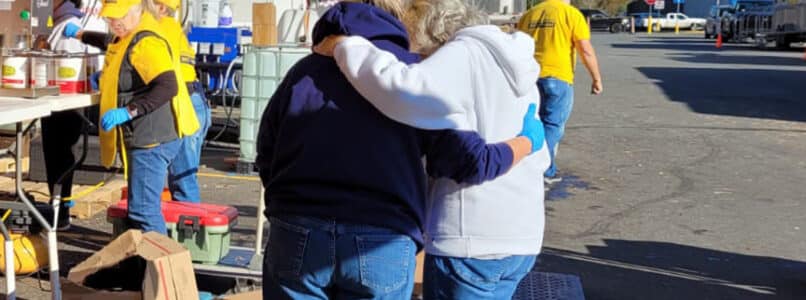
A disaster relief volunteer (right) counsels with one of the survivors of Hurricane Helene, which hit North Carolina in late September. SUBMITTED PHOTO

God provided every step of the way

This disaster came with challenges, but God proved faithful, Leyerle noted.

Unseasonably cold weather, with frost and snow, took a toll on volunteers. When the need for six additional helpers arose, Leyerle asked his church to pray God would send laborers into His harvest. The next day Stice called to say 11 volunteers were coming from two other state Baptist DR teams.

Portable toilets proved problematic. There was no one to clean them and without bathrooms, the kitchen would have to shut down. People prayed. A man driving a septic clean-out truck just “happened” to stop by and agreed to help.

Another day, a man drove into the feeding line and noticed trash piling up due to a lack of garbage service. He offered to haul it off, explaining he had prayed and asked the Lord to use him in some way like he had seen the yellow shirts being used.

“It may seem silly to pray to the king of the universe about trash and sewage, but God cares about every little detail of our lives,” Leyerle said. “We could have waited to respond to this disaster, but instead we came depending on our God who promised to provide all our needs. And guess what? He did.”

Healing hearts

The SBTC DR team served hot meals not just to survivors, but also to linemen repairing power lines and search and rescue crews still at work. They listened to heartbreaking stories.

One man shrugged in agreement when a chaplain asked if she could pray for him. After she finished a brief prayer, the man looked at her blankly and said, “My brother died.”

“Why don’t you pull over here in this parking place and let a few of us talk to you for a while and then we’ll pray for you again?” the chaplain asked. The man agreed.

A woman drove through the food line with her sister, praying with the chaplain. When they moved forward to the place in the line where water was distributed, the woman told that volunteer, “My husband died right after the storm.” Her husband, a local contractor, slipped when descending a ladder after cutting a fallen tree off their roof. These ladies, too, were invited to pull over and receive additional counseling.

“Sometimes people just need to talk,” Stice said. “That’s a big part of what we do.”

By the time teams left Spruce Pine, the team had prepared 19,561 meals over two weeks. They also gave away hundreds of Bibles, presented the gospel 292 times, prayed with 4,018 people, and made 11,196 ministry contacts.

“As we were serving our last meal, people who had been getting food only for their family asked for multiple meals and water to give away to those who lived around them,” Leyerle said, adding, “I am confident that God will continue the work He began through us when we obeyed His command to go to a little town in North Carolina and minister to people we had never met.”

Stice added that an SBTC laundry team remains in Asheville, supporting a shelter there, while a chainsaw team is at work in Georgia and a recovery team has been sent to Roswell, N.M., in the wake of recent flooding.