Tag: Featured

Nueva Vida Dallas continues to make rich gospel investments in Mexico and beyond

Giving, Going & Sending

DALLAS—When Vicente Acosta speaks, the people of Motho—a small town in the state of Hidalgo, Mexico—listen. 

Acosta is a respected leader among the 350 or so residents of Motho, which has a majority Catholic population. Once upon a time, he used his influence to keep the gospel from being preached in his town, as he was strongly opposed to Christians who might come spreading anything that might be opposed to his Catholic religion.

But that was then. Things for Acosta—and for Motho—have changed.

“I was against them coming to my town to preach the gospel,” Acosta said, “but now that I have given my life to Christ, I have a mission to spread the gospel to my people.”

Three years ago, Acosta joined forces with Primera Iglesia Bautista Nueva Vida in Dallas to make Jesus’ name known in Motho. This past summer, Nueva Vida went on a mission trip to Motho, furthering an advance of the gospel that started several years ago.
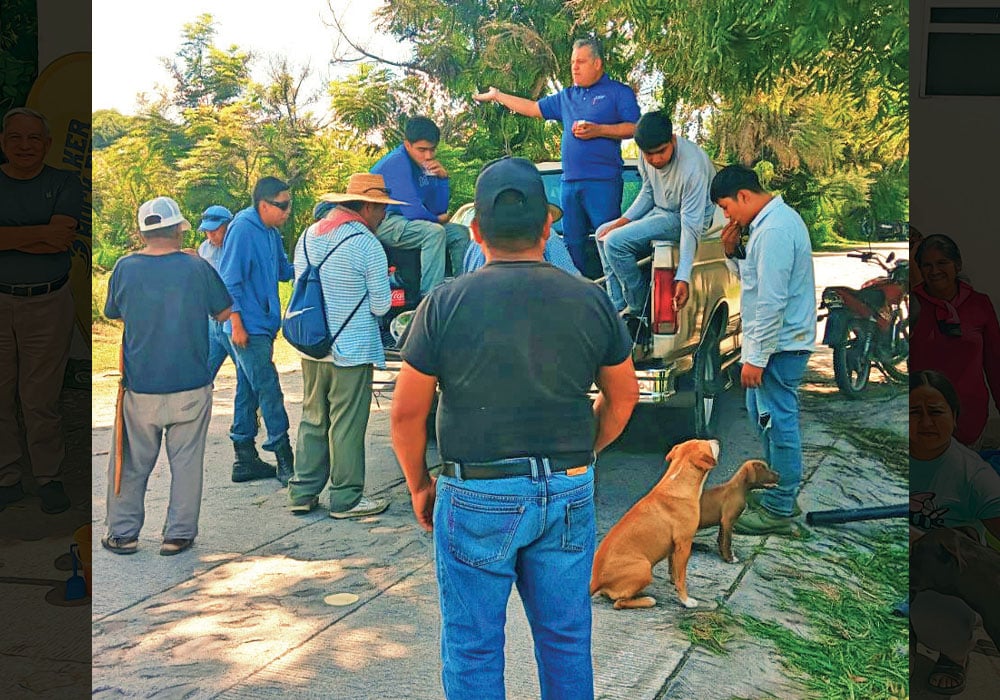
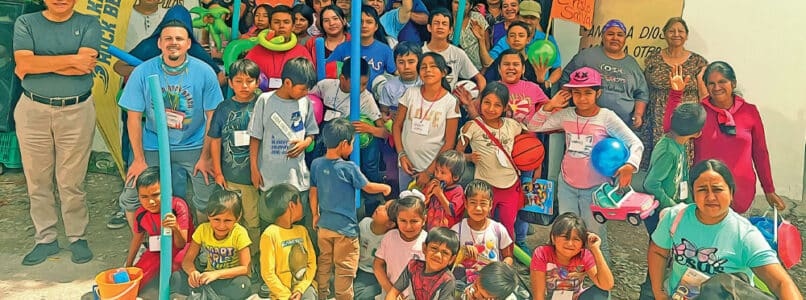
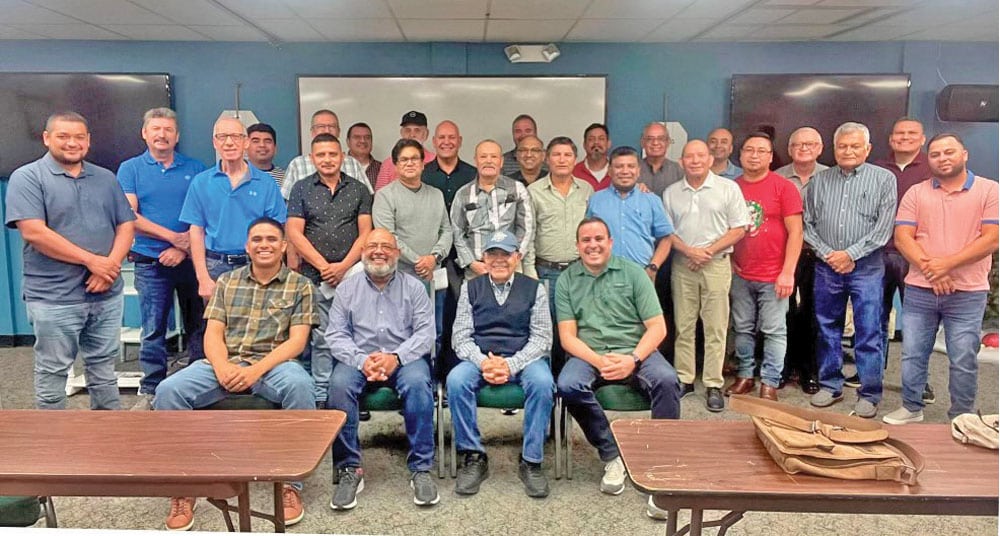
Nelson Fonseca, senior pastor of Nueva Vida Dallas, shares the gospel with a group of men on the church’s recent mission trip to Mexico. Nueva Vida’s support has helped plant a church in the city of Motho. SUBMITTED PHOTO

New commitment, new life

At age 18, Acosta began traveling to the U.S. to work during the hot season before returning home to his family in Mexico. Many people shared the gospel with him during those years, which gradually softened his heart and led to him accepting Christ. It was something his wife, Marisela, had been praying for since they got married.

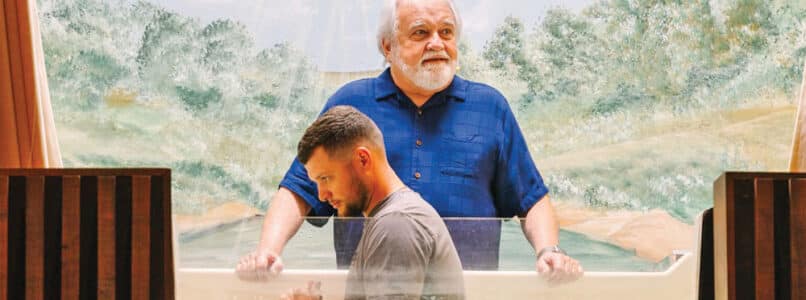
Acosta began attending a house church every time he came to the U.S., but in 1999, that church ceased to exist. That same year, he was working on a house when a Hispanic neighbor invited him to Nueva Vida in Dallas. There, Acosta rededicated his life to the Lord, was baptized, and committed himself to doing whatever God called him to do.

One of the things on Acosta’s heart was to take the gospel back to his people in Motho. So, he approached Nueva Vida’s leadership to share his vision for his hometown. Together, they began to pray about a way to do mission work in Motho. 

One of the primary ways they felt led to do that was through planting a church, Misión Bautista Nueva Vida—named in honor of the support and partnership of Nueva Vida Dallas. This past summer marked the third year Nueva Vida Dallas has sent a team to Mexico to help the mission extend the reach of the gospel in Motho. 

Nueva Vida Dallas helps the mission church to further the work already being done in Motho through training, education, and evangelism. Misión Bautista Nueva Vida has an interim pastor, Agustín Velasquez, who preaches there once a week, with the church meeting in Acosta’s home until it can find a permanent location.

Ironically, it’s not the first time Velasquez and Acosta have crossed paths. Velasquez once taught at a local seminary and would send students to evangelize Motho—efforts that were often frustrated by Acosta.

Now Acosta uses every opportunity to spread the gospel. During the mission trip, he held a birthday party for his granddaughter, renting a tent, providing food, and inviting the community. About 200 people showed up and, in the middle of the celebration, they heard a gospel presentation.
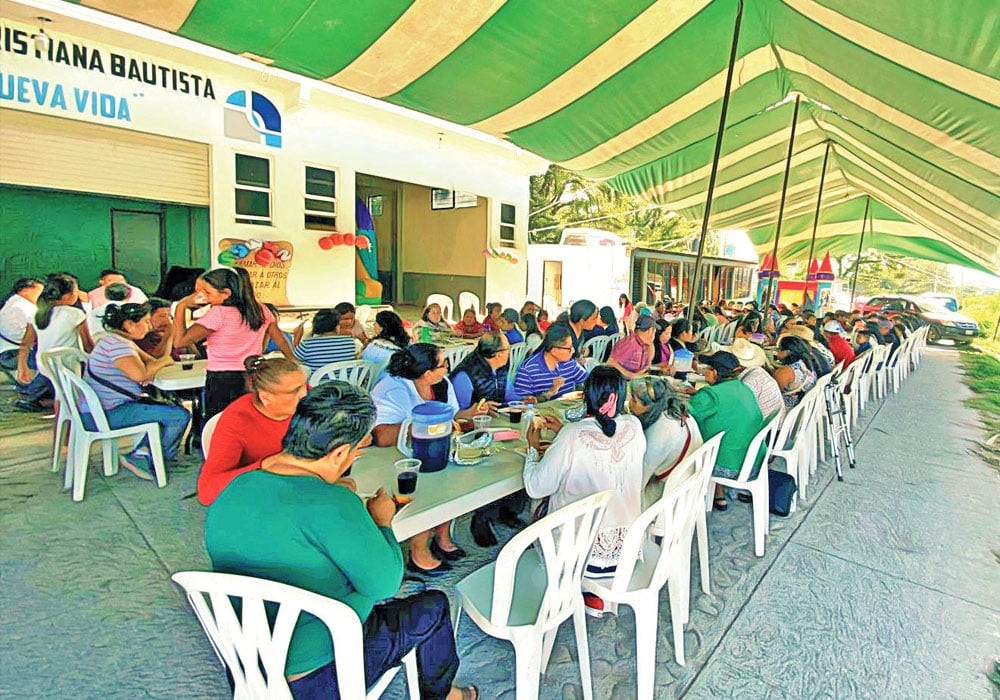
The church is called Misión Bautista Nueva Vida, in honor of the Dallas church.

Not only giving, but sending

Nueva Vida Dallas Senior Pastor Nelson Fonseca preached several times during the mission trip and, with trip leader Oscar Saenz, taught members of the mission church how to share the gospel. The church also held a vacation Bible school and invited children and families from all over town. 

“Unlike other mission trips I have had the opportunity to go on, we were able to experience a special move on the streets by having focused spiritual conversations,” Fonseca said, noting that children were especially filled with joy after seeing vibrant decorations and materials teaching them about Jesus during several events. “The gospel was proclaimed, and we were able to share the love of Christ with the little ones.”

God is strongly at work among the children in Motho, Saenz said. One day during the trip, he said Fonseca asked a group of children if any felt called to serve God or even pastor someday. One child boldly stood up and said he felt called to serve God.

Nueva Vida Dallas is making heavy gospel investments not only in places like Motho, but in people. The church supports missionaries and church planters in Dallas and Arlington, in Nicaragua, and across Mexico in places like Durango, Actopan, and Ixmiquilpan.

“Not only do we believe in giving,” Fonseca said, “but we also send and we pray for them and their families every day in our morning prayer.”

Saenz, who led the singles ministry at Nueva Vida Dallas in addition to serving in teaching and discipleship roles, said he now feels called by God to serve in evangelism. 

“You have to be faithful to God’s call,” Saenz said. “There will be persecution in many places, but you don’t have to focus on that. You have to focus on the impact God is going to make.”

Gospel seeds, family roots, and a legacy of serving

I grew up in Southeastern China and was raised in a Christian family. My parents and grandparents attended an underground church with me every Sunday in my hometown. My grandma would read a Bible story to me every night and we would talk about it, sometimes until midnight. And I remember my family teaching me to memorize Scripture. In my childhood, my parents would prepare a small whiteboard with a verse on it every week, and then I would read that very short verse every day until I memorized it. Then they would change it to a new verse. I think more than half of the Scriptures in my mind now were those I memorized when I was a child. 

My mother’s parents also emphasized family worship. They had begun that during the 1970s. If you know Chinese history, you know China had a cultural revolution from 1960 until the 1980s. Chinese Christians were facing great persecution during those years. Families of my mom’s generation would secretly find brothers who knew the Bible well and invite them to teach every Friday evening and then teach their children. Now, 50 years later, they still keep that family worship tradition. 

I was in fifth grade, about 10 to 11 years old, when I became a Christian—I raised my hand at an evangelistic meeting. During my teenage years, I began to be interested in helping others discern biblical truth after a close friend fell into a cult and I began to research Christian doctrine. I also began to play piano and minister in other ways in our church as I grew older. I very clearly remember when I was 17 years old, when I was in 11th grade, a Sunday school teacher asked us, “Hey, what’s your dream? What do you want to do in the future?” I answered that I wanted to be a pastor. It was a serious answer, though now I realize I did not know clearly what it meant to be a pastor.

“The example of other, older pastors and other churches has taught me the importance of shepherding God’s people with patience, love, grace, and mercy.”

During my college years, I studied microbiology and later anthropology, but I always knew I wanted to be a pastor, so I studied theology alongside these majors. My college years were also a time of maturing in my faith. Our church was influenced by Tim Keller and his City to City ministry. We tried to teach our congregation to have a gospel-centered view of our faith and the Bible. Through this, I was challenged at the point of pride and self-righteousness. It helped me go back and think about what grace is, what salvation is, and it helped me start to know the gospel is good news for me. It’s not just for other people—it’s my good news. 

There were seminaries in Taiwan and Singapore available to me, but I felt led to search among U.S. seminaries. At that time, I was not a Baptist because my home church was underground and we didn’t have any denomination background, but I found Southern Baptist Theological Seminary in Louisville, Ky. I saw a lot of “gospel-centered” phrases on the website like, “We provide gospel-centered theological education. We want to build gospel-centered churches,” and so forth. I graduated in 2020 and was married to my wife, Dan Song, at Third Avenue Baptist Church in Louisville.

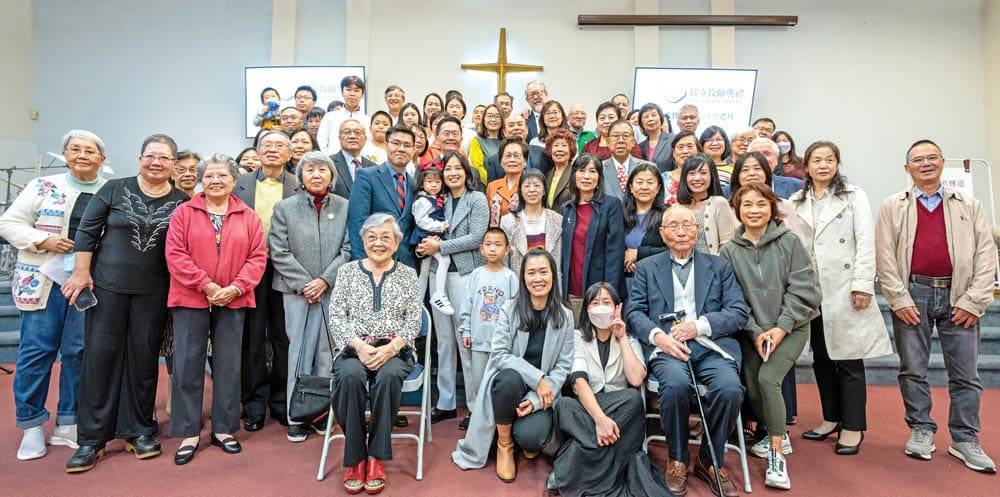
Northwest Chinese Baptist Church in Houston is my first pastorate, and I have been here since January 2022. As a young pastor, I am still learning. The example of other, older pastors and other churches has taught me the importance of shepherding God’s people with patience, love, grace, and mercy. My ministry is a heritage of so many who have taught me through the years—family, pastors, my seminary professors and president, and men like Tim Keller and Mark Dever. 

My grandparents have all passed away now, but my mother and my uncle still keep this family worship as a family tradition every Friday. Following that heritage, my uncle, my cousin, and now me—we three are the only male members remaining in my mother’s extended family, and we are all full-time pastors now.

Jesus is Writing My Story logo

Want to share a story of what God is doing in your life or your church? 

Share your story here

‘Jesus is working and using the SBTC’

Forshee prepares to preside over first annual meeting as convention president

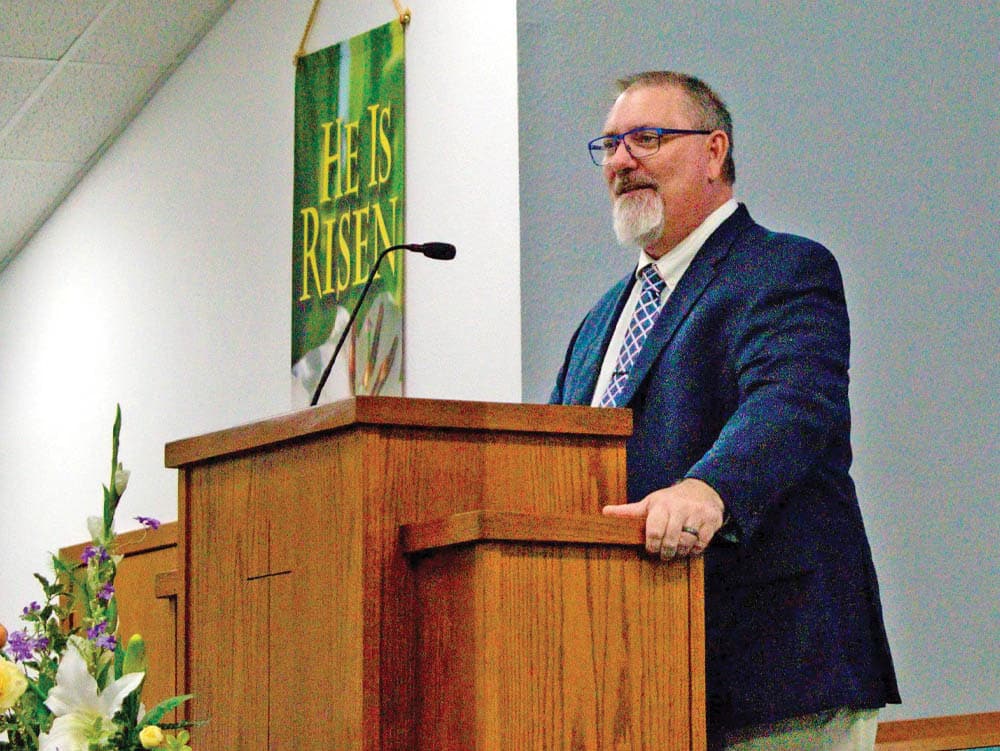
The Southern Baptists of Texas Convention’s 2024 Annual Meeting is scheduled for Nov. 11-12 at Sagemont Church in Houston. Danny Forshee, lead pastor of Great Hills Baptist Church in Austin, will preside over the meeting—his first as SBTC president. Forshee recently spoke with the Texan about the meeting’s theme, “Side by Side,” the importance of prayer, and what makes him most hopeful about the convention’s future.

Like many of your predecessors who have served as SBTC president, you have used your public platform to talk about the importance of prayer. How have you specifically been praying for our convention over the past year?

Danny Forshee: As part of my daily prayer time, I pray for the Southern Baptists of Texas Convention and its people, pastors, churches, and leaders. I pray specifically for Nathan [Lorick, SBTC’s executive director] every day. Nathan and I are discussing the prayer service on Monday night at the annual meeting on Nov. 11 and we are excited about this.

The theme of this year’s annual meeting is “Side by Side.” How have you seen God use our churches working alongside one another to advance the mission for His kingdom?  

DF: Having served on the executive board and now as SBTC president, I have a front row seat to see the work of the SBTC—and it is truly remarkable. We are a large state convention of 2,780 churches with resources to help plant churches, support missions, and help pastors be healthy. One example is when Jeff Lynn [SBTC’s Church Health & Leadership senior strategist] and his team came to our church earlier this year and led an excellent training for about 20 pastors.

Next year, Southern Baptists will celebrate the 100th anniversary of the Cooperative Program. Why is Great Hills so faithful to give through CP?  

DF: We give because of the kingdom impact the CP makes. I am grateful that God gave our ancestors this golden idea in 1925, and it is unparalleled among denominations. We can help reach our state, North America, and the world. We join with others in supporting disaster relief, our six seminaries, and numerous other initiatives of the SBC.

What are some of the victories we will be able to celebrate at this year’s meeting, as well as some of the challenges that lie ahead?  

DF: I am looking forward to the annual meeting. Our theme, “Side by Side,” is so needed as we seek to build one another up and help pastors and staff not go it alone, but be in harmonious fellowship and relationship with others on the same team. There will be many victories to celebrate, such as the planting of new churches, the ongoing work that the SBTC does in areas like pastoral help and training, disaster relief, and the overall unity God has given us. As for challenges, we will have to keep focused on unity and what unites us and not let the enemy divide us. We should pursue unity amid diversity but stay centered on our core convictions. We should fight against any kind of arrogance or intolerance toward those who disagree with whatever position we take.

It seems our world and our culture continue to move further away from God’s truth every day. What are some things Great Hills has been doing to reach people with the gospel in the Austin area that might serve as an encouragement to other pastors working to reach their communities? 

DF: Pastors and churches are unique and should exegete their culture well and ask the Lord to lead them in reaching the lost. We started another campus 2.5 years ago, and while that has been costly and hard work, God has blessed us and we are reaching new people. Also, we try to follow the BLESS strategy: Begin with prayer; Listen with care; Eat with and fellowship; Serve others; and Share Jesus with them. We have quarterly community impact days where our church comes together to go out and do various service and evangelism projects in and for our city. We also have a robust ESL ministry that allows for many opportunities to share Jesus with people from literally all over the world. And finally, we are big on short term missions, sending our people all over the world.  

As you look to the future, what are some things you are most hopeful about among our network of churches?  

DF: I am very optimistic and hopeful! Jesus is working and using the SBTC along with numerous other churches and denominations to reach people. I am hopeful also because of the excellent leadership we have at the SBTC, beginning with Nathan Lorick and the other men and women who serve us. And finally, I am hopeful because of the continued emphasis on the Cooperative Program, an ingenious plan to help reach the world.

State Board of Education to consider traditional curriculum offering for Texas students

AUSTIN—The Texas Education Agency, which oversees the state’s primary and secondary public education, has developed a new curriculum for students that supporters say can return public education to “rigorous academic learning.”

The curriculum is called Bluebonnet Learning (formerly TEA Open Education Resource). Last year the legislature passed  House Bill 1605 into law, directing the TEA to create its own free-to-use textbooks to help teachers with planning their classes.

“The materials will … allow our students to better understand the connection of history, art, community, literature, and religion on pivotal events like the signing of the U.S. Constitution, the Civil Rights Movement, and the American Revolution,” Texas Gov. Greg Abbott said.

The first offering will be reading/language arts for K-5 students and will be ready by August 2025.

One prominent feature of the curriculum is the explanation of biblical content used as a source reference for certain historical events, including famous works of art and music, important to understanding the development of Western civilization. Martin Luther King Jr., for example, referred to Shadrach, Meshach, and Abednego, from the Book of Daniel in his well-known “Letter from Birmingham Jail.” The use of biblical references has been controversial and drew critics to public hearings who expressed concern about schools “teaching religion.” The curriculum’s developers and advocates have responded that the use of biblical material is not for purposes of proselytizing.

The curriculum is optional, but a financial incentive is offered from the state for classes that use Bluebonnet Learning. It is offered free to homeschooling families, as well. Once ready for use, the material will be online in PDF form, allowing parents to see all that their children will be studying.

Cindy Asmussen, policy advisor to the Southern Baptists of Texas Convention, has reviewed the proposed curriculum and is enthusiastic about the chance to turn away from radical ideology in classrooms and back to a more classical model of learning.

“This is a once-in-a-lifetime opportunity,” she told the Texan. “We have all the pieces together to get something monumental done for Texas students.”

The State Board of Education has held public hearings on the new curriculum and received comments from the public online. The board will vote regarding approval of Bluebonnet Learning during its November meeting. Asmussen strongly encourages Texans to speak with their board members in favor of its approval.

You can contact your State Board of Education member by clicking here if you’d like to share your opinion on the subject.

As SBTC DR responds to disasters on multiple fronts, ‘our greatest need is for volunteers’

SPRUCE PINE, N.C.—Southern Baptists of Texas Convention Disaster Relief volunteers on the morning of Oct. 5 headed for Spruce Pine, a historic riverfront town of 2,000 hit hard by Hurricane Helene.

The hurricane wiped out Spruce Pine’s water treatment plant, leaving sludge-filled streets, ruined businesses, and collapsed buildings in its wake.

On a normal day, the trip from the Nashville area, halfway between Texas and North Carolina, where volunteers were guests of Tennessee Baptist Disaster Relief, would have taken a few hours. Instead, the journey grew to seven hours, involving travel on four interstate highways, three state highways, and multiple narrow roads as the 26-volunteer caravan—including a mass-feeding trailer, two bunkhouses, a command post, and shower and refrigeration units—motored on, greeted by the Smoky Mountains as mist rose in nearby fields and forests.

“Not long after we turned south and entered North Carolina, the lush, beautiful countryside began to be punctuated by evidence of devastation,” said Wally Leyerle, SBTC DR associate and team leader.

A blessing to see how the Lord provides

The DR team had another problem: With Spruce Pine’s water treatment facility gone, it needed bottled water delivered to the parking lot where it would set up operations off Highway 226 South.

An SBTC DR volunteer and her husband pulling a refrigeration trailer paused at a roadside rest stop shortly after learning that a vendor could not supply sufficient bottled water until the middle of the following week. As the volunteer got out of the tow vehicle, a truck driver approached. He had seen the SBTC DR logo on the refrigeration unit and asked what the couple was going to do.

“During the conversation, she mentioned our need for bottled water,” Leyerle said, adding that the truck driver thanked them for serving the community before departing in his rig.

“About 20 minutes after our volunteers arrived at the disaster site and began setting up, that truck driver showed up in an 18-wheeler, delivered 20,000 bottles of water from his employer, and left,” Leyerle said. “It’s always a blessing to see how the Lord provides.”

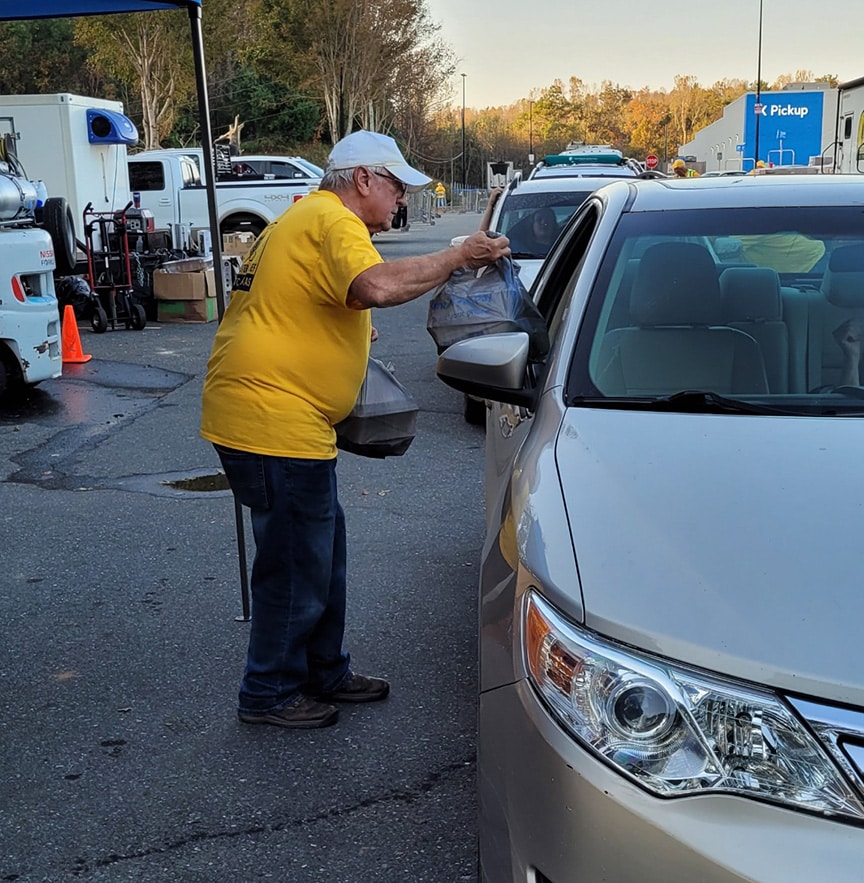
Drive-through food distribution is giving SBTC DR volunteers exponentially more contacts with storm survivors. SUBMITTED PHOTO

Pilot program

SBTC DR volunteers are following a new Southern Baptist Disaster Relief model being piloted during the Helene response. Feeding teams are preparing 3,000-5,000 meals daily in Spruce Pine, placing the hot food in clamshell containers, and handing the meals directly to survivors in a drive-through operation.

The advantages of the drive-through system are many.

“Our contacts with survivors are off the charts,” said Scottie Stice, SBTC DR director. “We ask, ‘Can we pray with you?’ If the answer is yes, the door opens for spiritual conversations. If the answer is no, we simply greet them warmly, hand them the needed meals, and they drive away. We don’t force the issue.”

Stice said many locals have tearfully thanked volunteers, sharing with them that the hot meal they received was their first in 11 days.

“God is with us. We couldn’t do this without the support of our Southern Baptist churches,” he noted, explaining the partnership also includes Send Relief and corporate entities. “Always, our primary support is Southern Baptist churches that contribute.”

Also responding to Hurricane Helene, SBTC DR feeding volunteers deployed to Live Oak, Fla., in support of the Salvation Army, where they prepared 32,201 meals distributed to survivors and first responders and nearly 800 meals for DR workers. SBTC DR volunteers provided shower and laundry service, too—contributing more than 1,900 total hours before the Live Oak deployment ended Oct. 6. An SBTC DR shower unit set up operations in Blackshear, Ga., on Oct. 8 where volunteers remain as needed.

Earlier in the month, volunteers ended a deployment to Morgan City, La., following Hurricane Francine, contributing 670 volunteer hours to complete chainsaw jobs and debris removal.

The busy hurricane season that started with Beryl in early July continues into the fall.

“We’re getting lots of opportunities to serve,” Stice said. “We just want to be the hands and feet of Jesus. … Our greatest need is for volunteers. We are short-handed in North Carolina and Georgia right now and the needs are great.”

He added that Hurricane Milton intensified to a Category 5 storm on Monday, Oct. 7, and is projected to make landfall on Wednesday, Oct. 9. Like other DR leaders, Stice said SBTC DR is monitoring the progress of the latest storm and preparing resources to assist.

To donate to Hurricane Helene relief efforts, visit sbtexas.com/disaster-relief/donate.


Everything you need to know for SBTC AM 2024

Messengers to celebrate ‘Side by Side’ ministry at this year’s Annual Meeting

In Philippians 1:27, Paul wrote, “Only let your manner of life be worthy of the gospel of Christ, so that whether I come and see you or am absent, I may hear of you that you are standing firm in one spirit, with one mind striving side by side for the faith of the gospel.”

That verse is the foundation for the theme at this year’s Southern Baptists of Texas Convention Annual Meeting, where messengers will gather “Side by Side” at Sagemont Church in Houston on Nov. 11-12. 

Each session will include inspirational messages and worship, while meals and gatherings will allow messengers to connect with others from around the state. Each year’s meeting is also an opportunity to celebrate the advancement of the gospel through cooperative work—a timely recognition on the eve of the 100th anniversary of the Cooperative Program happening next year.

“As devoted followers of Jesus, we strive—as Scripture commands—to live a life worthy of our calling,” SBTC Executive Director Nathan Lorick said. “We do that by furthering the gospel. We do that by mobilizing churches to multiply disciple-making movements. We do that by cooperatively giving and sending to advance the mission. And we do all of this together. This is how we stand firm in one spirit, speaking in one accord, and contending for the faith of the gospel. We do this standing side by side.”

This year’s meeting will once again feature a powerful prayer gathering on Monday night, led this year by SBTC President Danny Forshee. A church planter commissioning service is also scheduled, as well as an in-person report delivered by Jeff Iorg, president and CEO of the Southern Baptist Convention’s Executive Committee.

SBTC officer nominations announced

Byron McWilliams, senior pastor of First Odessa, has announced his intention to nominate Danny Forshee to serve a second term as president of the Southern Baptists of Texas Convention at its annual meeting in November. 

Forshee has served as lead pastor of Great Hills Baptist Church in Austin since June 13, 2010. He has been president of the Danny Forshee Evangelistic Association since it was formed in May 2004.

“I would be honored to serve a second term as president of the SBTC,” Forshee said. “God is working in powerful ways in and through our convention. I am excited about what the Lord will do in the future.”

McWilliams said he is honored to nominate Forshee for a second term, noting he has led Great Hills with “pastoral integrity and exceptional wisdom.” 

“He has led the SBTC well this past year, and I’m confident he will lead us well in his next term as president,” McWilliams said. “I am also confident Danny will continue the theme of his life and ministry—to lift high the name of Jesus and make His name known wherever he goes.”

Great Hills gave $211,175.62 through the Cooperative Program in 2023 and $233,730.08 in 2022. 

Forshee holds a doctoral degree from Southwestern Baptist Theological Seminary in Fort Worth, where he has served as a professor. He and his wife, Ashley, have three grown children, four granddaughters, two grandsons, and another grandchild on the way.

Ed Johnson III, lead pastor of Harvest Fellowship Baptist Church in DeSoto, will be nominated to serve as SBTC vice president. Johnson, a bivocational pastor who also serves on the convention’s executive board, will be nominated by Caleb Turner, senior pastor of Mesquite Friendship Baptist Church. The convention vice president fulfills the duties of the president in the president’s absence or when requested by the president to do so.

Amy Hinote, a member of First Baptist Church Justin and the wife of its pastor, Beaux Hinote, will be nominated to serve as convention secretary. She will be nominated by Matt Kendrick, lead pastor of Redemption City Church in Fort Worth. Mrs. Hinote previously served on the SBTC resolutions committee. The convention secretary’s duties include receiving copies of motions offered for consideration at the SBTC Annual Meeting. 

The secretary and vice president also serve on the credentials committee, as outlined in Article III of the convention’s constitution and bylaws.

Meals & Events

Meal registration is required at sbtexas.com/am24.

At a Glance 

Messengers to the Southern Baptists of Texas Convention Annual Meeting will gather for a powerful time of prayer, worship, and fellowship at Sagemont Church in Houston on Nov. 11-12.

Sagemont Church, Houston

11300 S. Sam Houston Pkwy E

Houston, TX 77089

Main Sessions

Monday Evening 6:30-9:00 p.m.

Tuesday Morning 9:00-11:40 a.m.

Tuesday Afternoon 1:30-4:10 p.m.

Spanish Session

Sagemont Church, Houston

Sunday

4:30-6:00 p.m. Spanish Session Concert

6:00-6:45 p.m. Spanish Session Fellowship

6:45-8:30 p.m. Spanish Session

Monday

10:00- 11:45 a.m. Spanish Session Breakouts

12:00- 2:00 p.m. Spanish Session Lunch

ANNUAL MEETING MEALS

Monday

• Chinese Pastors Network Lunch | 12:00 p.m.
• Exec. Pastors and Administrators Network Lunch | 12:00 p.m.
• Advancing Mission Dinner | 4:45 p.m.
• Resourcing Churches Dinner | 4:45 p.m.
• Young Pastors Network Dinner | 4:45 p.m.
• Women’s Ministry Dinner | 4:45 p.m.

Tuesday

• SBTC Disaster Relief Taco Truck | 7:30 a.m.
• Seminary Breakfasts
   Southern & Southwestern | 7:30 a.m.
• President’s Lunch | Panel Discussion | 12:00 p.m.

Resolutions 

A resolution allows convention messengers to express consensus on a current issue. While resolutions are non-binding on convention churches, they add substance to current conversations in Baptist life and the culture at large. Any member of an SBTC church may submit a resolution to the resolutions committee for consideration. The resolutions committee considers these proposed resolutions when preparing resolutions to present to messengers at the annual meeting. 

The 2024 resolutions committee will receive proposed resolutions from Wednesday, Sept. 18, until Wednesday, Oct. 16. A proposed resolution must include your name, church membership, phone number, and email address. 

Please review the format of previous SBTC resolutions at sbtexas.com/resolutions. 

All proposed resolutions should be emailed to Jenna Griffis at jgriffis@sbtexas.com. 

El mensaje de Miranda, servirá como uno de los momentos más destacados de la sesión en español de la Reunión Anual ’24

Congregaciones de habla hispana de todo Texas se reunirán en la Iglesia Sagemont en Houston en noviembre para la sesión en español de la Reunión Anual 2024 de la Convención de los Bautistas del Sur de Texas. 

El tema de la reunión de este año, programada para los días 11 y 12 de noviembre, es «Lado a lado», basado en Filipenses 1:27 (RV-2015): «Solamente procuren que su conducta como ciudadanos sea digna del evangelio de Cristo, de manera que, sea que yo vaya a verlos o que esté ausente, oiga acerca de ustedes que están firmes en un mismo espíritu, combatiendo juntos y unánimes por la fe del evangelio…».  

La sesión en español comenzará el domingo, 10 de noviembre a las 4:30 p.m. con un concierto dirigido por Job González, pastor de adoración de Champion Forest en Español. González es un cantante, productor y compositor de McAllen apasionado por impactar a las generaciones con excelencia musical. 

Tony Miranda, pastor y orador internacional que capacita a pastores y líderes en América Latina y los EE.UU., servirá como orador principal. Él ha enseñado en varios seminarios bautistas y es autor de varios libros en español.

Los talleres se ofrecerán el lunes desde las 10 a.m. hasta el mediodía con Lázaro Riesgo, pastor de Sagemont Encuentro y Livan Quintana, pastor de la Iglesia Bautista Vida en Cristo en Nassau Bay. Además, Amparo Medina y Karina Vázquez, quienes ministran a mujeres en Champion Forest en Español, dirigirán los talleres para mujeres.

El lunes a mediodía también se celebrará un almuerzo en el que Julio Arriola, director de Send Network SBTC y del departamento en Español de la Convención, entrevistará a Ramón Medina, pastor principal de Champion Forest en Español.

Para más información, visite sbtexas.com/am24.

Hotels

Fairfield Inn & Suites NASA/Webster
401 W Texas Ave.
Webster, Texas
832-932-3633
King/Double $104
Cut-off: 10/11

Holiday Inn Express Space Center
900 Rogers Court
Webster, Texas
281-316-9750
Double $102
Cut-off: 10/11

Tru by Hilton
901 Rogers Court
Webster, Texas
281-672-7025
King $94, Double $104
Cut-off: 10/21

Group Rates
Specify SBTC for group rates
when making any hotel reservations.

CHILDCARE
Childcare is available at sbtexas.com/am24childcare.

Housing Assistance
Senior pastors with financial need may request hotel cost assistance by visiting sbtexas.com/am24housing.

Questions?
Email aminfo@sbtexas.com or call 817-552-2500.

Handouts & Materials
Only SBTC ministries and approved exhibitors may hand out material to the messenger body on the premises of the annual meeting.

‘There’s hope for any church’

Snyder church experiences turnaround by becoming more ‘gospel-centric’

SNYDER—In just over a year, Avenue D Baptist Church went from about 30 people on Sundays and no one remembering the last baptism to seeing 80 to 90 on Sundays and more than 20 baptisms. 

In his initial meeting with the church’s pastor search committee, Charles Lowery, a former church planter, said something he knew could be hard to hear. 

“Whether you call me or not, somebody needs to tell you this,” Lowery remembers telling committee members. “Unless you have some significant changes, you’re probably looking at maybe not even being here in the next decade.”

The committee “could have been negative about that,” Lowery said, “but they were so very encouraging.”

Evangelism and discipleship have been the keys, Lowery said, adding, “It’s not rocket science.” 

“If you think about it, we haven’t done anything that’s been crazy or has cost a lot of money,” he said. “None of it has been that. I think we have just had a confidence that if you just follow God’s plan and you share the gospel and be gospel-centric, God will take care of everything.”

When Lowery arrived as pastor in May 2023, he asked if the church had ever had a formal discipleship ministry. No one could remember, so he began to form one. He also knew the church would need a missional mentality, so he encouraged outreach events. 

“It’s easy to adopt the idea that people are just going to walk through our doors,” Lowery said. “We love it when that happens, but that rarely happens.” 

Last October, rather than a trunk or treat, Avenue D hosted a “Dine and Dash” where parents could take their children for a quick meal at the church before heading out together for a night of candy gathering. “It was a huge success,” the pastor said. 

Charles Lowery, a former church planter, recognized the potential at Avenue D Baptist Church when he accepted the pastorate last year.

During a Snyder festival called White Buffalo Days, Lowery headed out with a backpack full of gospel tracts and found lines of people waiting at food trucks. He projected his voice to share a quick gospel presentation and then passed out tracts with a few church members.

“We led a family to Christ that day,” Lowery said, noting that probably 70% of the people who sit in one section at the church are related to that family in some way. 

Another thing the church started doing to create a culture of evangelism was to give a brief gospel presentation every Sunday during the worship service around announcement time. “They hear me say that every single Sunday. I think it helps keep everything gospel-centric,” Lowery said.

The pastor also coaches Sunday school teachers to open each class with an opportunity for someone to articulate the gospel, no matter what lesson they’re studying. 

Regarding intentional discipleship, Lowery chose a curriculum which has three sections: found, following, and fishing. In 16 lessons, the curriculum covers such topics as salvation, baptism, the Lord’s Supper, and prayer. 

“Discipleship is a lifelong process. We’re lifelong disciples, but we want to make sure, especially in the beginning, that people get a good foundation,” he said. 

Last year, Avenue D had three discipleship classes meeting each week. One met during the Sunday school hour in the pastor’s office, another  met on Tuesday mornings, and another on Tuesday evenings. 

In May, about 30 people graduated from the first round of formal discipleship ministry. They received a certificate in a worship service, and the church commissioned them to go out and disciple others. 

Before launching the discipleship ministry, Lowery taught the congregation about the biblical mandate for discipleship.

“Discipleship is simply the Great Commission,” he said. “It’s not something separate from the Great Commission. … So many of us think the Great Commission is just getting people saved. That’s wonderful. We love that, but until we’re involved in discipleship, we haven’t fully embraced the Great Commission.”

“It’s easy to adopt the idea that people are just going to walk through our doors. We love it when that happens, but that rarely happens.”

Lowery, 51, may have been the youngest person at Avenue D when he arrived, he said, but the church has seen growth in the 30-45-year-old age group. “We recently started a young adult class that our church hasn’t had in decades,” he said, adding that the church recently marked its 75th anniversary.

This summer, they sent a group to student camp, something else no one could quite remember doing recently.

Looking at what has happened this past year, Lowery said he saw the potential when he first considered accepting the pastorate. He knew it would be a revitalization ministry. 

“The people had a heart for the Lord,” he said. “I could sense that.” If a church is not resistant to outreach and evangelism, Lowery added, “I think there’s hope for any church.” 

How can we honor our pastors?

how can we honor pastors? Let's ask them ...

Many churches observe Pastor Appreciation Month in October. How or when your church chooses to show love to your pastors is up to you. But just in case you’re needing a few ideas, we reached out to a number of Southern Baptists of Texas Convention pastors recently to ask them how churches might best show them appreciation. Here’s a sampling of their responses:

1 “Last year, our church threw a fish fry supper for pastor appreciation and collected gift cards for a ‘shower’ for us. Our family ate at different restaurants for over six months, bought groceries for a few months off that … it was such a blessing.”

2“My church provided me with the time and the funds to take a sabbatical. It was an amazing time that they ‘made us’ take. It was a truly refreshing time I didn’t realize I/we really needed after nearly 30 years of ministry.”

3“In the past, members have signed up to do something nice for our family every day for a month. It was everything from mowing my yard to washing my car to giving me a gift card to my favorite restaurant.”

4 “Our church recognized my family during a Sunday service. They gave flowers to my wife and gave me a card signed by all the kids in the kids ministry.”

5 “One church where I served was very creative—they paid to have my master bathroom remodeled and also gave my family a weekend at a resort.”

6 “My church filled an entire calendar with people in the church to pray for me and my family. We were covered for 365 days straight, and we used the calendar to pray each day for those who were praying for us.”

7 “One way my church could show me appreciation would be to share the gospel with someone and then tell me about it via text or email or a phone call.”

8 “I received a public acknowledgment of appreciation from the deacons and the personnel committee. I hated it at first and did not want it, but after it was done, it was really meaningful.”

9 “Last year, our church blessed us with a cruise. I know that’s not possible for everybody, but it was helpful for us to get to go on vacation.”

10

“I love me a good handwritten note of specific ways God has used me in someone’s life. I also love when people give my wife and I date nights—gift cards to our favorite restaurants as well as babysitters.”

11

“Last year, our church held a lunch in my honor and invited people to share some meaningful parts of my ministry.”

12

“Our church had people write anonymous notes of encouragement and drop them in a basket along with gift cards. Some people have watched our kids so my wife and I could go on a date night.”

13

“I think the most meaningful ways the church has encouraged me are the times when they make a point to include my family in the gift or recognition. My work is extremely visible … but the ways my family serves and sacrifices are typically not seen.”

God has used a series of relationships to mold Sagemont Church’s Hispanic ministry—and its pastor

‘We have grown together’

HOUSTON—Lazaro Riesgo, pastor of Sagemont Encuentro, is a product of the people God has brought in and out of his life.

Riesgo was three when his father left Cuba promising to find a better life for the family in the U.S. The father never returned, however, leaving the family struggling to overcome the trauma and suffering that comes with abandonment. 

“I remember [hearing] a knock on the door and wanting to believe it was my father who was home,” Riesgo remembered, “but it wasn’t.”

Riesgo acknowledges the heavy burden his mother, Cary, took on as she raised her family while also caring for her own mother. 

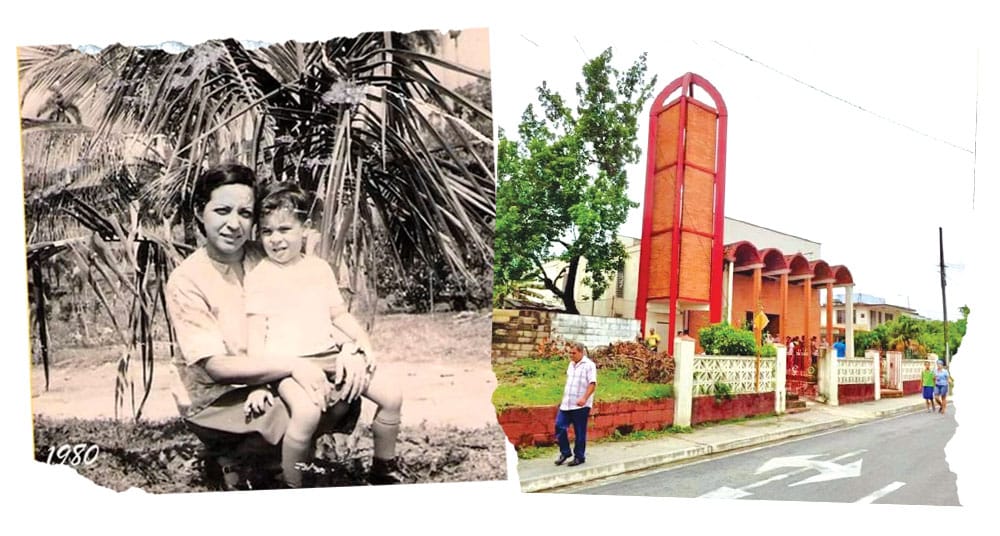
(Left) Lazaro is pictured with his mother, Cary, in 1980. (Right) Iglesia Bautista Libre is where Cary attended church after giving her life to Jesus. SUBMITTED PHOTOS

He remembers an aunt, Obdulia Peña, visiting from Miami one year and leading his mother to faith in Christ. The aunt, who died in 2023 at age 96, encouraged Cary to find a faith community that could support her as she endured life’s hardships.

Cary did just that and began attending Iglesia Bautista Libre, one of the few churches in town still standing after the Cuban revolution. It was the presence of the Lord and the fellowship of brothers and sisters at the church that sustained the broken family. 

Riesgo was nine when he gave his life to Christ during an altar call. Several Christian men who had been investing in him since he was younger continued to speak biblical wisdom into his life, encouraging him to not hate the father who abandoned him, but to have love and mercy for him.

“These men taught me to love the heavenly Father and to fill the absence of my earthly father with the sufficiency of the God of heaven,” Riesgo said. 

When Riesgo was 17, another important man came into his life—Rolando Delgado, a new pastor called to serve the church. It was Delgado whom God used to lead Riesgo to answer the Lord’s call to attend seminary and prepare for ministry. 

“Lázaro,” Riesgo remembers Delgado challenging him, “you need to find your place in the body of Christ.”

Riesgo never wanted to be a pastor or be involved in ministry. “I just wanted to be a good believer, get married, and have a successful career in sports,” Riesgo said.

But God began to change his heart during one of Delgado’s sermons, during which he warned that fame and success are often stumbling blocks to serving God. Before long, Riesgo enrolled in seminary in his hometown to prepare for the ministry.

Connections and relationships are strongly encouraged among those who participate in Sagemont’s Hispanic ministry.

Open doors

Riesgo met his wife, Ariadna, before entering seminary. She understood and accepted God’s call on their lives and never doubted that call, he said—even when she had to make the difficult decision to leave her medical career in Cuba to serve in ministry with him.

After graduating with a bachelor’s degree in theology in 2003, Riesgo was sent to pastor his first church. A few years later, in 2007, God opened a door for his wife and him to expand their ministry through the National Youth Leadership Network, an association of three Baptist conventions in Cuba. This led to a full-time job for the Riesgos to travel throughout the island to help disciple Cuban youth until 2010. 

The Riesgos began to envision expanding the ministry they were doing in Cuba to a larger area. In 2011, they left Cuba to fulfill a missionary call in Panama at a Bible institute, preparing future leaders for the pastorate and for missions. In 2015, that larger vision came more into focus when they received an invitation from a Baptist mission agency in Nashville to expand the work they were doing in Panama throughout Latin America. They accepted and spent four years training leaders in many Latin America countries, including Uruguay, Peru, Ecuador, and El Salvador.

‘God is not finished with you’

By 2019, however, Riesgo sensed something was missing. Because of his frequent travels training church leaders, he missed the connections associated with serving in the local church.  Before long, he learned of an opportunity to pastor a church in Miami. While it seemed like an answer to prayer, many difficulties lay ahead.

Prior to the pandemic, he and Ariadna’s passports and residency documents were stolen during a burglary of their home. Pastoring during the pandemic proved physically and emotionally exhausting, leading Riesgo to make the difficult decision to take a break from ministry in 2020 to take care of his health. 

“We were left alone in Miami with virtually nothing,” Riesgo said. 

They spent six months, from June to December, walking through that desert season. Though it was a time of discouragement for Riesgo, he remembers Ariadna’s constant encouragement. 

“I saw myself without a future at that time,” Riesgo said, “but my wife faithfully reminded me that this was temporary … [that I needed to] remember what and by whom we were called.”

“God is not finished with you,” Ariadna would tell him.

Though he admits it was hard to believe at the time, he has since seen God move in a powerful way through a new ministry assignment.

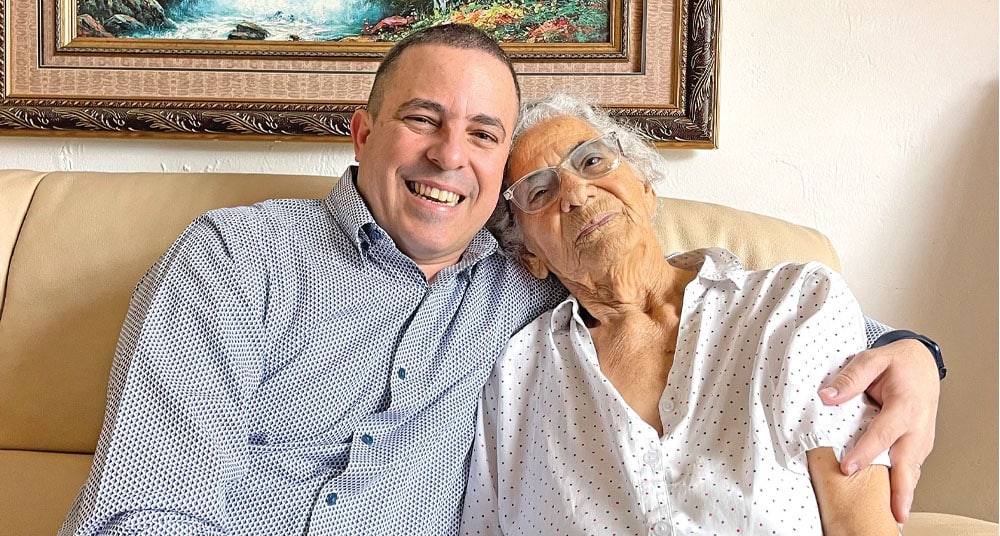
Pastor Lazaro Riesgo (seen preaching on the opposite page) is pictured with his aunt, Obdulia Peña, who led his mother to Christ many years ago.

A new start, a new story

After spending half a year away from ministry, Riesgo received a call from an American pastor, John Carswell, who had gone to Cuba to teach other pastors. Carswell learned that Sagemont Church in Houston was looking for a pastor for its Hispanic ministry and encouraged Riesgo to submit his resume. 

Despite his trepidation, Riesgo did and was called for an interview. About a week after he returned to Miami, leaders at Sagemont sent him a letter extending the call for him to pastor Sagemont Encuentro. Riesgo and Ariadna packed the few possessions they had left and arrived at Sagemont Encuentro to preach on Easter Sunday 2021. 

From that moment on, a new story began for the Riesgos and for the church.

Relationships—with God, each other, and even sister churches—are one of the focal points at Sagemont Encuentro. Riesgo was greatly impacted by the relationships he formed with the men who invested in him when he was younger, and now he wants to connect others so that they may grow and learn to serve others.

Riesgo also focuses on encouraging people to deepen their experience with the Lord and have an identity rooted in Christ. He recently wrote a book, Contrasts: The Value of Being Different, to challenge believers to live authentic lives while making decisions that align with God’s kingdom values.

As a result of their focus on Jesus and one another, Riesgo—who also works with new church planters through his collaboration with Send Network SBTC—said God is allowing the ministry to experience growth numerically, spiritually, and relationally.

Said Riesgo: “We have grown together.”

‘God is in the middle of something here’

David Crain Main Street baptist church

70-year-old first-time pastor says he has no other way to explain East Texas church’s fruitfulness

GRAND SALINE—The man who gave Christian recording artist Chris Tomlin his first opportunity to lead worship at a concert has been called to pastor his first church at age 70. In fact, it’s the church both he and Tomlin grew up in, years apart. 

Main Street Baptist Church in Grand Saline had “been kind of dormant” after years of successful ministry, said David Crain, the church’s pastor who, after 45 years as a traveling evangelist, was hesitant to think he had what it took to lead the congregation back to vibrancy.

The pastor search team had secured a younger candidate just over a year ago. “He was coming, 29 years of age,” Crain said. “I chuckle when I think about it.” The church asked Crain to fill in for four weeks until the new pastor arrived, but the pastor went to another church and Crain’s time was extended.

“They asked me if I would consider being their pastor, and I said, ‘No. I have never pastored. I have no idea what that means,’” Crain recounted. After turning them down repeatedly, he agreed to pray about it and realized God was leading. 

Attendance the first four Sundays Crain preached at Main Street Baptist signaled something may have been up. The first Sunday, they had 85 people in worship. The second Sunday they had 112, the third Sunday they had 144, and the fourth Sunday they had 180, Crain said.

Now attendance has surpassed 360, and the church has moved to two services. “It’s kind of just skyrocketed for a little town in East Texas,” Crain said. 

They baptize most every week, and many new people have joined, including couples with young children and students. The church has hired two associate pastors, and preregistration for a fall Awana program is nearing 70 children. 

“All I can tell you is God is in the middle of something here, and I didn’t want to miss out. The conventional wisdom says, ‘Get a younger guy,’ and we would have done that had we been able to find one.”

“All I can tell you is God is in the middle of something here, and I didn’t want to miss out,” Crain said. “The conventional wisdom says, ‘Get a younger guy,’ and we would have done that had we been able to find one.”

One way being 70 years old helps at this particular church, Crain said, is that he already had connections with the congregation.

“I wasn’t the new guy on the block,” he said. “I knew everybody here. … I knew their heart, and I could just start ministering right away.” That includes being with a family when a loved one dies, cheering on the local team at football games, and visiting people at hospitals. 

“In a church this size and a town this size, there’s a whole lot more going on than you would think,” Crain said. “We’ve had two suicides here in the last month or two—kids from our school. There’s a lot of need, and there’s a lot of pressure on folks in this day and time, so to be able to be a part of that and help them through it is kind of a wonderful thing.”

David Martin, who grew up in the church five years ahead of Crain and now serves as a deacon and trustee, said, “He doesn’t let anybody in the church go to a surgery or anything like that unless he’s standing there with them when they go in.”

And since Grand Saline doesn’t have a major hospital, that means a 45-minute drive to Tyler or a 55-minute drive to Dallas. 

“You can’t speak about his age because his age doesn’t show,” Martin said. “I’ve never seen a young pastor that was able to keep a schedule like that.” 

Having recorded several studio albums, Crain is a world-class musician, Martin said. 

Tomlin wrote about Crain in an Instagram post in 2017: “David was a traveling musician out of our little church. I thought he was the coolest guy ever. I couldn’t believe that someone could travel around to churches and sing for a living (ha). 

“I just want to be purposeful. I just want to be useful.”

“I’ll never forget this one particular afternoon when I was in high school. David stopped by my house and asked if I would like to go help him set up his gear and sell ‘tapes’ in the back for the concert that he had that night,” Tomlin wrote. 

“… In the middle of his concert, he said he had a friend in the back named Chris that was helping him for the night, and he thought it would be a good idea if I took the stage and played a couple songs. Then, to my surprise, he just walked off the stage and everyone was staring at me! All I can remember was that I was pretty awful. But that one opportunity turned into another and then another and then another.”

Martin said Tomlin is one of countless young men Crain has nudged into the ministry and even mentored. His decades of preaching at youth camps between revivals demonstrated his love for youth.

“Kids just flock to him,” Martin said. “They sit on the front row. The front row is loaded down with kids. God has worked through David in many, many ways that we don’t even know about.”

As for how long he plans to continue pastoring now that he has gotten started, Crain said he doesn’t see an end in sight.

“I know the Levitical priests actually got to retire after a certain amount of time, but since I’m not of that tribe, apparently there’s no retirement for me,” he joked. “I just want to be purposeful. I just want to be useful.”

To everyone around him, he said, he’s 70, but “to me, I’m still like in my mid-40s. I look in the mirror and I don’t know the guy.” 

His schedule had been full of 30 to 40 revivals a year, as well as concerts and camps when he was asked to pastor, so “it wasn’t like I was running out of anything to do.”

“Right now, it’s kind of just full steam ahead.”